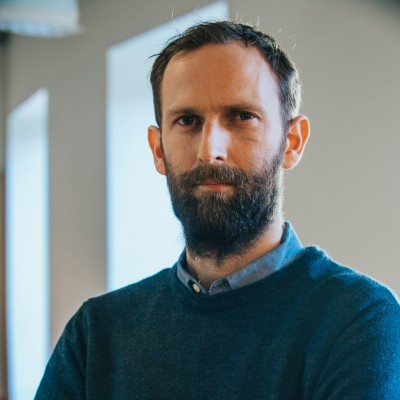
The Down Syndrome Centre in Sandyford, the charity that got her son a physio appointment when nobody else could, had put up a post looking for people to run the Dublin Marathon. She sent it on to her husband and told him he should give it a go.
"I was like, oh, I don't know if I'd be ready for it," Brendan says. "I said, look. I'll join a local club and see if they can get me ready first."
That is how a man who had never run further than a half marathon ended up on the start line of his first full one, and how Gorey Athletic Club ended up with another member.
"I'd Be Done Before I Even Crossed the Line"
Brendan had run plenty before, but always on his own, off a programme he had stitched together from the internet.
Joining the club changed that, and he is in no doubt about what it has been worth.
"If I did it by myself, I'd be all over the place. I'd probably be injured, trying to run too fast. I wouldn't be tapering. I wouldn't be eating the correct food, and yeah, I'd be in trouble. I'd be done before I even crossed the line."
A few of them from the club are heading for Dublin this year.
Sligo, Wicklow, Riverchapel
Brendan was born in Sligo and raised in Wicklow from the age of three. He has a brother three years younger, and his parents live in Wicklow.
He works in technical support for Zutec, a construction software company, and four years ago he and Edel moved down to Riverchapel, just outside Gorey in County Wexford.
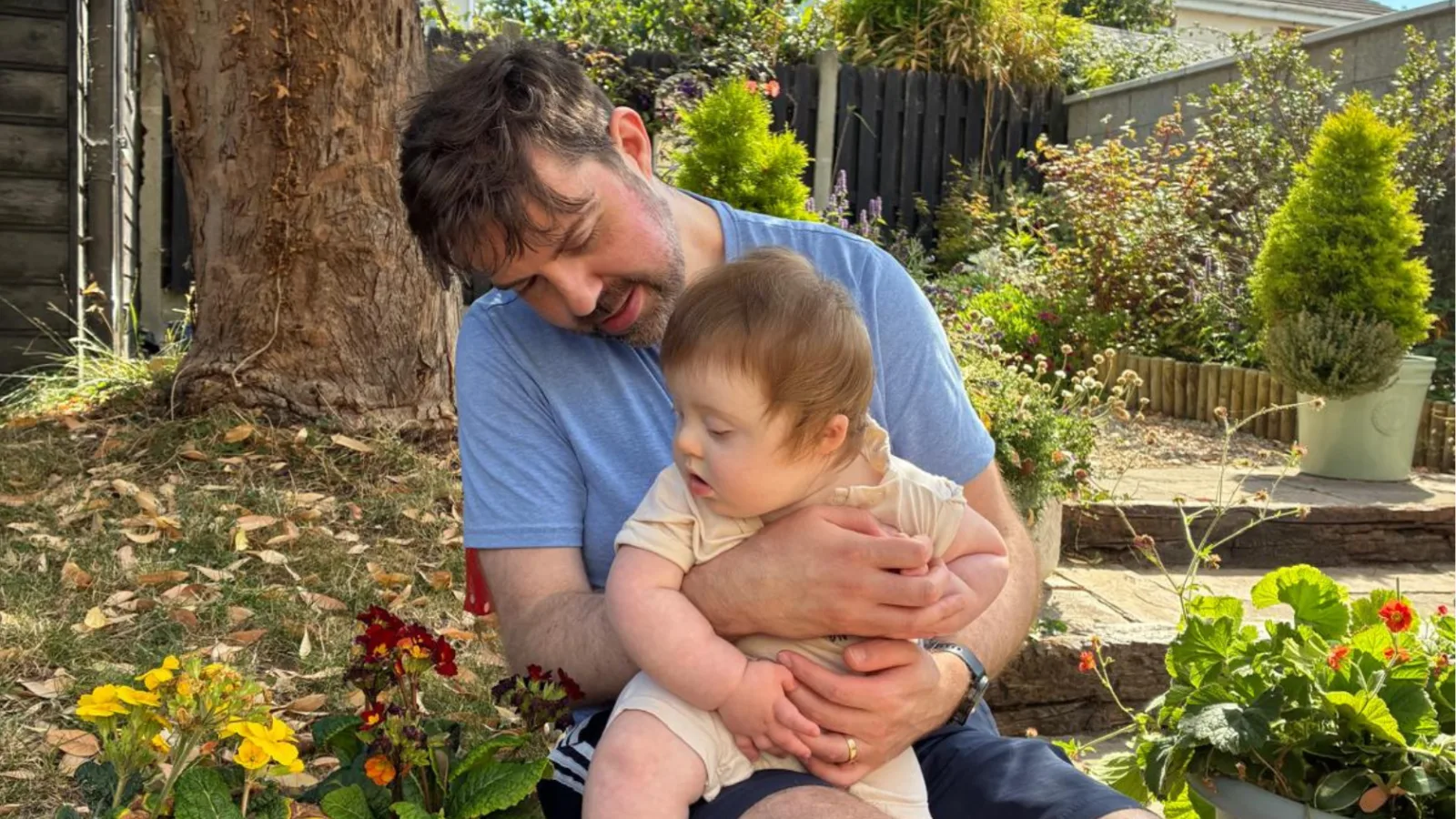
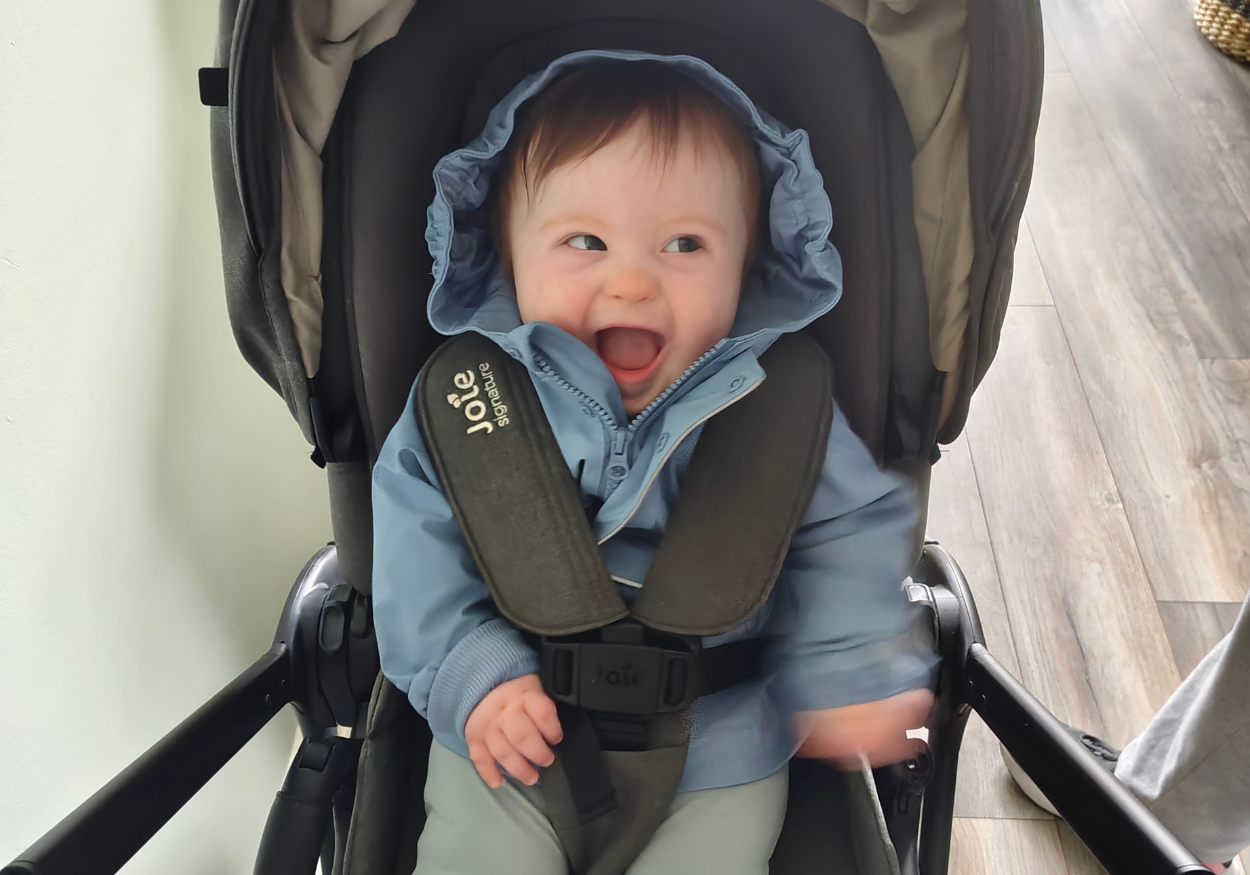
Their son Leo was born last December.
Leo has Down syndrome, and the first thing the family went looking for was a physio.
The Mothers Solve Most Problems
Finding one turned out to be harder than Brendan expected.
Edel did the searching and made the calls. The family had assumed there would be physios locally who specialised in working with children with Down syndrome, and there were not. What she found instead was the Down Syndrome Wexford branch toddler and baby group, several of whose families travel up to Sandyford for exactly this reason.
They pointed her towards the Centre. She rang, got an appointment more or less immediately, and the worry went away.
"The mothers solve most problems," as Brendan puts it. "They're running the country."
It is worth pausing on that, because it is the part of the story most likely to be useful to somebody reading this in the same position. The thing that unlocked it was not a search engine or a referral letter. It was a group of other parents who had already been through it and knew exactly which door to knock on.
Filling in the Gaps
The way Brendan describes the Centre is the clearest one-line explanation of what a charity like this is actually for.
"The charity fills in the gaps of the disability network. If there's not therapies available immediately, or if you're looking for certain therapies, they fill in the gaps of the public system."
That is not a complaint about the public system so much as a description of where the holes are. There is no occupational therapist in Gorey, and as Leo gets older and starts on the more complicated business of eating and dressing and getting through a day, OT is the next thing the family will need. The plan is to get it through the Centre.
The Down Syndrome Wexford branch run early intervention courses and classes through the year as well, so the Egans are drawing on all three: the public network, the Centre, and the local organisation.
He has also seen where fundraising money lands, which is more than most charity runners can say.
"You can definitely see it. I can see how the other families benefit. I know they do extra things during the summer as well, summer camps and little experiences and stuff like that."
And he is warm about what it is like to walk in the door.
"They're very friendly. They're just like, oh, Leo, it's great. There could be other kids there who are older, and it's great to see them getting on so well and just going around and having fun and getting up to mischief."
That last part mattered more than he expected it to, early on. Seeing children a few years ahead of his own, getting on with it, having the run of the place.
It is the thing he would point a new parent towards before any leaflet.
€2,820
Brendan set a fundraising target he thought was optimistic and has been quietly embarrassed by how wrong he was.
"I never thought I'd raise cash. I thought I'd have to give money in myself to pump it up. But I'm actually surprised. Pleasantly surprised."
The total stood at €2,820 when we spoke.
New to Him, Familiar to Her
Brendan did not know anybody with Down syndrome before Leo.
Edel did. Her sister has a learning disability, so a lot of her sister's friends come from that world, and it was not unfamiliar ground for her.
"Edel would be very used to it, whereas it's very new to me. But I must say, it's a fantastic community. Really, really good, great people. Exceptional people."
What he keeps coming back to, ten months in, is how ordinary the whole thing has turned out to be.
"We never want to just think of them as a person who has Down syndrome all the time. We almost forget the Down syndrome. When we go outside, people might notice, but we forget ourselves."
"They might just need a little bit more help here and there, but until you come to that crossroads, just treat them like any other kid. That's how we go about it."
"He doesn't know he has Down syndrome, so he's just flying along."
Parenting Plus
There is one observation Brendan makes that he credits to Edel and to watching the older children at the Centre and at World Down Syndrome Day events.
"Socially, their emotional intelligence is far ahead of the game compared to kids their own age. They can pick up on small little micro emotions. They're very aware of how people feel around them."
He has a phrase for the whole experience of the last ten months, and he offers it without a trace of sentimentality.
"It's kind of like parenting plus. You get more happiness out of it."
A Ticket in a Hostel in Melbourne
Running arrived in Brendan's life at about 23, in a hostel in Australia.
There was a 10k race on in Melbourne, a few people he knew had entered, and one of them got injured.
"They said, you can have my ticket. I see you going out running every day."
It snowballed from there. He kept it up while living in the UK and raced a bit over there, and since coming home he has done a couple of half marathons and a fair bit of trail running in the west.
Before any of that he had a go at most things. Golf, rugby, soccer, tennis, swimming. Golf and tennis and swimming are the ones that stuck.
Dublin will be his first full marathon.
What draws him to running, he says, is how simple it is. There is nothing to organise and nobody to arrange it with. You put on a pair of runners and you go out the door, which is roughly the only form of exercise that survives a new baby in the house.
The Build
It has gone better than he expected, after a wobble.
He picked up a knock a couple of months ago, which he blames on being less young than he feels. Since then the long runs have gone 15, 20, 25, then a 30 a few weeks back, and a 25 last weekend, with 15 or 16 to come this weekend before the taper drops him down to threes and fours.
He has also acquired the full kit along the way. T-shirts, socks, a gel belt.
"I'm like Rambo. The running Rambo."
New runners arrived a fortnight before we spoke and solved a set of aches that had been nagging at him.
"It's amazing what an impulse buy can do to your psyche."
He is aiming somewhere around five hours, maybe five and a half, and would take anything under five if the day allowed it. He is not married to the number. Finish it, enjoy it, come out the other side uninjured, and go after a proper target in a year or two.
The fuelling plan is carb gels, chewable bars and a caffeine gel late on, and he is wary of overdoing any of it, having heard enough stories from the club about people who did.
Training Around a Ten-Month-Old
The schedule fits around Leo's sleep, which means out the door before he wakes or out once he is down for the night. Long runs early at the weekend, home, and then on parenting duty for the afternoon.
Edel has a name for him.
"She calls me the part-time parent and the babysitter every now and again. She does the brunt of the parenting, and probably parenting me too to a certain extent."
He is careful not to let any of this sound like a sacrifice.
"I'm not going to think myself some sort of martyr or something like that. She'd probably want to be running rather than looking after the baby sometimes."
Side by Side
Ask Brendan what crossing the line is going to mean and he takes his time over it.
"I started this because of Leo, and I've spent ten months watching him figure things out while I was figuring this out. That's what I'll be thinking about at the finish."
He is aware that can sound like a cliché, and he has made his peace with that.
"As life goes on, you kind of realise clichés are clichés because you go through them. You live through them yourself."
He also makes the causal link explicit, which not everybody would.
"I probably wouldn't be doing this if I didn't have a son with Down syndrome. I probably wouldn't have joined the athletic club."
"He's definitely expanded my life. We've met great people, and we have friends out of all of it."
For the Fathers
The other thing Brendan wants said is the reason he agreed to the interview in the first place.
He has listened to podcasts where fathers of two- and three-year-olds look back at the first weeks and wish they had handled them differently, and he has noticed something about who the available support is aimed at.
"Obviously the mothers have gone through birthing the kid and all that sort of stuff. But there isn't as much stuff out there for fathers either. How they go through whatever they go through."
"I've listened to podcasts where fathers talk when their kids are maybe two or three years of age, and they always go, I wish I could go back in time, I wish I'd reacted differently."
His own conclusion, ten months in, is the thing he would want a man in a hospital room to hear.
"Really, there's not much to be scared of."
If the piece is useful to one father who has just had that conversation, he reckons it will have been worth doing.
What He'd Tell a Beginner
Brendan laughs at himself before he answers.
"I should be called cliché, Egan."
Then he gives the advice anyway, and it is good.
"Just get up, and even if you have to walk 5k, just walk it until you can run it, and then run until you can run faster. You just need to get up off the couch and get outside."
"Don't worry about what people think, or how you look, or what you're wearing."
He suggests breaking it into blocks, a few days or a few weeks at a time, keeping the momentum, and then looking back after six months at what has quietly accumulated.
And then, inevitably, find a club.
"There's plenty of people in the same situation as you, and people who are great runners now who were in the same position as you."
On why he does it at all, he is unambiguous, and it is not about the legs.
"You never regret going out for a run. Sometimes you do, because you come back in pain, but all in all it's a good pain. It's good for the health. It's good for the head more than that. Whatever about the body, you will lose weight, you will gain strength. But mentally, it's great for that."
A Night Off
Race weekend is doubling as something else.
Brendan and Edel's second wedding anniversary was on 5 October. Leo is going to Edel's parents, who would happily keep him every day of the week, and the two of them are staying in town.
"It's nice just to get away and be an adult, and sort of be a couple again."
Then he thinks about it for a second.
"Now, I don't know what state I'll be in after the marathon. I'll probably just be lying on the bed or in the bathtub."
You can support Brendan's fundraising for the Down Syndrome Centre ahead of the Dublin Marathon here.