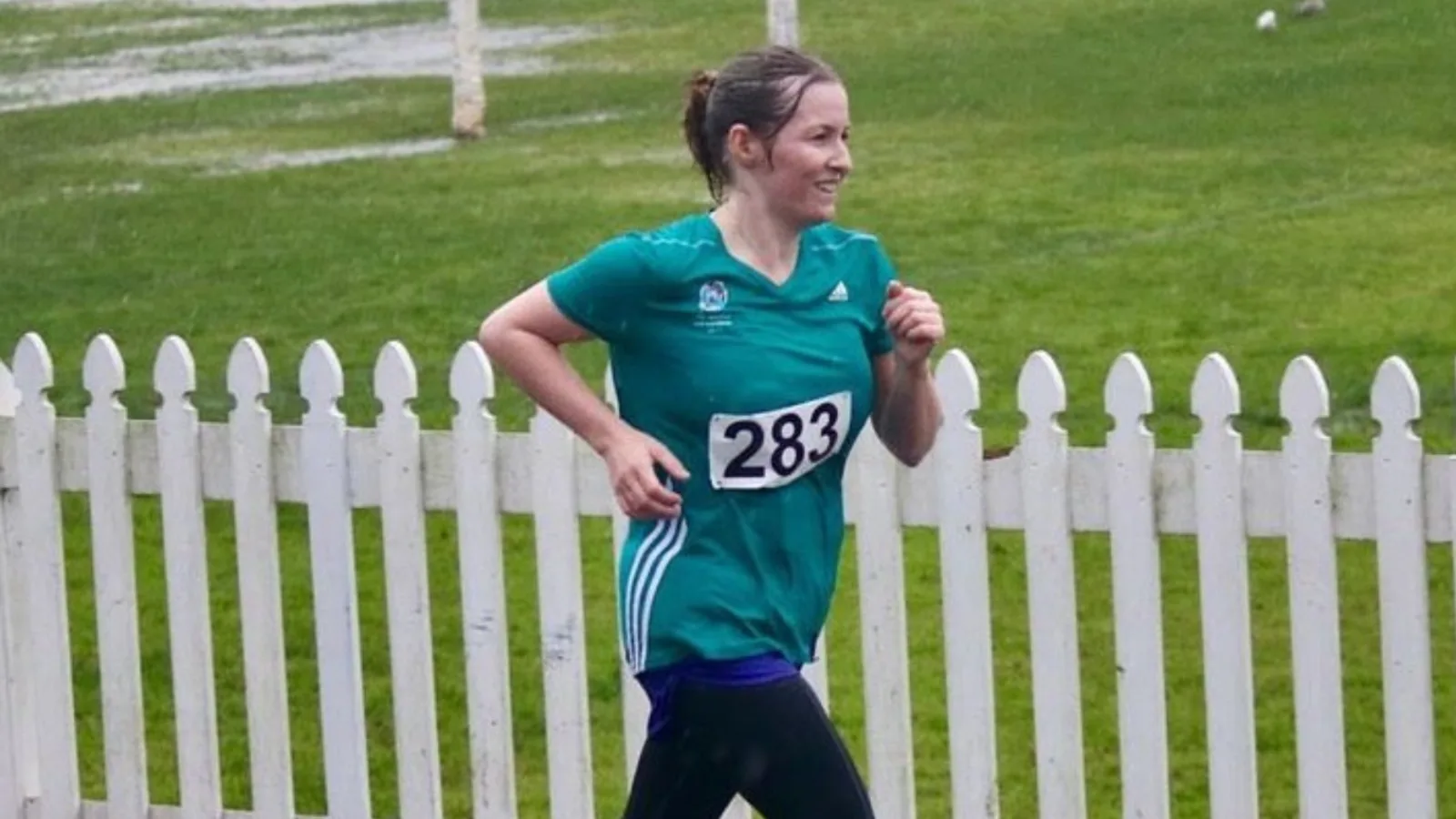
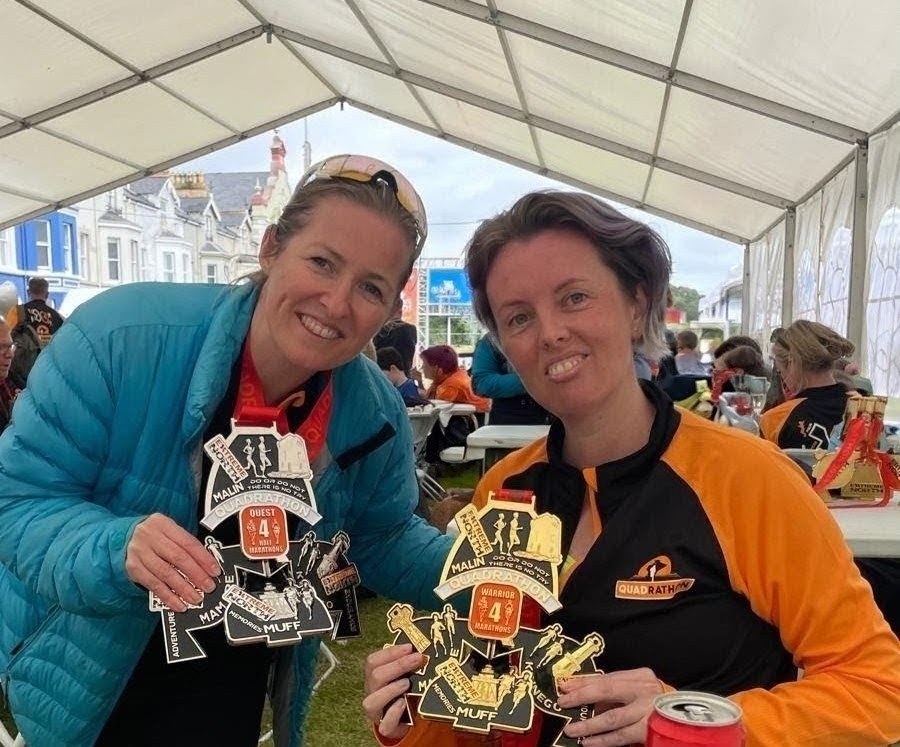
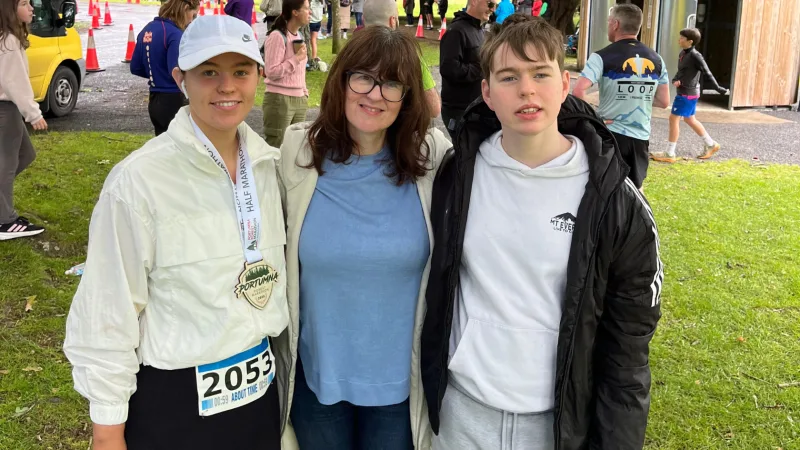
Frances O'Donnell has run four marathons on four consecutive days around the Inishowen peninsula.
She would like it on the record that she does not enjoy running marathons.
"I don't like running marathons. I actually really hate running marathons. I detest running marathons on the road."
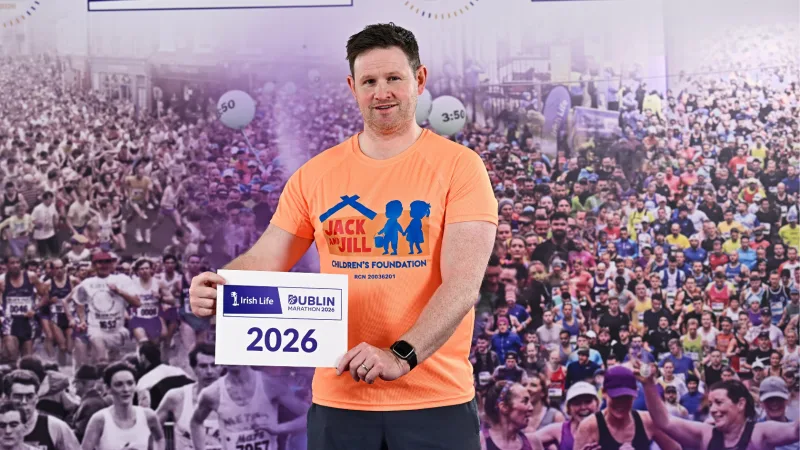
On the last Sunday in October she will run the Dublin Marathon anyway, for Team Hope, and the reason is simple enough.
"They wanted people to run. This is for charity, so I just kind of gave in and decided, fine."
Four Days in a Row
The Donegal event is called the quadrathlon, and Frances worked her way up to it the way she works up to most things, which is by finding out whether she can.
The first year she did the four half marathons, four days in a row, with somewhere around 300–400 metres of climbing in all of them bar the last. You turn up, get a bus out to the start, run, eat in the marquee afterwards, go home, and then come back and do the whole thing again the next morning.
What she remembers most is not the running.
"The same people come back every day, so it's such a lovely event. It's not like a normal race where you might say hi to someone but you're never going to see them again."
"You're all in the same boat. Oh my gosh, I can't believe I have to come out here and do this again tomorrow."
She is still in touch with a couple from Cork she met out there.
The year after that, the halves no longer interested her, for the straightforward reason that she had already done them. So about eight weeks out she went and tested whether she could run 30 kilometres on three consecutive days.
She could.
So she signed up for the full version. Four days, four marathons, and a good deal more climbing than 400 metres a day.
"My toenails were falling off by the last one."
She finished it without an injury, which is how most of her challenges seem to go. No hip problems, no knee problems, nothing.
The pattern is deliberate. Frances tends to pick something she has never done and then find out, which is how she ended up on the Snowdon trail challenge as well, an event she is glad to have done and has no intention of repeating.
Thirty Boxes a Year
Dublin is a strange fit for a woman whose idea of a good weekend is a mountain. Half marathons she likes. Mountain events she likes. Four days of hills in Donegal with the same faces every morning she likes a great deal. A flat road race around a city is, on her own account, the one format she would never choose. The reason she is doing it is Team Hope, and Team Hope has been in her family for years before anybody asked her to run anything.
They run the Christmas shoebox appeal. Frances's mother assembles 30 boxes a year on her own, and knits all year round to fill them.
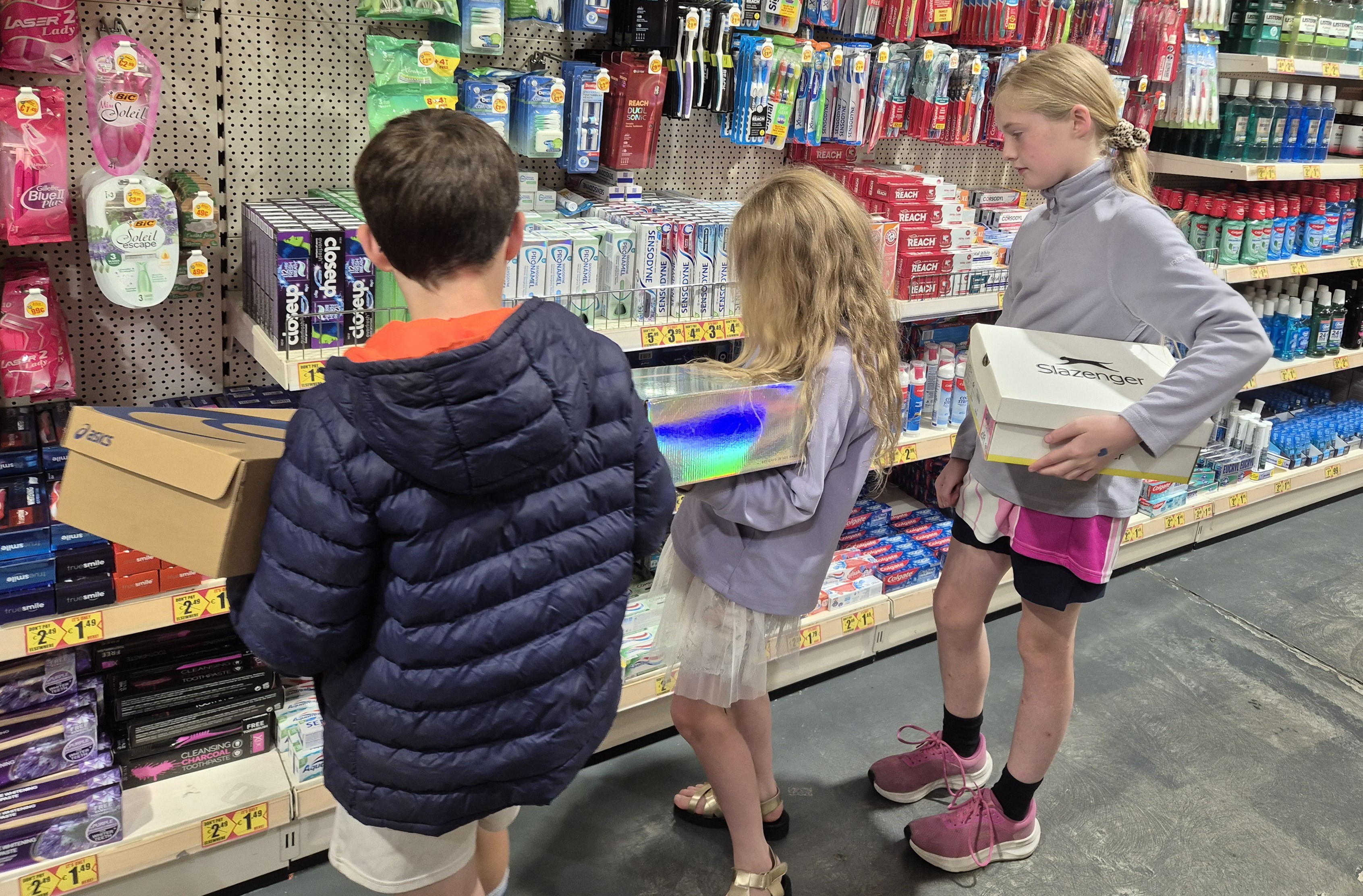
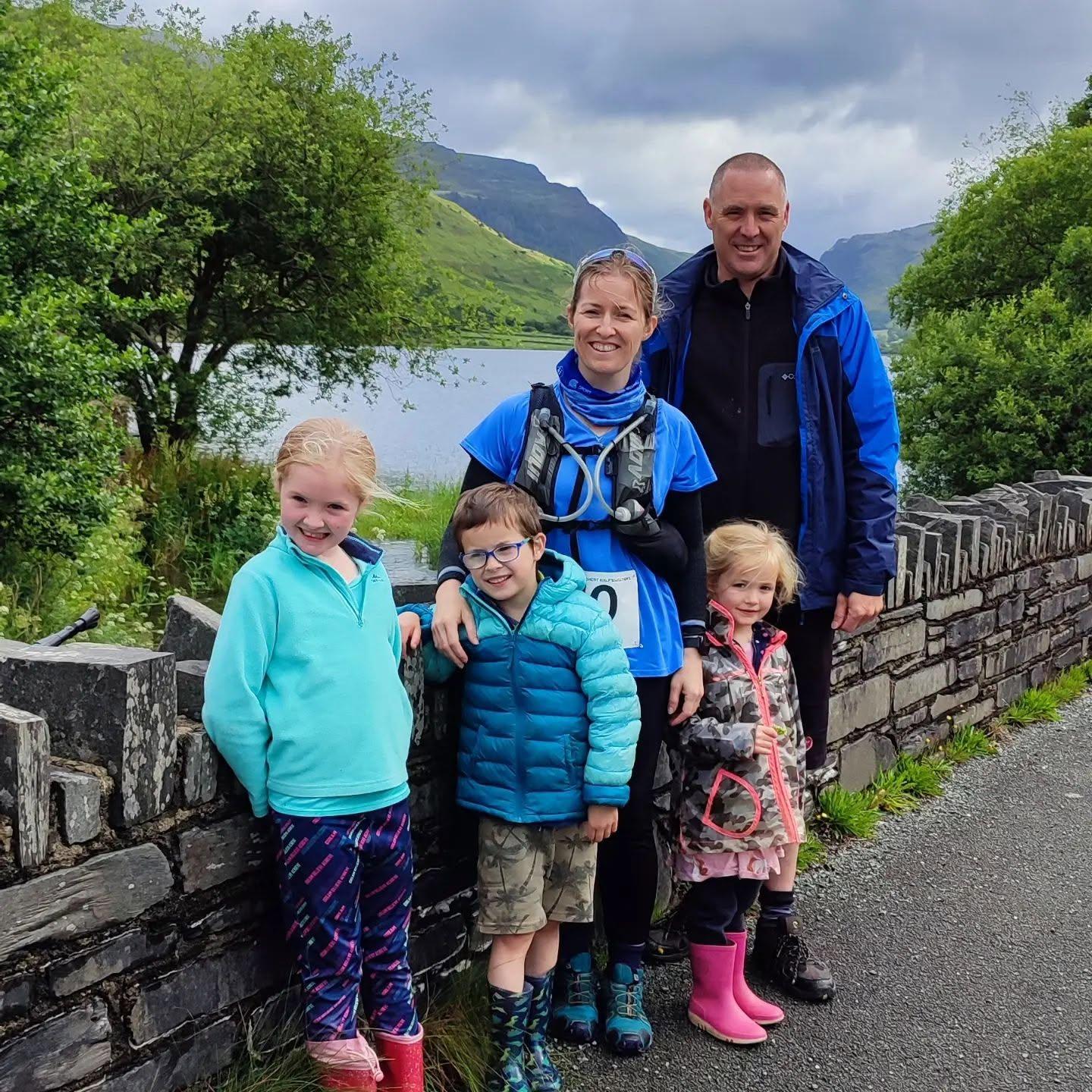
The boxes are the part that matters to Frances, and her reason has as much to do with her own three children as with anybody else's.
"I believe we are extremely privileged. I believe people in westernised society don't realise how privileged we actually are."
"My children are growing up, and it is really hard to keep them grounded. Like, really difficult."
The shoebox appeal gives them something they can physically hold.
"The Team Hope shoebox appeal gives them something tangible. They get their boxes, they go in, and they choose, like, toothbrushes and socks."
And then they watch what happens at the other end.
"We watch the little videos of the children receiving those boxes."
"The abundance of happiness that my kids get to see from a child opening a toothbrush. Like, a new toothbrush and a new pair of socks. That's invaluable. And I don't think there's enough of that tangible kind of way of understanding for our kids."
The Rest of the Work
Frances follows the organisation closely enough to know that the shoeboxes are the visible part rather than the whole of it.
"They do projects in Africa. Making more sustainable food sources, water. Obviously repairing buildings and schools that are going to fall down, like toilet blocks, and working on the sanitary side of things, in Kenya and the likes of that."
She is wary of charities in general, and she is fairly direct about why.
"I do get concerned with some charities in terms of where the money is all going, and that kind of makes me avoid the big corporate charities."
Team Hope she trusts, partly because she has watched the number of boxes grow year on year, and partly because she has met the people running it, including the chief executive when she came to Letterkenny.
"You can relate to them. It's all very wholesome. Super valuable, super homegrown kind of thing."
The family follow them on social media, which is how the children get to see the deliveries at the far end.
The Hard Part Was Not the Running
Here is the thing that surprised her most about this whole project.
"I absolutely hate asking people for money. When I took this on, the challenge for me was much more the fundraising and asking people for money than it was training for the marathon."
The last time she fundraised for anything she was about 19, kayaking, raising money for a breast cancer charity, and she found it so uncomfortable that she never did it again.
"This is the first time in a couple of decades that I have personally fundraised. I give money all the time, but I personally don't ask people to give money."
Her target was €1,000. Team Hope went ahead and set the page at €1,500. She was sitting around €1,180 when we spoke, with the race still to come.
What worked was LinkedIn, which is where she is anyway for work.
She put up a video of herself talking about starting the training, and inside the first week it had brought in €400 or €500. A Facebook post with the children after a half marathon, on the personal rather than the professional side of her life, pushed it on towards €700 or €800.
She is clear-eyed about why the rest of it does not convert.
"There are other people who will support me and click like and share it, but then you just don't get back to it. People are so busy. It's not even that they don't want to help or don't want to support."
"I do this myself. I must give money towards that. And then there's a lot in social media where people are asking for money."
"Some people I didn't expect, I think, were super generous."
She is also generous about the people who meant to give and never got round to it.
"It's not even that they don't want to help or don't want to support. Our society is so busy."
The Slowest Kid in the Class
Frances did not come to any of this with a background in it, and she is cheerfully specific about that.
"When I was 12 or 13, I was the slowest kid in the class."
Then, mid-sentence, she catches herself.
"I'm going to tell my kids this."
"I'm really small. I'm not even five foot. I'm not naturally athletic, definitely not at that age."
What she had instead was the outdoors, and a lot of it.
"I went to the outdoors a lot. I've kayaked for years, hiked for years, worked in outdoor centres, worked in France and Italy, climbed."
"I was always into sport in that way. Just not in the super aerobic fitness way. More in the strength and enjoying the outdoors."
Which meant that when she eventually started running, she found something she did not know was there.
"When I started to run, I discovered I'm actually way more aerobically fit than I had realised."
Auckland, After a Few Drinks
The actual start of it was about ten years ago, in New Zealand, and it was not a plan.
"Years ago in New Zealand, over ten years ago, I signed up for the Auckland half marathon after a few drinks. And I had never run before. Like, not really ever."
"I was a bit shocked that I'd even done that. But it was too late. I'd already signed up."
So she went out to see what she was working with.
"A couple of days later, went out to run 5K, and I nearly died. I only got about 1K. I was wearing completely the wrong gear, no idea what I was doing."
She had six months to get from a kilometre to 21 of them, and she did, and came in quicker than she had any right to expect given where she started.
She has been hooked ever since.
Gisborne, and the Way Home
The New Zealand years are their own story. Frances and her husband, who is from Cardigan in Wales, lived in Gisborne, where both of them taught and where all three of their children were born.
Before that she had spent eight years in Dublin, having started out as an outdoor instructor.
Gisborne is, she points out with some pride, the most easterly city in the world, that gets a great deal of sun. This turned out to be a problem.
"I'm Irish, and I love the cold, and I hate running in the sun. I hate heat waves in Ireland. Give me the rain and the cold air any day over the sun."
"I found the summers in Gisborne are way warmer than over here."
It is classified as a city and is about half the size of Letterkenny, which took some adjusting to. So did the scale of the country around it.
"There are parts of New Zealand where we would drive from one town to another, and you'd realise you'd run out of diesel, and there's nowhere. You have to turn around and find the closest one before you actually run out."
"Compared to Ireland, where you could get six petrol stations in the space of five kilometres."
They came home to Donegal about six years ago, and the reason was arithmetic as much as anything.
"All of our holidays were being spent being exhausted by just getting home, and seeing people very briefly, and then going back."
She wanted the children near their grandparents and growing up in their own culture, with an Irish mother and a Welsh father and a very long flight between them and both sets of family.
They live just outside Letterkenny now, which she describes as bustling, with shocking traffic.
Running in the Dark, in High-Vis Hair Bobbles
Training happens in whatever gaps the week leaves, and the logistics are worked out between the two of them.
Her husband cycles. She runs. A turbo trainer in the house means he can get a session done while still being there with the children, which frees her up to get out the door.
Most of her running is done in the dark, which in Donegal in October is most running.
She goes out with a chest light and a serious amount of high-vis, right down to high-vis hair bobbles.
A 5K she can justify to herself in any week, because it is half an hour door to door and she is back before the homework is finished.
Marathon long runs do not fold into half an hour, and that is exactly where this build came apart.
"The training plan for this one is completely out the window."
Between a full-time job, three children all playing sport, several committees and a doctorate, the long runs were the thing that did not fit.
So she has revised the target down to around 4:30, and she will take it, while being perfectly clear that on a better block she is capable of more.
"I'll Take It Before I Feel the Dip"
Fuelling is the one part of this she has completely nailed, and it is because she has had enough bad days to recognise the pattern.
"When you've done it before, you learn a lot. When you start, I was just like, oh sure, everybody can run."
"But I know myself now when I'm going to start to dip, and so I can counter that."
"Hydration and fuelling are so important. Which is why I could just keep going and going and going, because I haven't hit that dip. And I don't let myself."
The plan for the day is Maurten gels, a couple of caffeine ones, and hydration tablets, which she rates particularly for how little they weigh. The box has already arrived.
She will carry the lot in a small running vest with soft bottles at the front, and she will go straight past the water stations.
"Generally, I don't stop at the stations."
She finds it too hard to get going again once she stops, and it breaks the rhythm she has spent the first half of the race building.
Not in a Club, for Now
Frances is not in a running club, people keep telling her she should be, and she agrees with them.
She would be a better runner for it. That is not the issue.
"Life is so busy that I just can't be dealing with another WhatsApp group, another set time to be somewhere. I just go out and I do my runs."
"When the kids are a bit older and things calm down, I would really like to be part of a club. But at the moment, I just do my own thing."
She is coming down to Dublin on her own, on the bus. Her wave goes at 09:45.
Whether the family make it is still open. She looked at Dublin accommodation prices and decided the money was better left where it was, and there are football fixtures in the way, which would mean pulling the children out of their own matches to come and watch their mother run.
The Day Job
The thing Frances did not mention until about half an hour into the conversation is that alongside the job and the three children and the marathon, she is doing a doctorate.
She works as an instructional designer at ATU, and her research is on AI in higher education, focused on lecturers rather than students.
What she hears from lecturers is not encouraging.
"I have lecturers saying to me, the students are going out and just vibe coding, and they haven't learned anything."
Her own argument is more interesting than the usual one, because she does not think AI is the problem at all.
"Our issue is assessment. A hundred percent. That has not come around because of AI."
"That's been an issue for the last twenty years, where we're continually assessing somebody's rote learning and their knowledge. We have talked about this for decades, and still nothing has changed."
"AI is now just like, oh, this is really a problem. It was always a problem."
And she is impatient with how slowly the sector has moved.
"We keep saying it's too fast. But really, this has been going since 2022. And in the education sphere, what have we really done for our students or our lecturers?"
What She'd Tell a Beginner
For somebody who takes on four marathons in four days for fun, Frances's advice is remarkably low pressure.
"Probably run for enjoyment, I think. Especially if you're starting out."
"Don't be worrying about times. Don't be worrying about other people. Set yourself your challenge. Stay within your own remit, and enjoy the process."
It is consistent with how she races, which is only ever against herself. And it comes with one small advantage she is quietly pleased about going into Dublin: because she does not normally run road marathons, she has no personal best sitting there waiting to be defended.
"When's the Next One?"
Frances has a wall of medals at home, unmounted, all clumped together, waiting for somebody to put them up properly.
She knows there will be another one on it at the end of this month, and she already knows how she is going to feel about it, because a friend told her the day before we spoke and she suspects the friend is right.
"Right now it's just like, oh, I really don't want to go to the city."
"But guaranteed, when I get to the finish line, I will be buzzing that I completed it. And I'll be like, when's the next one?"