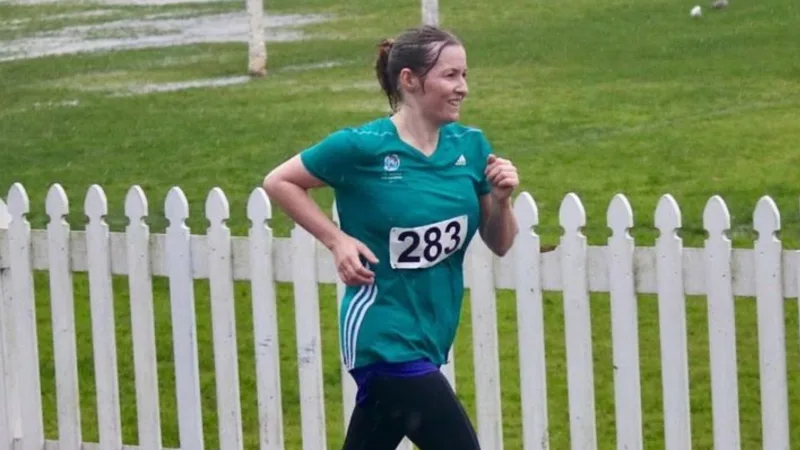
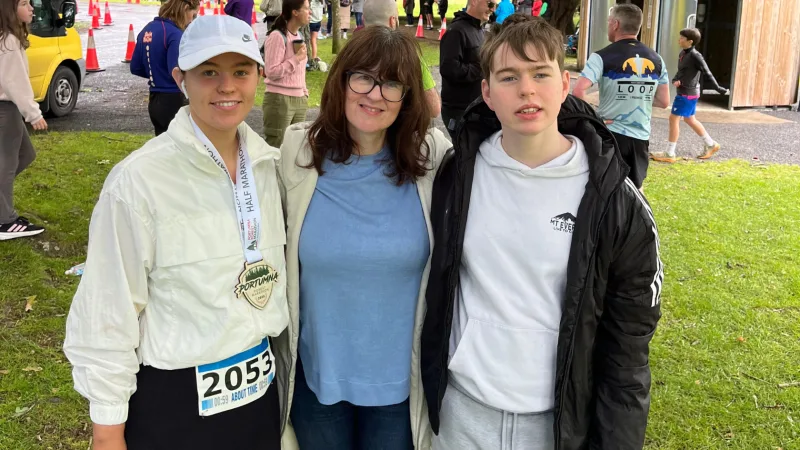
There is a thing Pat Chaney did for most of last year that his wife did not know about.
Michelle was going through treatment for oesophageal cancer. Pat was the one holding it together in front of her, in front of their daughter, in front of everybody.
"It's really difficult being a carer, because I had all the emotions going on in my head and everywhere. And then I'm trying to get her through the journey, and I'm trying to keep a straight face. I'm trying to keep it in."
"And I had a few meltdowns along the way, I don't mind saying."
So he went running.
"I've gone out running because I'm so upset and emotional that I run and nobody can see me, and I get all that emotion out when I'm running, and I come back and then I'm okay."
"And she never knew that."
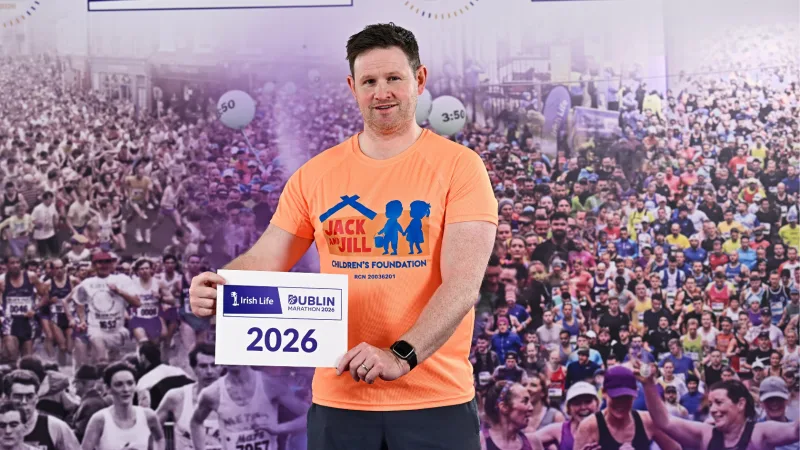
On the last Sunday in October he runs the Dublin Marathon for the Oesophageal Cancer Fund.
Navan
Pat is originally from Finglas and lives in Navan. He works from home for an American data storage company, handling logistics and trade compliance across the region.
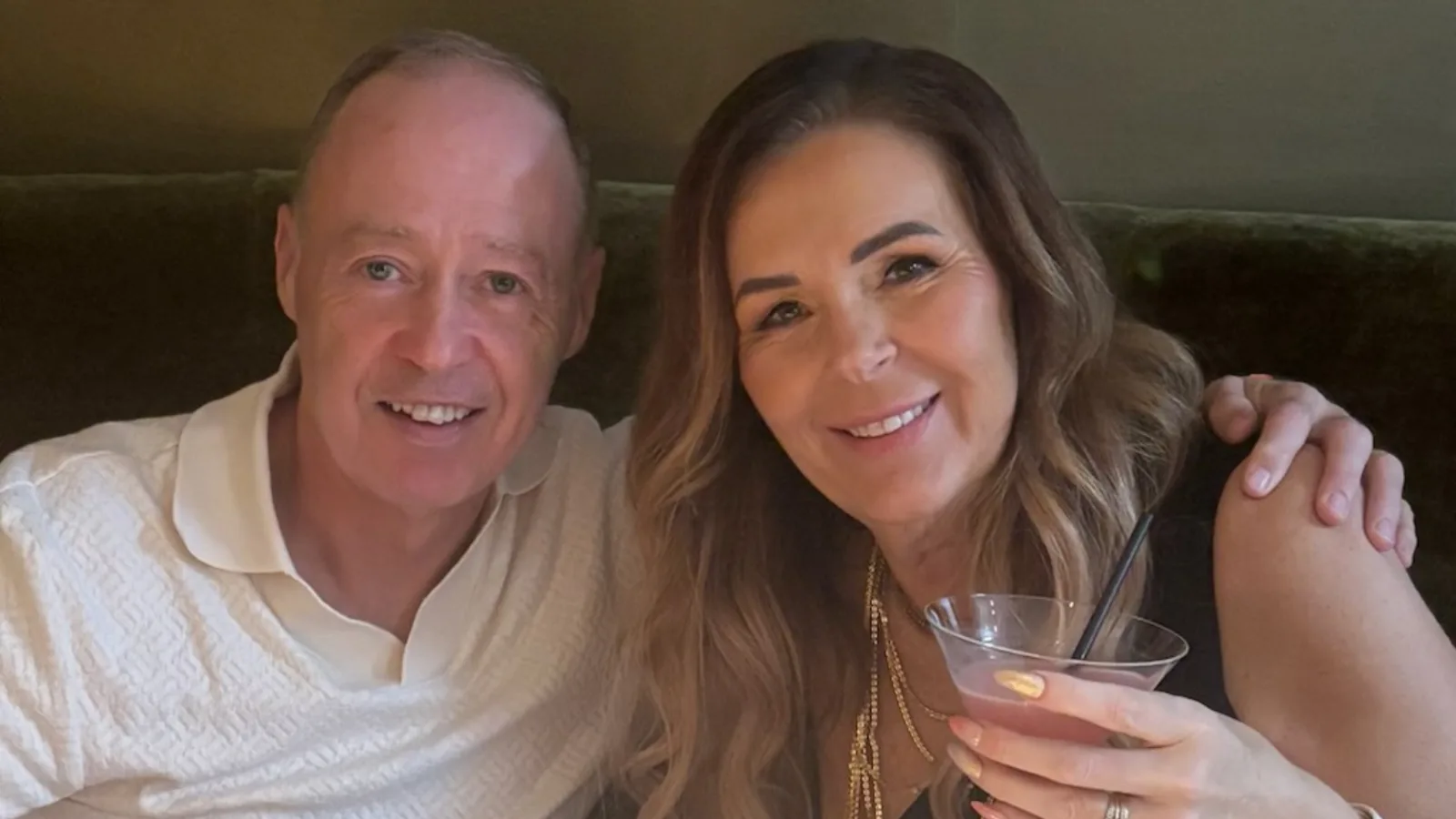
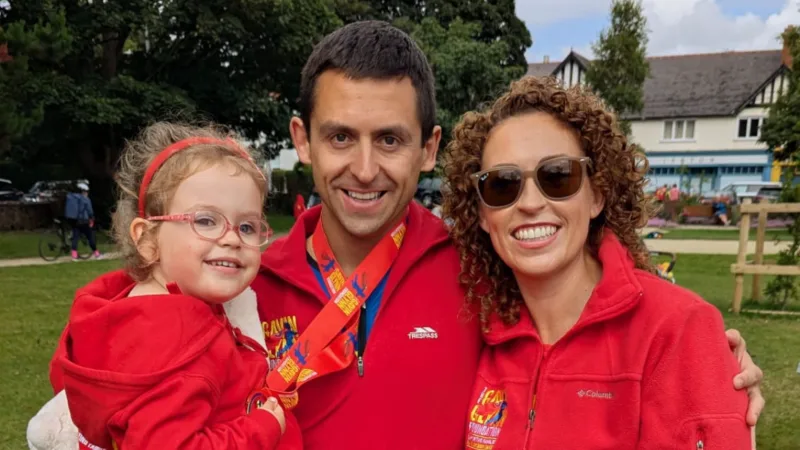
He and Michelle have been married 37 years and together 41. They have a daughter of 31 who got engaged a few weeks before this interview, two dogs and two grandbubbas.
He came to running around 2019 through a Couch to 5K on a local track he had not known existed, despite having lived in the town for 23 years at that point. He joined Navan AC, and has since coached Couch to 5K groups himself.
His first marathon was a virtual one around Navan during COVID, untrained, in 4:45, and Michelle was there at the last 3K running beside him, because that's what we do as a couple, says Pat. His best half is 1:56:02, a time he can give you to the second.
Several marathons have followed since. This is the first one he has run for a reason outside himself.
Eleven Kilos in Three Days
Michelle was diagnosed in May last year, on her birthday.
Before that, she had lost around eleven kilos in three days and could not eat while they were away on holiday.
The first round of hospital tests found nothing. Scans, MRIs, nothing.
What changed it was Michelle not accepting that. She pushed back, went to their own gastric surgeon in the Mater Hospital in Dublin and a referral led to an endoscopy that was abandoned halfway through, because of what they could see. The biopsy confirmed it.
That detail is worth sitting with, because it is the difference between this story and a much shorter one. The first set of tests done in the Mater Hospital found nothing. She did not take nothing for an answer.
Pat also notes that oesophageal cancer is predominantly diagnosed in older men, which is part of why it took as long as it did for the oesophageal cancer to be diagnosed and also because Michelle had previous stomach problems, oesophageal cancer wasn't even a consideration.
At Beaumont, the consultant put a PET scan up in front of them. The tumour was 12.5 centimetres long, which is roughly three times what is typical, extending down towards her stomach and into the lymph nodes.
Treatment was six weeks of daily radiation, over 30 doses in all, with chemotherapy every Friday.
It shrank the tumour by about one and a half centimetres.
Michelle worked through all of it. She drove to Beaumont for nine o'clock radiation, went on to work, came home around three and rested. Six weeks straight.
"Cancer Is the Boss"
The consultation that Pat quotes word for word, a year and a half later, is the one where the surgeon told Michelle how this was going to work.
"He said to her, listen, princess. You might be the boss at home, and you might be the boss in work, but you're not the boss here. Okay? Cancer is the boss."
Then he explained his own role, and he picked a comparison that landed.
"He said, what Johnny Sexton is to the Irish rugby team, I am going to be for you."
"I'm going to control everything that goes on around you. The team, the doctors, the nurses, the treatment. That's my job. So let me do my job." And you have to do your part, Michelle. Pat said, good luck with that, doctor!!
Thirteen and a Half Hours
Michelle did not want the surgery.
The surgeon had, by that stage, already resigned from the hospital to move to a private clinic. He came back to do her operation.
It took thirteen and a half hours last November. They removed her oesophagus and her stomach, and used part of her colon, routed up to her neck, to build her a new oesophagus.
He performed it robotically, which Pat understands to have been a first in Ireland for this operation, decided on the morning of the surgery. It was recorded, and Pat says the recording is now used to train surgeons at the Royal College of Surgeons.
Two mornings later, Michelle walked around the ICU ward unaided, having refused the physiotherapist's arm.
"That's the kind of person that she is. I knew she was a strong woman, and I'll be quite honest with you. I am astounded by her strength and determination and the doctors are astounded by her as well."
"I'm Not an Invalid"
There is a moment Pat describes that every carer will recognise, and it is the one where he got it wrong.
He had slipped into doing everything for her. Michelle stopped him.
"She said, hang on a minute. No. I'm not dead. I'm not an invalid. Okay? I want to be as independent as I can be for as long as I can be."
His reaction is the reason the quote is in this piece.
"And I never thought of it that way, to be quite honest with you."
The Decision
Faced with the numbers they were given before the surgery, the two of them sat down and made a choice about how the rest of it would go.
"We can sit here and we can mope with it. One, we can mope and we can wallow and we can feel sorry for ourselves."
"Or two, we can make the best of what we have, live our lives as best we can, go on the holidays."
"Whereas before we'd say, we'll go away for the weekend, I will do it next time. Now we don't do that. Now we go now."
They have been away in February, in May and in September. They flew to Tenerife the day after this interview, and they are staying in Dublin the night before the marathon with lunch booked somewhere good on the Saturday.
There is a certain amount of laughing at it too, which Pat is keen to say is allowed.
"We kind of laughed about it, and we had to have a laugh along the way. And that's okay to do that, and make a bit of fun of it."
Michelle is scanned every three months. The last one was clear. The next is in November.
What the Meetings Gave Them
The organisation's support meetings bring survivors and carers into the same room, and Pat is clear that the carers' side of it is not an afterthought there.
For somebody who had spent a year keeping a straight face at home and falling apart on the road, sitting in a room where other people had done exactly the same thing was the first real support either of them had.
It is also where the practical knowledge came from. The dietitian talk that explained dumping. The cards for the toilets. The things that nobody hands you on a discharge sheet.
The Things Nobody Warns You About
The part of this story that will be new to most readers is what life looks like after an oesophagectomy, and Pat is specific about it because the specifics are the problem.
Michelle can only eat small amounts, frequently. At a meeting, a dietitian explained dumping, which is what happens when food goes down faster than a rebuilt system can handle it.
In restaurants, this turns into an argument.
"She can only have small portions of food. And she'd say to them, give me a kid's portion. They say, no, you're not a kid. I'm not giving you a kid's portion."
The restaurants in Navan know her now. Elsewhere it is a conversation every time.
Then there are the toilets, which is the one that makes Pat angry.
Michelle needs urgent access, and she uses accessible toilets. She does not look like somebody who needs one.
"When she came out, there were people standing outside, and they were all giving out to her, saying, what were you doing?"
"And she said, I'm recovering from cancer. When I need to get access to a toilet, I need the toilet."
They now carry cards from the group explaining the condition.
What Michelle said to Pat afterwards is the most honest thing in the interview, because it does not let either of them off.
"She said to me, I used to be thinking the same about other people when I saw that. But I've changed my mind now."
"You don't know what's going on in somebody's life."
"We were very judgmental, and that's changed our mindset."
The same applies to how she looks.
"Some of our friends say, are you sure you had cancer?"
"And as Michelle says, well, what's that supposed to look like? Do you think I go around with no hair? I'm not going to be that person. I'm going to be me."
They Found the Charity Afterwards
Here is the reason Pat is fundraising, and it is a slightly uncomfortable one for the charity sector generally.
Through the diagnosis, the radiation, the chemotherapy and the thirteen-and-a-half-hour surgery, the Chaneys had nobody.
"We were on our own, and we didn't know what was going on."
They only connected with the Oesophageal Cancer Fund afterwards. Their first meeting was in February this year, four or five weeks after Michelle got out of hospital.
What they found there was other people, survivors and carers both, who had been through the same thing.
That is what Pat wants his money and this article to do. Not just fund the organisation, but make sure the next family finds them in May rather than the following February.
Michelle spoke at one of the meetings herself in September.
Pat's main contact at the group arranged a charity T-shirt for him to run in, and there is a reception for their runners afterwards.
Four and a Half Hours of Pain
Pat built this year's seventeen-week training plan himself and is aiming for somewhere around four and a half hours.
Fuelling is a gel every 5K, sodium tablets, a banana at halfway, and his own bottle with electrolytes in it, because a bad experience with cups at a half marathon put him off course stations for good.
He is deaf, and runs with bone-conduction headphones rather than his hearing aids, mostly listening to eighties music.
His advice to anybody starting, from years of coaching beginners at the club, is about not looking sideways.
"Forget about time. It's all about your pace. Don't mind anybody else. Concentrate on yourself, on your goal, on your time, on your speed."
"If you see people running around the track at a hundred miles an hour, it doesn't matter."
The Last Eight Kilometres
Ask Pat what the finish line will mean and he goes straight to the part of the race where it hurts.
"Even when it's going to get tough after the 34, 35 kilometres, I know it gets really tough. I've been there, I've done that. But this is going to spur me on."
"If she can go through that pain, and everything she's gone through, I can go through a couple of hours."
He says a shorter version of it elsewhere, and it is the line that should be on the fundraising page.
"I can run the marathon. Four and a half hours of pain. That's nothing. After what you've gone through, that's nothing."