Daniel Kenny spent the whole bus journey home from rehab thinking about relapsing. Thinking about calling someone, getting what he needed, and going back to square one.
Forty, forty five minutes of it, every one of them swaying between should he and shouldn't he.
"By the time I was getting off the bus, the one thing I was confident about at this time that I could guarantee was the fact I could run."
So he did the only thing he could think of.
"I went into my house. I gave my sister a hug. I put on me running shoes, and I went out the door."
Because if he had not, he says, he would have been on the phone to somebody straight away.
He went out and ran, and he felt great, and somewhere on that run he bumped into a friend called Lee O'Neill. It was the first day Daniel had been out of rehab, and the two of them talked about setting up a running club.
A couple of days later, Karyn Manders came on board as the third founder. Karyn is the brains behind the club's logistics and social media, while Daniel and Lee share responsibility for the running side.
That was July.
Five Months a Runner
Daniel is 29, originally from Drimnagh in Dublin, and he has been living in Courtown in Wexford for thirteen years. He works in the chipper there. He is also a barber.
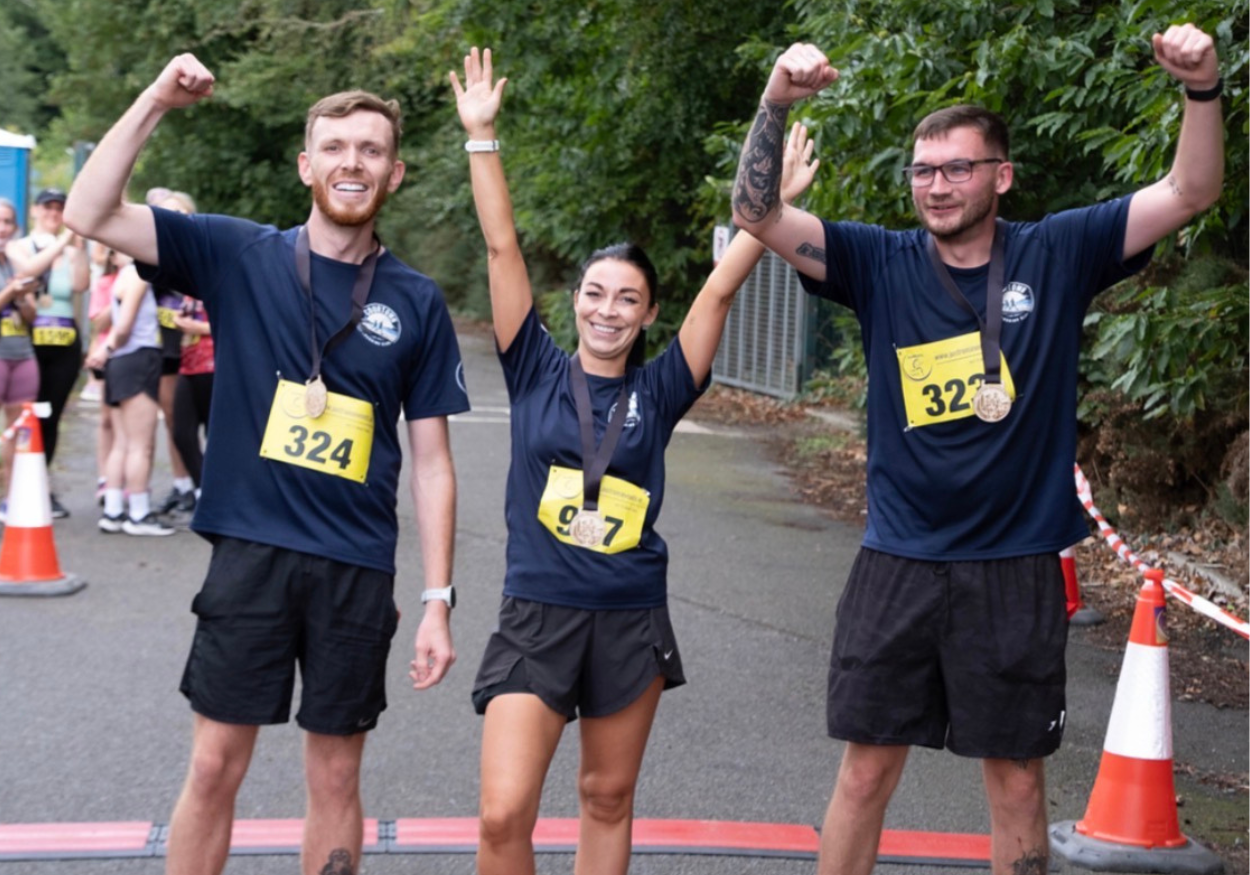
In between, he, Lee and Karyn run Courtown Running Club, which has over a hundred members on the books and somewhere between 60 and 80 people turning up every week.
He has been a runner for five months.
Before any of that he was a Dublin GAA man, playing both codes for Crumlin, usually alternating football and hurling week to week with the same team, and winning a fair few titles along the way.
"Crumlin and Drimnagh, there's a road separating them. Crumlin was a very, very well respected team, so that's who we played for in the end."
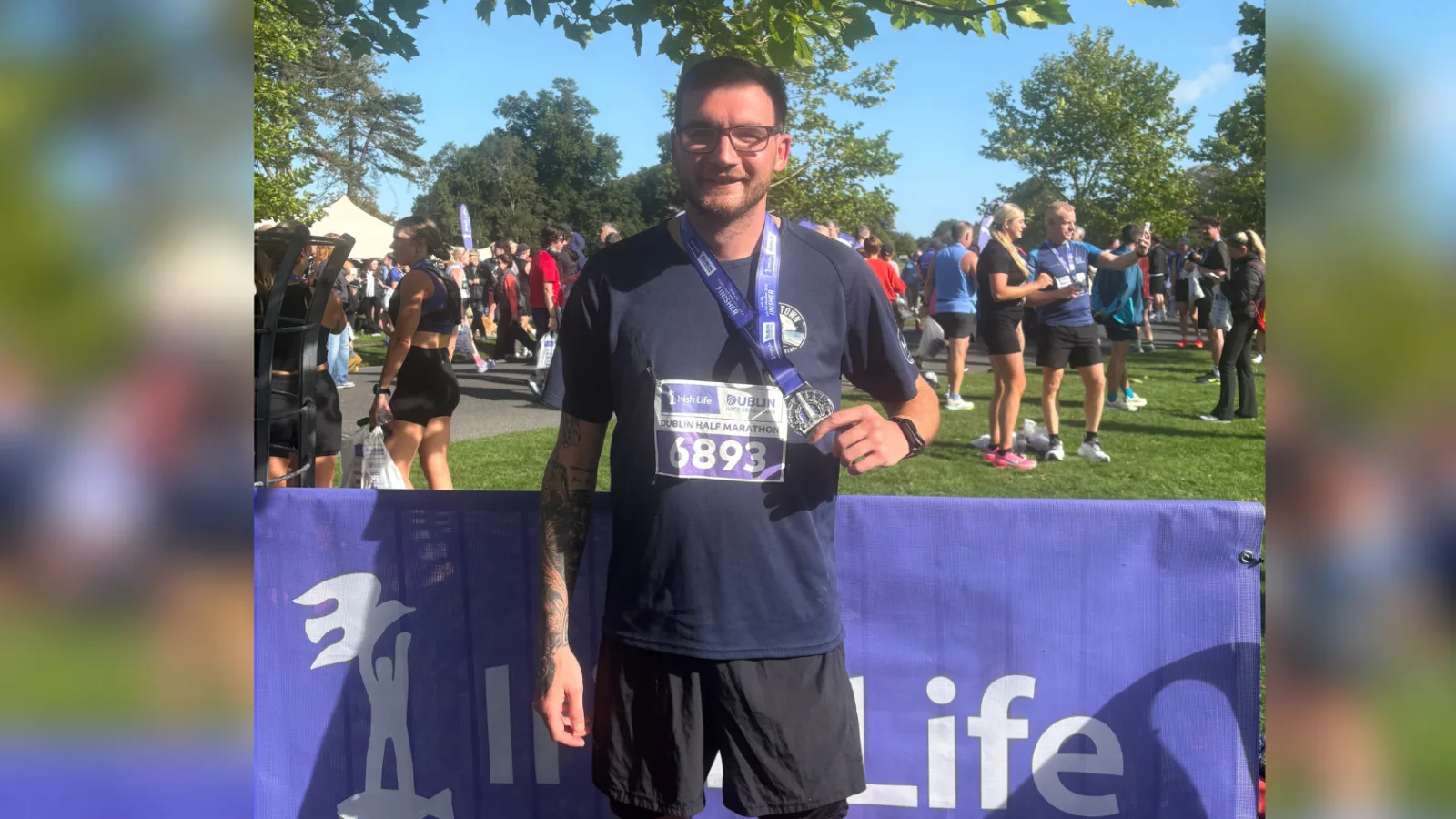
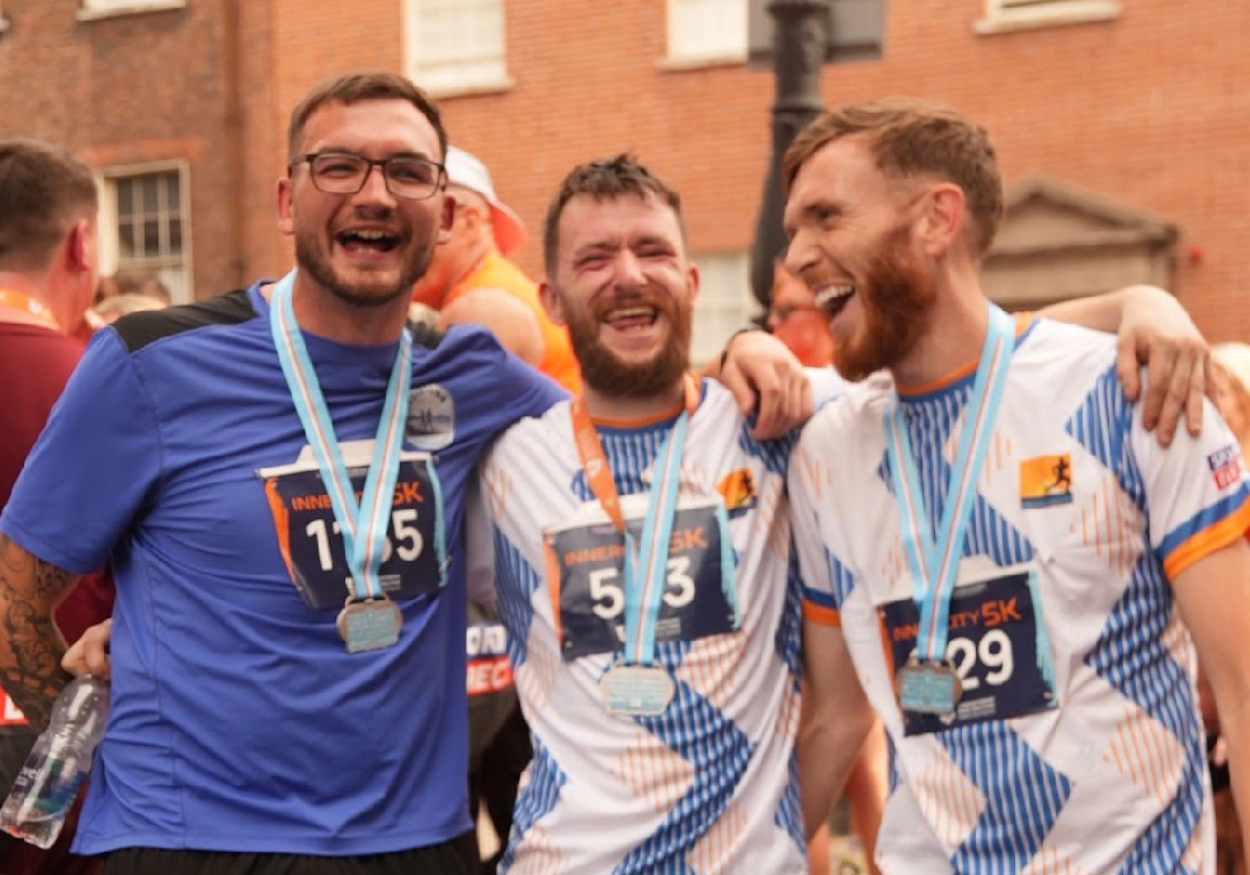
In those five months he has run a 5k, a 5k for breast cancer, the Dublin Half in the Phoenix Park, a three quarter marathon, and a 5k and 10k event organised by Daniel, Lee and Karyn, with the support of the Vision for Courtown and Riverchapel group, which attracted 187 participants.
On the last Sunday in October he will run the Dublin Marathon for DePaul.
He is clear about why he keeps stacking events up in front of himself.
"Without that focus of all of these events coming up, your mind can go into a very, very different frame of mind."
How the Family Ended Up in Wexford
The move to Wexford was not a lifestyle choice.
"We had a bit of a mad upbringing. There was a lot of drugs and gang violence going on when I was quite young. That's what ended up leading to us being homeless."
Somebody tried to bomb the family home in Dublin, so they went overnight, and thirteen of them ended up in a family member's four bedroom house in Wexford because there was no money for anywhere else. That lasted months.
Addiction, Daniel says, runs right through the family, and has done for a long time. Add ADHD and his own mental health into that, and the road was fairly well worn before he ever set foot on it.
"That period, my ADHD and mental health issues just led me down a very, very bad path, unfortunately."
The addiction he eventually asked for help with was cocaine.
He is careful about how he describes his own experience of homelessness, and the distinction matters to him.
"I suffered from homelessness myself. Lucky enough, I was kind of couch surfing. I wasn't on the streets."
And then, at a certain point, something shifted.
"Lucky enough, I was able to put my own hands up and say, I need help."
The Mandatory Parkrun
The rehab was Tiglin in Ashford, and part of the programme there is parkrun. Every Saturday. No opting out.
Daniel arrived into it with nothing.
"I had no confidence for running. I couldn't run a hundred metres."
He walked his first one. The second week one of the lads asked him if he fancied running it, and he said he was not sure, so he ran a bit and walked a bit.
By the third week, the lads had stopped asking.
"They basically wrapped their arms around me and said, look, you're coming, that's the end of it."
Within a fortnight of actually running he was doing 10k and 15k every two or three days.
What that did for him had very little to do with fitness.
"You lose so much confidence through addiction. Your body becomes weak. Your mind becomes weak. You lose connections with people. You feel so isolated."
"So with the running, when I was able to start running, it was like, oh, you can actually do something good again."
And then one day, out on the road, something gave way in him.
"I nearly started crying as I was running. It was the first time I felt human again in years, after being an addict for so long."
"I even stopped, and I said to the two boys that were with me, I said, you don't realise how much this run actually means to me."
He is in no doubt about what it did for him.
"I could still be in addiction now if it wasn't for going for that run. I know it sounds cliché, but running genuinely did save my life."
Why Running, and Not Something Else
Daniel has thought a lot about why this particular thing works for people coming out of where he came out of, and his answer is about honesty rather than fitness.
"Part of being an addict is there's a reason why somebody's an addict. Whether it be mental health, whether it be loneliness, whether it be lack of love as a child, there's always a reason."
"So when you find a community that you fit into, and you don't have to put up these walls and these fake barriers and these fake masks, when you go running, it's you, your two legs, and whoever you are with. There's none of this fake personality."
There is also, he points out, nowhere to hide in it, and he means that as a compliment.
"You'll be held accountable by the time you've finished the run. You know who's faster and who's not faster, so there's no lies about it. You get out there, you help each other, you run together."
He is firm that the stereotype of running as a solitary pursuit is wrong, and he sets it directly against what he came out of.
"It's not a lonely sport."
"Addiction is very, very lonely. It's very lonely. You find that comfort of being around people with similar interests, and you're having a laugh, you're having a joke, and it just gives you a sense of achievement and a sense of belonging as well."
Faith, and What Has Been Answered
The rehab in Tiglin is Christian based, and Daniel is careful and generous about where he has landed on that since.
"It's something I'm learning at the moment. I definitely wouldn't hold myself back on faith. I've seen it work for people. I personally haven't had the deep experience with it that most people have, but that doesn't mean I'm against it."
"I do pray to God sometimes when I'm feeling stressed or I'm feeling worried, and I do believe there is somebody there listening."
And he has his own evidence for it, which he lists plainly.
"I'm still sober, so that's one thing that has definitely been answered. I'm able to run the Dublin Marathon and help a charity. That's another thing I prayed for as well."
The Club
Courtown Running Club has three groups. A walking group. A couch to 5k group that mixes running and walking. And a faster group.
The whole lot start at the same time and finish at the same time, which is the bit that matters.
They meet on Tuesday, Thursday and Saturday, and those three fixed points in the week are doing more for Daniel than any training plan could.
"It's to regulate me. To hold me accountable. I know every Tuesday, Thursday and Saturday I have to go to that running club at that time. So my brain will focus on that. It is a regulation for your brain as well."
He puts it a second way that is probably closer to the truth of it.
"If I'm not doing it, I'm letting the club down."
"Walk, Run, Crawl or Limp"
Two or three weeks before we spoke, Daniel hurt his knee on an easy run, going downhill after a climb, something popping on the outside of the left one.
He was still down at the club three nights that week. He just joined the walking group instead.
"It's a running club, but it's still your club. You're still a member. You're still a leader. So why not go down and show your face? You're obviously free on them evenings anyway."
What he says about that is the best single argument for joining a club that anybody in this series has made.
"Whether you can walk, run, crawl or limp up the road, do it with your club, because you're still going to have that laugh. You still have that sense of community."
"You're missing out on your couple of kilometres here and there, but you're still surrounded with good people, and it keeps you on the straight and narrow."
The Half, and the DJ Booth
The Dublin Half in the Phoenix Park is where Daniel found out what he had.
He ran 1:40, on three hours sleep, with no food beforehand and one gel in his pocket. He also stopped to dance at one of the DJ booths on the way round.
"I'm not a professional racer. I'm not getting paid. I'm paying to do the race. So go out and have a bit of a laugh."
"And if you see somebody along the way, slow down, get them up on the shoulder, walk beside them and take them on. Let's go."
The three quarter marathon is the one he is quietly prouder of, and the reason is not his own time.
He brought two women from the club along to do the 10k on the same day, one who had never run the distance in her life and one who had not run it in fifteen or twenty years. He paced the pair of them round in about 58 or 59 minutes.
Then he went back out and ran his own race.
Halfway through his last lap the knee went, and he spent five or six minutes walking, trying to run, and walking again.
"I said to myself, there's no way I'm walking over this finish line."
He finished in 2:42.
DePaul
Daniel found the charity through the Run for Charity link on the Dublin Marathon site. A fella called Chris came back to him, they set a target of €1,500, and he hit the €1,500 ten days after the page went up.
The 60,000 followers he has on TikTok did most of that work, including donations arriving from England for an Irish charity.
He is still slightly stunned by how fast it went.
"I'm only very new to TikTok, so I was shocked when I put it up and the goal was hit so quick."
And he has drawn a conclusion from it that anybody with a following should probably hear.
"If every influencer or TikTok creator was able to put up one once a week for a charity, the work that could be done could be amazing."
"Charities like DePaul, they're doing God's work. Not everybody is out there on the streets every day helping people and getting them homes."
The reason he picked DePaul is not abstract, and it is worth reading twice if you have ever walked past somebody in a doorway and not known what to do.
"Homelessness is extremely lonely. When you're already low, you feel worse again, because you feel so lonely."
"And when you have these people coming up from a charity like DePaul, coming up and treating you like a normal human being, you start to feel that confidence come back into your life."
What he values most is the least technical thing a charity does.
"Even a simple chat from somebody that's part of the charity can automatically bring your confidence up and make you want to get yourself back together."
"They're genuine people, and any interaction we've ever had with them has always been a human interaction. There's none of this fake persona, because at the end of the day, when you're struggling, you need a real human connection."
"You don't need this generic yes, no answers. You want somebody who's going to connect with you. I personally think that they specialise in the human connection."
And he has seen the results of it himself.
"I've seen people get help from them. I've seen people get support from them. The proof is there."
The Training Week, Such as It Is
Tuesday is easy with the club, what they call the non ego run, anywhere from six minute pace to seven depending on who he ends up beside.
Wednesday is sharper and shorter, around 10k at four forty five or five minute pace.
Thursday is easy again with the club, maybe 8k.
Saturday or Sunday is the long one, 20 to 25 kilometres, and he had been building towards 30 before the knee. There has been a bit of gym work added lately to keep the hips loose, something Daniel says would not have been possible without the support of his girlfriend, Sophie Wong, who has kept him on the straight and narrow and encouraged him to keep turning up.
He is refreshingly honest about the rest of it.
"I don't do a Sergeant Bilko on the training. I'm probably one of the worst training runners and worst eating runners that you could ever imagine. I just get out and run."
He is deliberately loose about paces, partly because he spends most of his running accommodating whoever is beside him.
"I don't focus too much on, it has to be like this and it has to be like that, because that takes the fun out of running."
The same applies to the number he has in his head for Dublin.
"Even the likes of the 3:30, if I don't hit it, I don't care, because I'm out there to have fun."
The Gear Speech
Daniel races in a pair of Brooks Hyperion Max 2 that he got for nothing in rehab.
The first shorts he ever ran in were given to him by somebody in there as well. The t-shirt was from Penneys. He had no phone in his pocket and no watch on his wrist.
He still has no Garmin. On the half marathon he left the earphones at home and paced himself off the sound of his own feet.
All of which gives him standing to say the following.
"I've seen people pulling up on race days wearing the four hundred euro shoes and the fifty euro packet of gels in their pocket and the five hundred euro Garmin on their wrist, and if they're a minute off their PB they're upset at the end."
"Don't worry about the fancy gear. Just get out and run. It's your legs that carry you and your mind frame that carries you."
Looking for the Box of Smokes
Daniel is aiming for 3:30 in Dublin, off the back of that 1:40 half, and he says plainly that if he misses it he does not mind.
After Dublin he is eyeing an ultra, mostly because he cannot sit still with an achievement. The ADHD makes the self-congratulation close to impossible for him, and he describes the finish of the Phoenix Park half with a sort of bemusement.
"People are crying coming to the finish line, and I was looking for me box of smokes."
"I find it very hard to feel self accomplishment anyway."
The people around him see it, and he knows they see it.
"I'm surrounded by amazing people. They're always telling me they can see the potential. I still struggle to see it myself."
He has found a use for that, mind.
"It's a good and a bad. It's bad that I don't feel it, but it's good, because I get a kick up the backside to go and do the next thing. I'm always chasing the next thing."
Dublin might be the one that changes that, and he is starting to admit as much.
"I am feeling quite emotional coming up now to the Dublin Marathon. I'm really starting to feel a sense of achievement, for the fact that I'm running four to five months maximum and I have accomplished a lot in them four to five months."
What he wants from the finish line is not a number.
"I still doubt myself. Even though I know I have the legs for it, can I actually run it? That's another thing."
"Once I cross that finish line and I solidify that for myself, I think I'll realise I actually am a bit of a runner."
Then, because he cannot leave a sincere moment alone:
"I might take me dieting a bit more serious as well, instead of eating chippers."
"Everybody Was New One Day"
Ask Daniel what he would say to somebody thinking about joining a club and he goes straight past the training talk.
"Everybody was new one day. No matter what any professional athlete in the whole world, or anybody in your local club, or Margaret down the road who's running 50 kilometres every Sunday. They all started on day one one day as well."
"I can guarantee you, as somebody who has their own running club, we love seeing new people come. I've seen club members pace people on the first day quicker than I've seen coaches doing it, because it's making a new friend."
His practical route in, for anybody who cannot picture themselves walking into a club, is to build a bit of confidence first with a few brisk walks a week, then go down and ask whether there is a slower group that takes beginners.
"Put your shoes on, go down and try it out, and see what you think."
The Five Who Went Out Together
The club started in July with men and women who could not walk five kilometres.
A few days before this conversation, five of them went out and did their first 10k together. Not as a race. Just as a group.
They came back crying and hugging each other .
"I love helping other people. Can I feel accomplishment myself? If I help other people, I love it. I feel great when I help other people."
That instinct predates the running. He has done a good deal of youth work over the years, and some public speaking off the back of his own story, and the club is really just the latest version of the same thing.
The club's own 5k and 10k event is probably the achievement he is proudest of after the races themselves. Daniel, Lee and Karyn organised it with the support of the Vision for Courtown and Riverchapel group, getting it registered properly and attracting 187 participants.
He has not asked anybody to come up and watch him in Dublin. He never has asked people for anything like this, not even for visits when he was in rehab.
"I feel like I got myself into that mess. I should be able to look after myself."
A few from the club have told him they are coming anyway.
You can support Daniel's fundraising for DePaul ahead of the Dublin Marathon here.