Dáithí Casey spent twenty years having to be somewhere on a Tuesday, a Thursday and a Sunday.
He played football for Dr Crokes and for Kerry. He was on the Kerry panel in 2014, injured for the final. He won a club All-Ireland with Crokes in 2017. And then, at around 35, that was the end of it.
"I'm definitely at my best when I'm in routine. I've had to be somewhere Tuesday, Thursday, Sunday for twenty years nearly. And all of a sudden that goes, and then it's a bit like, is this? I need something."
What he found out first, though, was that he did not miss it at all.
"I finished playing, and for the first six months, I was actually loving life. It was great being at home with the family, not chasing your tail."
"And then all of a sudden, it comes to January, and you're like, Jesus, time to get back on the horse."
"I felt probably a bit softer, maybe."
He had a knee arthroscopy that same month, started running, and on the last Sunday in October he runs his first marathon.
He is doing it for Sarcoma Cancer Ireland, in memory of his sister-in-law, Sarah Egan, who died on 27 May at the age of 34.
Kilcummin
Dáithí is 36 and teaches at Kilcummin National School, just outside Killarney. He and his wife Stephanie have two children, AJ, who is four, and Daisy, who is three.
The shift from a lifetime of team sport to running on his own took some getting used to, and he describes it well.
"It's been a big change, alright. Going from a team dynamic, and everything that I would have done was team-orientated, to going out individual, listening to podcasts."
"Trying to do even 5ks at the start was difficult. But it's amazing what consistency can do for you, really."
He is wry about where the whole thing came from.
"Maybe we're going through that midlife crisis kind of age, 30 to 35 to 40, where we're all looking to find something."
What he has taken from it is less about fitness than about the shape of a week.
"The biggest thing that I've gained is that if you're consistent and disciplined with it, you can see improvement. That's when it's enjoyable as well."
"Once you break the first few kilometres, you kind of just get into it, and it's good for you, both physically and mentally."
He is careful to say that he did not come to running out of any particular need, and he counts that as luck rather than virtue.
"Mentally, I've never had to. Some people have found running very helpful in that regard, and I was lucky in that regard."
"I like spending time at home. But then when you're at home all the time, you need to be pushing yourself to do something again."
Then his perspective changed, because Sarah got sick.
"My perspective as well just changed then with Sarah being sick, and got me back into this and went from there. Signed up for the marathon and kind of just continued on from there."
Sarah
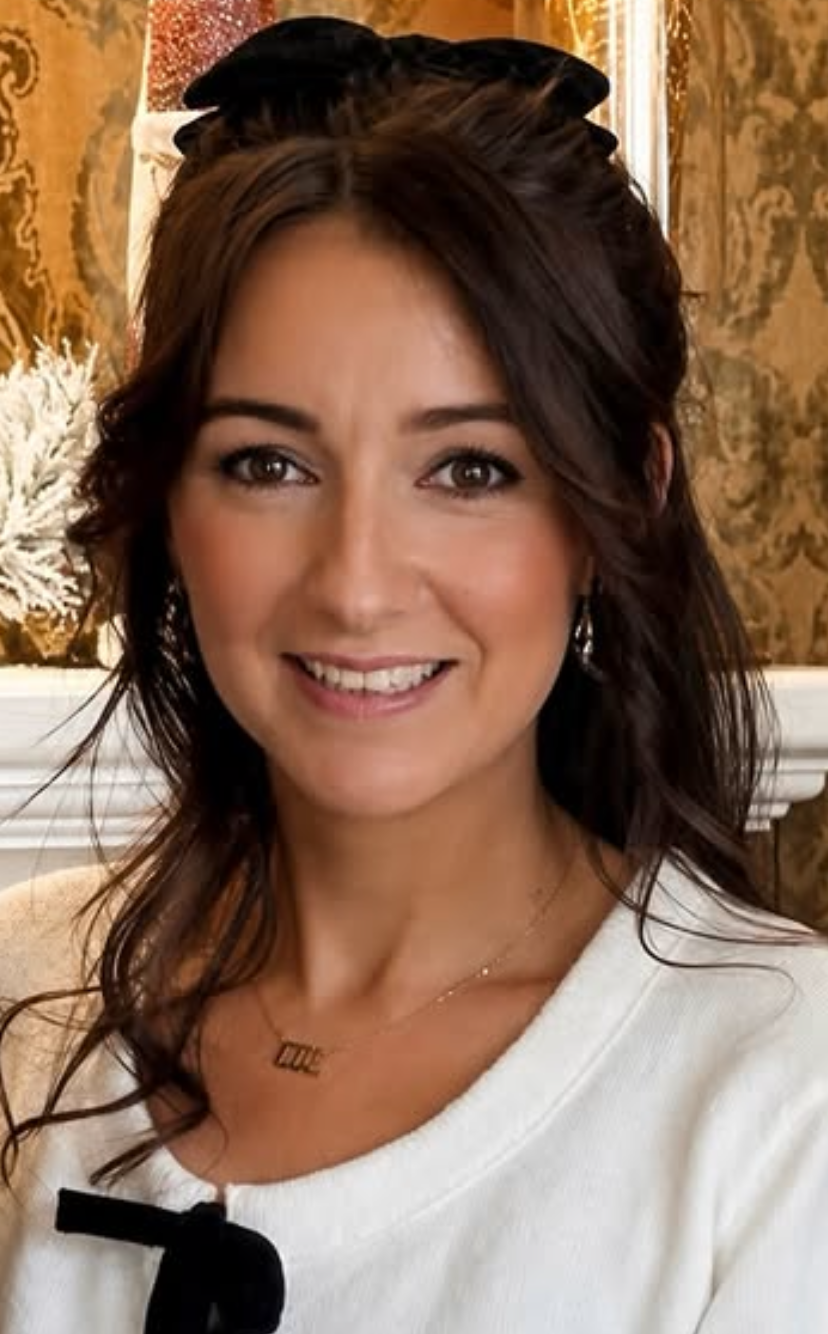
Sarah Egan was Stephanie's sister and her best friend. She was a preschool teacher at the Mercy in Killarney, one of five children, with her sister Stephanie and three brothers, Chris, Mark and Darragh, and parents John and Bridget.
In October last year she started getting pain in her shoulder.
"In October last year, she kind of was starting to have a bit of pain in her shoulder and progressively got worse. And then in December, she got diagnosed with Ewing sarcoma."
Two months from a sore shoulder to a diagnosis.
"Ewing sarcoma is, first of all, very rare. But second of all, it's very hard-hitting. Basically, it's a very aggressive form of cancer."
She had chemotherapy until April, by which point it was not working, moved to palliative care in mid-May, and died on 27 May.
Dáithí is careful about how much he says regarding those last weeks, and that is where this piece leaves it too.
What he does want said is how she handled it.
"She was unbelievably brave during that time."
"That's where my admiration comes from. Very much how she handled herself, especially at her worst. She was a beautiful girl, basically lost her hair and stuff like that, and just even slight little things that were very hard to take, and she just handled it well for the sake of her family."
Auntie Susie
The thing everybody says about Sarah is that she was mad about the children.
Between Dáithí and Stephanie's two and her brother Chris's four, there were six nieces and nephews, and she was obsessed with the lot of them.
"Her obsession basically was with my two kids, and Chris has four kids. So it was all about the nieces and nephews."
She was godmother to Dáithí's son.
Sarah and Stephanie were in business together as well, running the Heart Glow Studio, a jewellery and personalising business they set up in 2023. Before that the two of them taught swimming together, two- to four-year-olds, after Sarah had worked as a swimming instructor at the Gleneagle.
The studio started out, in Dáithí's words, as a way of the two of them spending more time together once the children had arrived, and it was doing well.
"The Heart Glow Studio gives them an opportunity to make someone smile in a hard time."
Stephanie intends to push on with it, when the time is right for that.
There were four or five years between the sisters and it made no difference at all.
"They would have been very, very, very close."
The Eighth of October
Sarah's birthday was 8 October, which fell the week before this interview.
"It was her birthday last week, October the eighth. So the last two weeks for my wife's family have been very, very sad, I suppose."
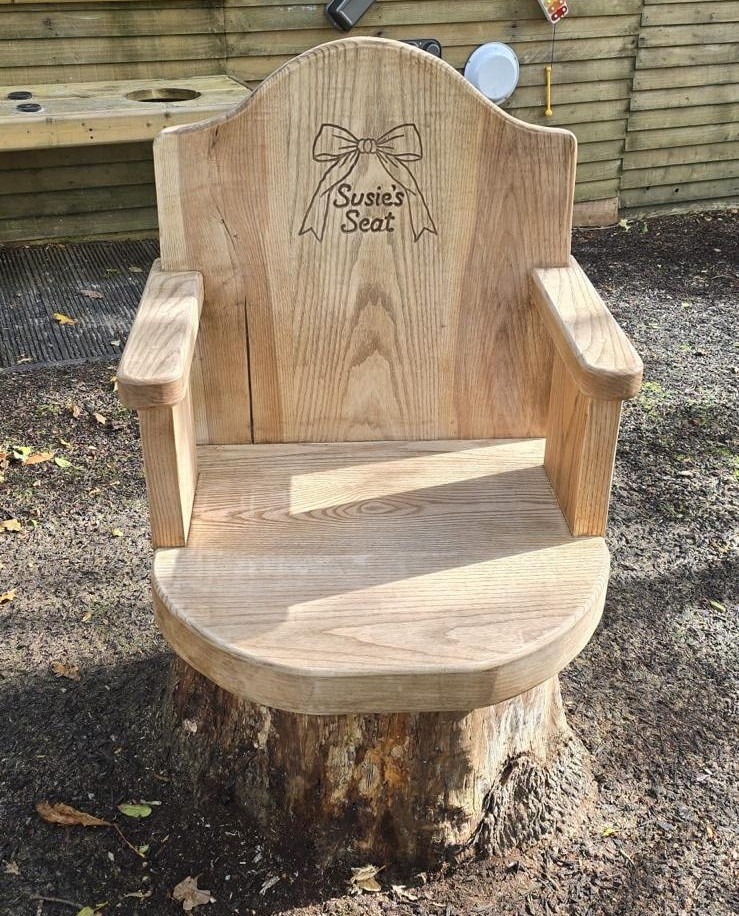
The preschool where she taught marked it by unveiling Susie's Seat in the garden, a small queen's chair with her name on it. The staff there donated €1,000 to the fundraiser.
And Dáithí notices what the marathon has done for the family in the middle of a fortnight like that.
"The positive then is obviously me doing the marathon and making so much money for the charity. They see that as such a good thing to honour Sarah with."
What Sarcoma Cancer Ireland Do
The support, in the Egans' case, mostly arrived after Sarah died, and Dáithí lists it plainly.
"Sarcoma helped the families with bereavement groups. They'd have play therapy available to the kids if they want to, and there was a lot of family counselling. As well as that, they provide a grant to support the families."
Play therapy for children is the part that should stop anybody reading this. Six nieces and nephews, the eldest of them nine, and an organisation that will sit down with them.
Beyond that, what Dáithí wants the money to do is fund research and awareness, for the straightforward reason that sarcomas are rare and hard to catch.
"It's a hard one to diagnose, because it's rare, first of all, and then it can be in the bones."
A sore shoulder in October. A diagnosis in December. That is the awareness argument in two dates.
He has noticed other cases in the papers since, young people with families, and he assumes the ones that make the news are a fraction of it.
"I'm sure there's loads more stories that we haven't heard."
What It Changed
Sarah's death has shifted how the whole family operates, and Dáithí puts it in one sentence.
"It just changes your perspective on life in general. A big one for our family is to do things now rather than waiting, because you just never know."
Which is, when you think about it, also a reasonably good explanation for why a man who has never run a marathon has signed up for one this year rather than some other year.
The WhatsApp Group
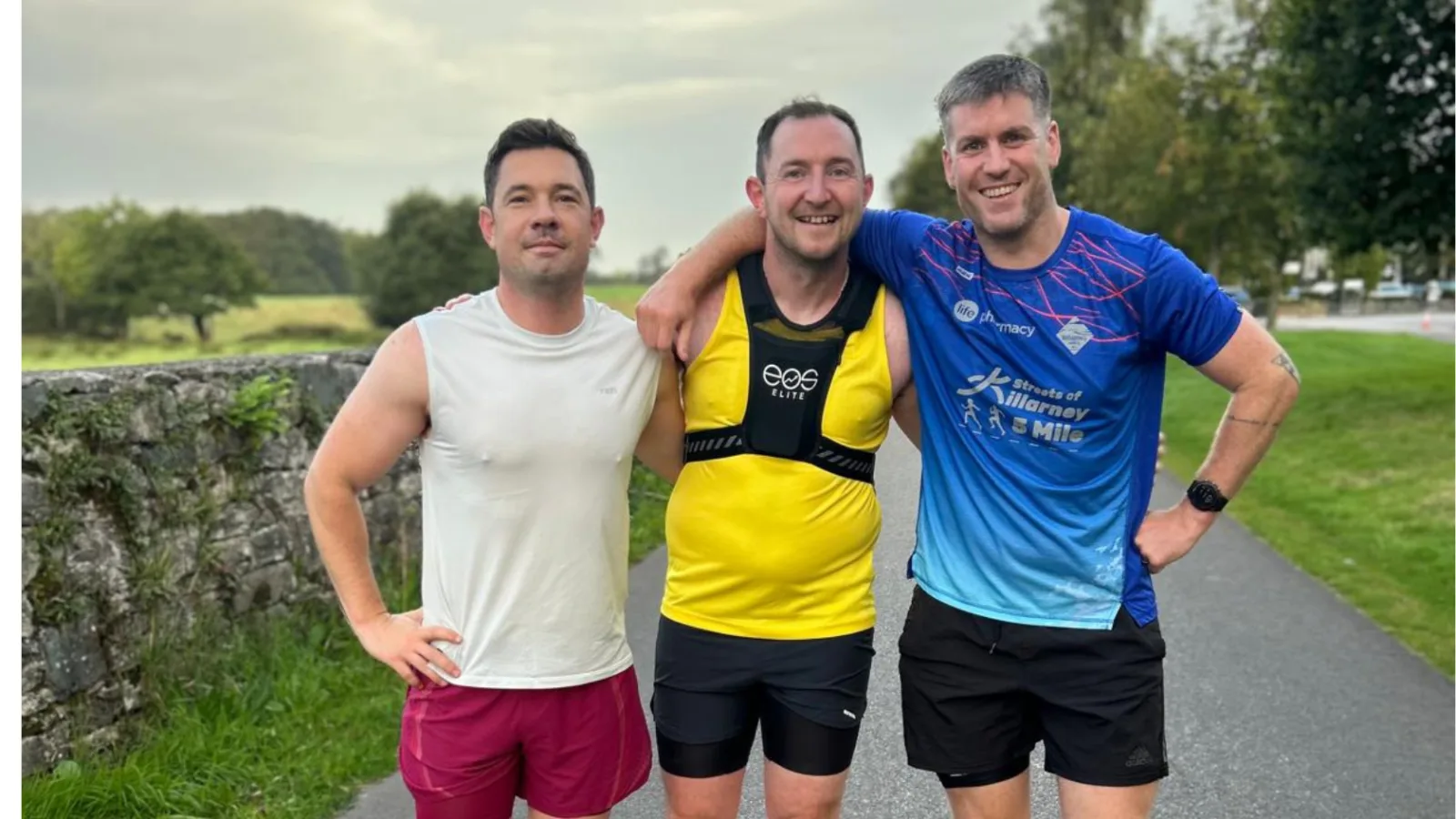
Dáithí is not in a running club. What he has instead is a group of friends who are all doing Dublin, and a group chat.
"I'm in a WhatsApp group with a few lads who are doing it, and that was a lot of it, keeping each other going."
There is a competitive streak in him, and a realistic streak running alongside it.
"With having got my knee done in January, you're not going to be breaking any records here either."
The knee came first. He rehabbed it from January, got going with light running around April and May, and the marathon block proper started at the end of July, after a stag in Nashville.
He is following a four-hour plan and sticking to it fairly closely, dropping from four runs a week to three when the knee asks him to.
The hard part was not the start. It was the middle.
"Having never done a half marathon, to doing one every week was. It was an interesting change of pace, put it that way."
The worst session was about a fortnight before we spoke, when he went out to run 32 kilometres and stopped at 21.
He is targeting around four hours. The dream is 3:45.
The routine itself turns out to be the thing he was missing, and he only worked that out once he had it back.
"I didn't realise it at the start, but I definitely realise now that getting out two or three times a week is definitely a help. I probably need that discipline, which probably comes from my GAA background."
Fuelling has been the fiddly part, and he has moved onto SiS gels in the last few weeks after starting with something easier on the stomach. He will run in Hokas to look after the knee, and he will be wearing the yellow Sarcoma Cancer Ireland singlet with the sunflower on it.
Mary, Who Is 65
The most interesting thing an All-Ireland medallist says in this interview is about humility.
"It's definitely a more humbling sport."
"Mary, who's 65, could be running past you. But I think I have an appreciation for anybody who does it, because it's not easy."
He is quick to add the caveat that keeps it honest.
"The more you're consistent with it, the better you get. But it's not easy to be consistent either."
He also admits he used to be on the other side of the argument entirely.
"I always say this to my wife, because she used to be like, what are you going running for? Nobody seems to be smiling when they're out running."
The Finish Line
Asked what crossing the line will mean, Dáithí pauses before he answers, and the pause is part of the answer.
"I don't really know. I suppose, personally, there'll be a sense of achievement."
"But, ultimately, this isn't about me. I suppose it's about, first of all, representing Sarah, and then representing our family."
Stephanie and the children will be in Dublin. So will his mother, Sarah's brother Mark, and a group of friends.
Just Start
His advice for anybody who has not started is short, and coming from a man who could barely get through a 5k in January, it carries.
"Put simply, just start. Don't be afraid to start and just give it a try."
"Once you get started, you'd be amazed what can happen and what you're going to achieve."
And then the practical half, which is the same advice half this series gives.
"Obviously, a lot of this stuff is easier when you're doing it in a group."
He points to a cousin of his who joined a running club in Dublin and has now run the marathon two years in a row, and to parkrun as the most inclusive thing going.
Not Afraid
At the very end of the conversation, unprompted, Dáithí landed on the thing he keeps saying to people about the whole year, and it is the best line in the interview.
"I'm not afraid of running anymore."
"You go from playing football where you obviously are running around, but you're doing the skilful stuff. Whereas you're like, oh Jesus, the thought of a marathon."
"Even talking to the boys who play with Crokes now, they're like, jeez, that's very far."
"And then all of a sudden, you do the plan, and it's like, I can do this."
You can support Dáithí's fundraising for Sarcoma Cancer Ireland ahead of the Dublin Marathon on Dáithí's EventMaster page, listed under David Casey.