A nurse in Crumlin said it to Niamh Owens four years ago, standing in the hospital room while Niamh pumped milk with one hand and sang to her newborn daughter with the other.
"She said, Niamh, she's going to be here for a while. It's a marathon, not a sprint."
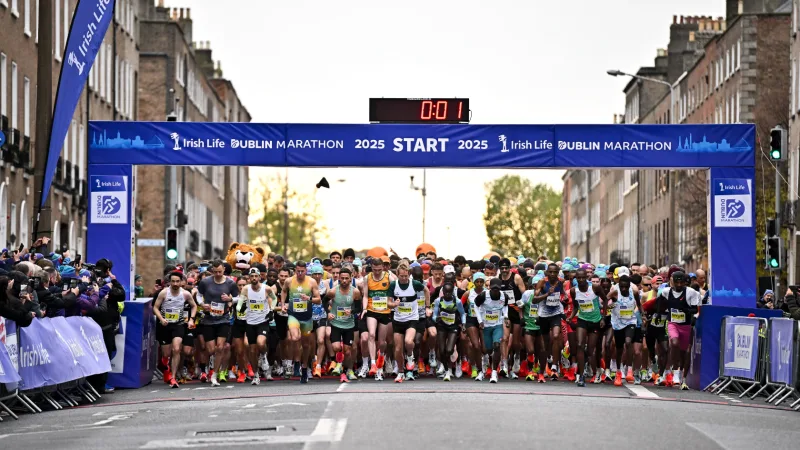
Niamh has thought about that line on nearly every run since. In October she'll take it literally, running her first marathon in Dublin for Heart Children Ireland, the organisation that held her family together when the bottom fell out of it.
The Music Therapist on the Boat
Niamh is a music therapist. She came to it the long way round, through music school as a child and then a series of caring roles, until she realised the two things could be one thing.
"It kind of suited my caring role and it suited my passion for music, so I ended up melting those two together."
Music therapy works much the same way as any other therapy, she says, except that the main tool is music rather than talking. A lot of the people she works with are non verbal, which is precisely the point.
"You don't need words. You can communicate through music, you can communicate through a song."
Her explanation of why it works is the best short description of the science you'll hear. Music engages areas throughout the brain, so when the direct route is damaged, music can take the back roads.
"Imagine the main road is damaged. Music is so innate and built within us that it can take the back roads to wherever it needs to go."
She's watched people introduced to her as mostly non verbal start talking a few weeks into sessions. Songs are automatic memory, she explains, so they arrive without effort. You might not remember what you were meant to do five minutes ago, but you'll have every word of something you loved at 16.
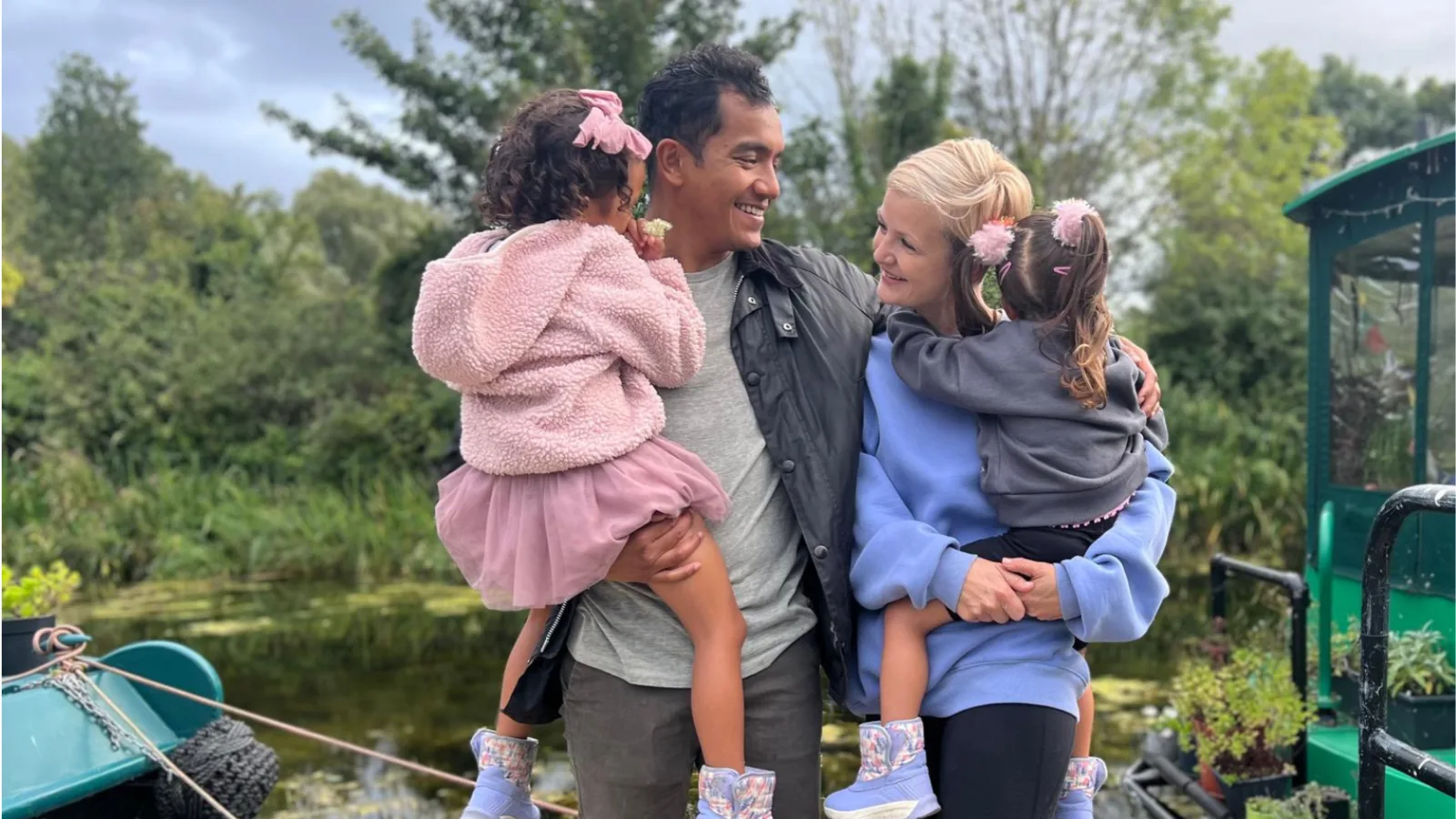
Home is a boat, shared with her husband Sammy and their two girls, Aya who is five and Freya who is four. The whole boat is covered in plants, which is not incidental to this story.
Freya
Something showed up on the 20 week scan at the Coombe, and the sonographer kept going back to the screen.
"They said they'd probably give me a call to come back in the next week. Then they called the next day and said come in tomorrow. I thought, that doesn't sound good."
What they could see then was transposition of the great arteries, which Niamh describes as the wires being crossed. It was explained to her, along with the surgery it would need and the survival rates, which were good. She held onto that while grieving something else entirely.
"You're grieving the loss of a healthy child and all the expectations you were hoping would happen."
At a scan about three weeks before the birth they could see more, and there was more to see. Narrowing in the aorta. Other complications they couldn't fully make out. The number they gave her at that stage was a 30% mortality risk.
"So I was like, okay, 70%. It's going to be fine." She did daily affirmations. She minded a 20 month old at the same time.
The birth was a planned induction with a full team on standby. She'd been told to expect a baby who came out blue and unresponsive.
"Freya never stopped kicking my whole pregnancy. She just never stopped moving. I feel like she reassured me the whole way."
Freya came out at five pounds, not blue, and screaming her head off.
She fed at first, which she wasn't supposed to do either, until feeding started costing her more energy than it gave her. Nothing they tried got weight onto her, and weight was what would bring the surgical risk down. They tried balloon procedures. Nothing shifted.
The reason why only became clear when they opened her up. In a heart the size of a strawberry, they found two ventricular septal defects that had effectively become one hole roughly the size of a ten cent coin.
"No wonder none of the procedures were working. She was working harder than any of us could have ever imagined."
Niamh has a way of describing what those first weeks looked like that stops you.
"I remember watching her belly. It was moving so quickly. It was like she was running a marathon from the moment she was born. She was working hard just to lie there and exist."
Singing in ICU
After surgery Freya went to intensive care, and there was very little her mother could physically do for her.
"You can't hold them. All I could do was sing, really, or touch her foot or her hand."
So that's what she did, for weeks, and the monitors picked it up.
"Her heart rate would go down when I sang to her. Heart rate is the key marker for pain. Her oxygen saturation would go up and her heart rate would come down."
A music therapist, in a room where music was the only route left. She doesn't make anything of that. It's worth making something of.
The wider cost of it doesn't get talked about enough either, and Niamh is clear eyed about it.
"It's traumatic, and not just for the child. For me and my husband, for my daughter, who I couldn't be with for nearly three months, for my family who had to take care of her. It's a whole big impact. Families really need support during that time."
The Lunch Box, and the Fifteen Months
Freya recovered faster than anyone expected, which by now was becoming a pattern. Niamh taught her to feed after months of tube feeding, and they were sent home.
"I used to bathe her in a lunch box. She was that tiny. I'd just sit her bum in a lunch box and wash her."
What followed was harder than the coming home suggests. Freya's gut was wrecked from the medication, she was unsettled in a way Aya never had been, and her whole introduction to the world had been being poked and prodded.
"Her existence, she just stayed in fight or flight for a long time. She was a fighter, but it was to her own detriment. I'd be trying to put her down for a nap and she'd scream for an hour and a half. She approached everything as if it was a fight."
Niamh got roughly fifteen months without sleep out of it, while staying in fight or flight herself, braced for every sniffle.
"We just felt like everything was happening to us at once. When I look back, I don't know how we survived it."
She and Sammy developed a joke about it that tells you plenty. The saying is that a problem shared is a problem halved. They flipped it.
"We said a problem halved is a problem shared. Because it's still shit. It's just shared now."
She kept going to the playgroups. She kept doing all the things with the kids. Nobody looking at her would have known.
What Heart Children Ireland Actually Did
Two things, and both of them are the answer to anyone who wonders where charity money physically goes.
The first was psychological support, free, once Niamh got past the surviving part and recognised she wasn't okay.
"They were so quick. I got a referral and it was in my own time. The person I was referred to had specific experience with parents of children with heart conditions. You can't really get any better than that."
The second was money, at the moment it was the only thing that could help. Niamh and Sammy are both self employed, so when a child is in Crumlin for months, income simply stops.
She lists what nobody thinks about until they're living it. Food in the hospital every day. Coffee. Parking, every single day, twice over when the two of you swap shifts. Accommodation if you want any sleep at all, because you won't get it beside the machines. The bills still landing at home. The pets.
"You can't work while your child is in hospital that whole time. And you don't know which way things are going to go day to day, so you have to be there."
Heart Children Ireland provided hospital respite support, and Niamh remembers exactly what she did with it.
"The day I took Freya home I remember carrying her in her little carrier and I went straight into the credit union. It was such a weight off me. I was able to pay off all the bills that were waiting on me."
Where Freya Is Now
Good, is the answer, with the honest caveats of a parent who has learned not to assume anything is finished.
The surgery went well and her prognosis is strong. She can live a healthy, normal life. She's had stents fitted and will need more as she grows, because scar tissue from all the correction doesn't grow with her, and that's likely to continue until she's 18. There's a leaky valve that may or may not need dealing with somewhere down the line.
The last checkup was nine months ago, which is their longest gap yet, and the next one is in a fortnight.
"Our journey feels very manageable. I've been in touch with other parents who are still very much in and out of hospital all the time. We're very, very lucky."
Freya herself is, in her mother's word, a lunatic. Full of energy, athletic, and impossible to pick out in a room of four year olds. Niamh watches for small things. She naps more than other children her age. She feels the cold. That could be the heart or simply her, nobody can say, and Niamh has learned not to rush to label it.
"We're raising her to be strong and to not not do things because of it."
She also passes on the line a doctor gave her, which she clearly enjoys.
"There are people who've run marathons who have leaky valves too."
Sammy and Aya
Sammy took most of the night shifts in the hospital, because the beeping and the machines through the small hours gave Niamh more anxiety than she could carry. She'd do the days, he'd take over at night.
At some point in the middle of that, he told her he'd signed up for a jujitsu competition.
"I don't think I've ever been so annoyed about anything. I thought to myself, are you for real? We're literally in the middle of hell right now."
He did the nights anyway, and went into the competition on about two hours of sleep with a mantra of doing it for Freya, and won the thing. Then he came back to the hospital and hung the gold medal on the top of Freya's cot, where the staff kept asking what the story was.
Niamh sees it differently now than she did at the time.
"Pushing yourself to do something challenging can remind yourself of how strong you are. That was his thing then. I feel like the running is my thing now."
Then there's Aya, who was 20 months old and suddenly without her mother.
"I just kept telling her, don't worry, after all this we'll all be together again."
When they finally got the four of them into the car and back to the boat, Aya said it before anyone else got a word out.
"Mammy, we're all together again."
Niamh's voice goes when she tells that bit. "She was waiting for that moment."
Coming Back to Running
Niamh was a sprinter as a child, running with Lucan Harriers and bringing home medals. It fell away in her teens, partly because she'd got used to winning and stopped, and partly because music took over everything.
In her mid twenties, living in London, she and Sammy got seriously fit before travelling around Asia, on the theory that they should be able to look after themselves. Jujitsu, Muay Thai, kickboxing, HIIT, yoga, the gym five days a week. Running was only ever an occasional sightseeing thing with no idea of pace or distance.
After Freya, all of it went.
"I really wasn't taking care of myself enough. I kept getting back pain and I wasn't sleeping. I'm a very hyper person, I know I need to exert my energy."
So last Christmas she did the only thing she trusted to work, which was to make it impossible to back out.
"I said I'm going to sign myself up for a half marathon. Then I can't get out of it. I'll have to run."
She picked the most local race she could find, out along the Grand Canal in May, and started training in the second week of January. She got through it. She also got shin splints and a collection of niggles, because she was doing no strength work and not enough stretching, and researching it all blindly as she went.
Then she emailed Heart Children Ireland about a place for Dublin, half expecting to be told to try next year, and was told there was one going.
"So I was like, right, I guess I'm doing it this year."
The Block, Honestly
Niamh is refreshingly unwilling to pretend the training is going perfectly.
"I'm following the running app and I'm not managing to do every run. Life gets in the way, or I have a niggle and I think, okay, I better rest instead of getting injured."
She's on three runs a week and suspects that becomes two as the long runs grow. This time she's doing strength, mobility and stretching around it, which is the main thing she'd change about last time.
The evidence that it's working came last weekend, when she ran a half marathon off her own bat.
"Compared to the first time I ran a half a couple of months ago, when I couldn't walk the next day and I couldn't eat that day, I was in absolute bits. This time I was actually grand. I think I understand fuelling more now, and electrolytes."
She's still working out food, which she'll tell you plainly. She never feels hungry after a run and has to make herself eat. She gets stitches on long runs no matter how easy she takes them. It's a work in progress and she's fine with saying so.
"Some runs feel great and I'm shocked how great they feel. And then some, I'm like, this sucks. That's just what it is."
She's equally unimpressed by the mythology around the runner's high.
"My friend asked if I'm chasing that runner's high. Honestly, it does not happen every run. It happens every few runs and it's a nice surprise."
Running Towards It
There's a joke online that people who take up marathons and ultras are running away from something. Niamh has thought about this, and she's decided it's the wrong way round for her.
"I feel like I'm running to it. I'm not trying to run away, I'm trying to meet it."
That was deliberate. She could have gone back to the gym, where there's always another piece of equipment and never a moment to think.
"When you're running there's no choice apart from to run. I wanted to be in that position. I wanted to reflect."
The mantra that gets her through the bad runs is three words long.
"Whenever I don't feel like going, or I'm mid run and I think you could just stop, I say it's a privilege. It's a privilege. I couldn't have done this two or three years ago."
On her last run she nearly stopped, and instead the hospital came flooding back, and with it the thought of the people who are in that room right now, today, while she's out on the road.
She describes the effect of the last four years in a way that any parent who's been through something similar will recognise.
"There's Niamh before this and there's Niamh after this. I'm a different person, but I'm still me. The running is the way of me recalibrating the two Niamhs."
Two Thousand, One Hundred and Forty Euro
That's where the fundraising stood when we spoke. The goal is €4,000.
Niamh has already done the sums on what that buys, because she knows exactly what it buys.
"What I've raised so far might help two families for a month. But I want to be able to help more families."
She's realistic about the ceiling on what one person can do, and unapologetic about asking anyway. A fiver is a coffee for somebody who's been at a bedside since six in the morning and hasn't costed the week yet.
What She'd Tell Another Parent
Ask her for advice and she resists the premise, which is very her.
"I feel like I just did it. I don't know if I did it in the best way. I just survived."
Then she gives the advice anyway, and it's good.
Ask for help, and talk to people. She wore her heart on her sleeve throughout, sometimes to the visible shock of other parents at baby groups, and she thinks it helped her. If talking to everybody isn't your way, find one person.
It won't be this way forever. Things ebb and flow.
Start with walking, not running, because at the start everything is a stressor. Find whatever feeds you, whatever that is. For her it was plants, which is why the boat looks the way it does now.
And don't let anyone rush you into something enormous before you're ready for it.
"Wait until it feels right for you. It's a big, big commitment and it takes up a lot of time."
Four years on, it finally felt right.
"Now is the right time for me."
The Last Sunday in October
She hasn't looked at the route yet. When she does, she'll find it takes her along the canal and up past Crumlin, which is a road she can't drive down without things coming up.
She already knows the finish line is going to undo her.
"I already feel that. There's just so much emotion in it."
Somewhere behind her on the course will be a heart the size of a strawberry that had to work like it was running a marathon just to lie still, and a four year old who is now a lunatic with a lot of energy who feels the cold and naps a bit more than her friends and is going to her first swimming lesson.
It's a marathon, not a sprint. Somebody told her that when she needed to hear it. She's been carrying it ever since.
You can support Niamh's fundraising for Heart Children Ireland ahead of the Dublin Marathon here.