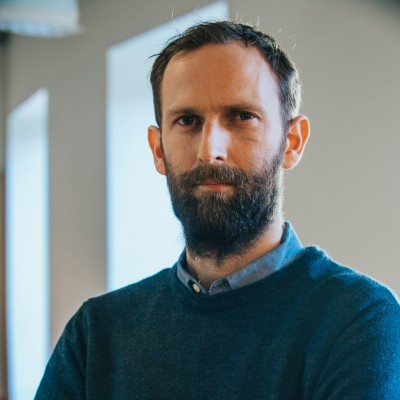
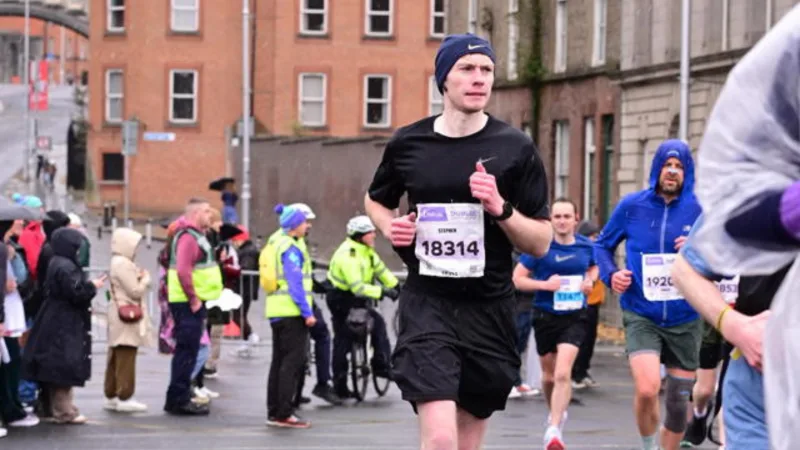
When Aidan Kelly told his wife Lucy he had entered the Dublin Marathon, she laughed at him.
In fairness to Lucy, she thought he was joking and she had grounds. She is a physio, so she knew exactly what she was looking at. A man of 46 with four knee operations behind him, the first in his early twenties and the last around 2012, who had been told by a physio years ago to stop running altogether, and who had never run much further than 10k in his life.
Then he told her who it was for.
"She kind of still laughed. And then she goes, you're mad. But go for it. She gave me the green light."
Lucy is a Kerry woman who has run Dublin twice herself, so the laugh came from an informed place. Aidan is a native of Oughterard in west Galway, and on the last Sunday in October he will run the first marathon of his life for Cancer Care West.
A Poster in a Shop Window
The entry happened more or less by accident.
Aidan had never gone into the ballot and had no plan to run a marathon. What he had was a local club, Corrib AC, and a lot of people around him who had got places, and a town where the marathon was suddenly the only topic of conversation.
"I never had that bug. But all of a sudden I was getting this itch, and then I hadn't got an entry."
Around March or April he was passing the Cancer Care West shop in the town on the school run and saw a poster in the window looking for volunteers. He went in.
They were looking for a runner.
He gave his name, got a phone call and an email back, and ended up with a place. Which left him building towards 26.2 miles from a base of almost nothing, in considerably less time than any coach would recommend.
Why This Charity
The charity part of the decision needed no thought at all, and Aidan's reason for it is that he can see it from both sides.
Lucy's father died in 2020 after a battle with cancer. Aidan watched what it did to him and what it did to the family around him, and he also saw the support they got.
There is a detail about his father-in-law that has stayed with him ever since, and it is the reason the Dublin Marathon in particular carries a bit of weight in that house.
"He also ran the Dublin Marathon back in the day. He was self-employed and worked hard, played music, was involved in a number of local clubs and had a big family as well. It always struck me. How did he manage to do it back then?"
Aidan's own mother came through cancer a few years ago.
And then there is everybody else, which is where his list starts to run away from him a bit.
"Friends, friends' parents. Children of friends."
One of them, a little girl, is only now finishing her last round of treatment.
"Everyone has a story. But yeah, there's a lot."
What he keeps returning to is the practical end of what Cancer Care West does, because that is the part he can picture clearly.
"It really comes into supporting the families. With accommodation, even transport and logistics. Community stuff."
That is the thing he wants people to understand when they read this. Not the medicine, but the business of getting a family from the west of Ireland to treatment and giving them somewhere to stay when they get there.
A Family of Nine on the Lake Shore
Aidan grew up on the shore of Lough Corrib in a family of nine, six lads and one girl, and he was the third of the boys.
"I spent probably my early childhood chasing the two older brothers around. And if I wasn't chasing them, I was getting chased by them."
There were gaps of about two years between them the whole way down, so by the time he had stopped chasing, the younger ones had started chasing him.
"We were always active. We didn't have TVs, we didn't have computer games. We were always outside."
Living where they did, that meant the water and the roads.
"On the lake, so either on the boats, fishing, or we cycled everywhere."
The one thing that was not available was the sport he would turn out to be built for.
"There was no running club back then, even though we were all probably genetically geared for running."
What was local was boxing, so the whole lot of them boxed, at the local club, every one of the brothers.
"We kind of did what was local. That's where the training came from."
There was football too, which was the big game in the area at the time, and there were the community games, which took him as far as qualifying for Mosney once in cross-country.
He reckons the competitive streak came out of the house rather than out of any club.
"That's probably from growing up with the group of lads, the brothers. Very competitive, whatever I did."
And that was the end of his running career for the guts of twenty years.
There was one other thing, though, that he suspects did more for him than any of it.
His mother is from Tullycross, out in Renvyle, and as children the brothers used to cycle back there from Oughterard to see their grandmother. Aidan was about twelve. His brothers Peter and James were fourteen and sixteen. The three of them would head off for the day with sandwiches and not be seen again until evening.
"It was forty k each way. Maybe that's where I got some of my endurance from."
This being Connemara before mobile phones, the news always got there before they did.
"People used to see us going back, and they'd tell our grandmother ahead that the lads were on their way. Someone would stop and tell her."
He still goes back out those roads whenever he gets on the bike.
College came and went with no sport in it whatsoever, by his own cheerful admission, and then four years travelling through Australia, London and America in his early twenties.
Four Operations
The knees started with football damage, and then with a wait.
"It took me years to get an operation, as I was on the public list."
By the time the first one was sorted, the other knee had started giving out, so that got done too. Over the years it came to four operations in total.
He did try to come back. Living in Dublin for a while, he got into mountain running and liked it, and then the knee went again.
He went to a physio in Dublin who gave it to him straight.
"He just said, it's the running. It's the impact from the running."
So Aidan stopped. Six years without a run.
What the Bike Gave Him Back
What saved him was cycling, and the way he tells it, the competitive streak was never going to allow it to stay gentle.
"I started off leisurely cycling, and then of course after a few months I wanted to go racing."
He did the charity spins first, then decided he wanted to race properly, and he was living in Dublin at the time with more room in his week for it.
"No matter what I did, I always wanted to race. My brother, Donal, raced for Galway Bay CC at the time and had previously done the Rás Tailteann so he led me down the racing road."
He raced competitively for about four years, working up through the ranks with a team in Dublin.
Then in 2018 and 2019 he and Lucy moved back to Galway, started looking at sites, and began building, and the long uninterrupted blocks of time that bike racing demands simply disappeared.
Duathlons fitted into smaller windows, so he moved to duathlons, and that is how the running crept back in through the side door.
He was careful about it, mind.
"I'd run the races, but I wouldn't run training-wise, because I was wary of the knees and the impact."
And the thing he noticed, which is worth passing on to anyone coming to running from another sport, is that the bike had done more for him than he expected.
"I found that the mileage on the bike transferred over really well for me to run. I could train on the bike and do my efforts on the bike, and it just used to transfer over to the running."
"When I did go back, it was like I never stopped."
Thirty Minutes, Wherever They Are
There are no long windows in Aidan's life now either.
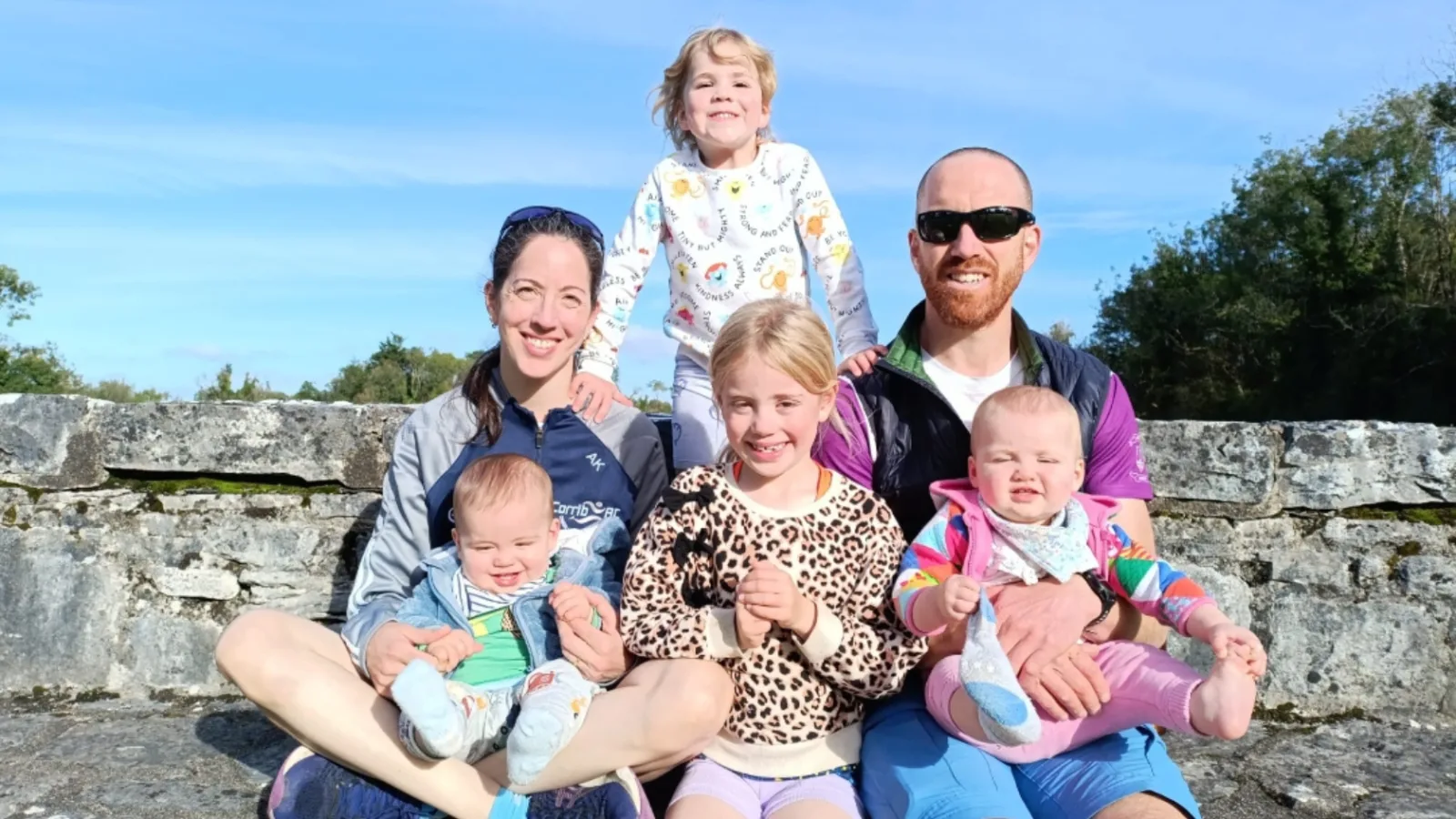
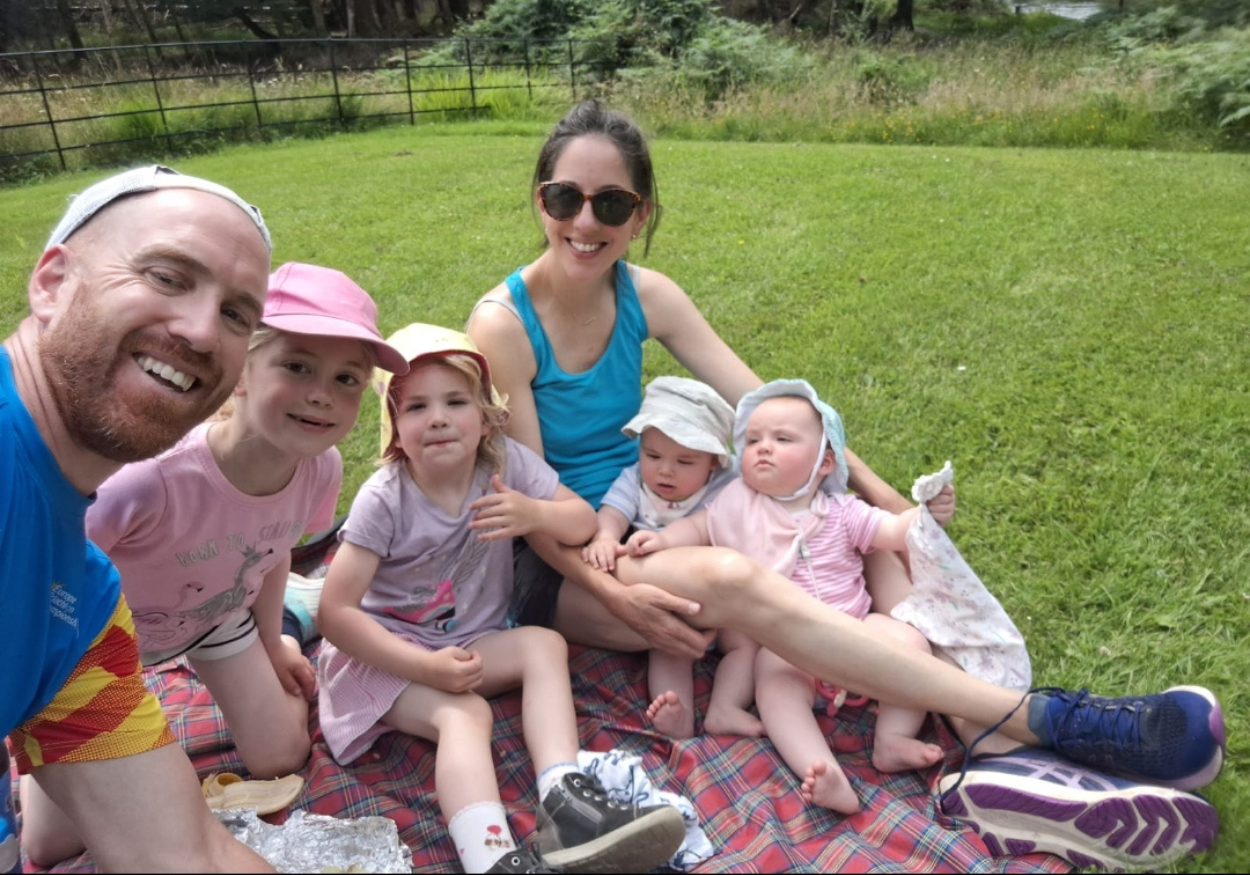
There are four children under seven, including twins who are ten months old. There is a self-build that the family moved into four or five years ago and which still has landscaping and odd jobs hanging over it. And there is shift work.
So the training goes wherever it fits, and he has stopped negotiating with himself about it.
"If I've got thirty minutes in the morning before school, it doesn't matter if it's raining. It doesn't matter how bad I feel. I just do it."
The gear lives in the back of the van. There is a running buggy and a bike trailer for the babies. If one of the children has a dance class, he runs while he waits for them.
He makes a point about busy people and training that is the opposite of what you would expect, and it rings true.
"When you're so busy with four kids, you don't take it for granted. When you have your spare time, you use it well."
He is not romantic about the actual going out the door.
"Sometimes it's hard when you're tired. But once I'm out, I'm actually happy."
There is also the small matter of being a genuine beginner at 46, which his watch reminds him about constantly.
"Every run I'm going on now, I'm getting the Garmin saying, congratulations, you have a new record. It's your longest run."
The Honest State of Play
Aidan is refreshingly straight about where this build has actually landed him, and anybody who has ever had a plan fall apart on them will take comfort from it.
"There have been times during this where I've been trying to follow programmes, and there's no way I can fit in the mileage they're giving in these programmes. There have been times where I really thought it wasn't going to happen."
The body has fought him most of the way. Knees, hamstrings, calves and patellar tendons have all flared up at various points. At one stage this year he could not get through six or seven kilometres without stopping. Any time he goes near marathon pace, the hamstring reacts.
And the distance remains, as of a fortnight out, an open question.
"The distance of my longest run, I'm still 10 or 13k short, which is in the unknown. I just don't know."
He has a target of three hours, which he admits he picked off the top of his head and now suspects could be well beyond him.
He is going to go out with the three-hour pacer anyway.
"If it doesn't happen, I just get in. I'll probably end up blowing up and just suffer the rest of it. But I still get in."
He is also done adding mileage. The plan from here is to taper, recover and arrive in one piece, and let the day do the rest.
"The crowd will carry it."
The Privilege of Being Able to Suffer
The family will not be travelling to Dublin. Getting four small children out of west Galway and up to the city for a Sunday morning is "chaos", so a couple of people from Corrib AC are going up and they will travel together.
"I won't have them. But I'll have a lot of them in my head."
Asked what crossing the line is actually going to mean, Aidan took a while over it, and then got there by way of the people he is running for.
"If I'm thinking of people battling cancer, or families of people battling it, the challenge they go through is huge. I've seen it. So for me, all I have to do is suffer for a few hours."
And then the line that is the best thing in the interview.
"I'll be thinking of the people who are not able to run, whether they're sick or whatever. The fact is, it's a bit of a privilege, being able to be out there and being able to suffer."
The Posters, and His Mother
The fundraising target is €1,500, and Aidan had not hit it when we spoke, for a reason he shares with most of the country.
He hates asking.
"It's kind of new for me to be the one out in front."
The posters have gone up around Oughterard and the phone has started ringing because of them, and the person who has been putting most of them in windows is his mother Mary.
Now in her eighties, Mary is still cycling into town every day.
"Mam is great. She never drove a car in her life, but that never stopped her getting out. We live 2 miles from town, but she travels that road every day. She still cycles in the wind and rain that the weather here throws at you. Mam came through her own battle with cancer a few years ago, and even that didn't stop her. I have a lot to thank her for… and I no doubt will be calling on those resilient genes Sunday week."
He has a plan for a proper push in the last fortnight, which mostly involves getting other people to do the sharing for him.
What He'd Tell a Beginner
Aidan's advice comes straight out of his own mistakes, which makes it more useful than most.
Give yourself time. He reckons about twenty weeks for a first marathon build, which is a good deal more than he gave himself.
Do not load it up too early.
Get a massage or see a physio before things go wrong, rather than scrambling for one in the middle of a block when something has already gone.
And then the main thing, which is about expectations rather than training.
"It's normal to be in pain after runs. Some people go out and run a few k, and they're very sore after, and they say they're not built for running."
"It's normal to have niggles. It's normal to be sore."
He has watched his own body come round over the last few months, from a man who could not get through seven kilometres to one who is about to attempt 42.
"The body does come around. Bodies are great for adapting."
"I didn't believe I could get to half the distance. Then I did it. And now I am going to double it."
He offered one last thing without being asked, and it is as good an argument for entering a marathon as anything else in this series.
"I'm 46 now doing my first. After my situations, if I can do it, there's no reason why other people can't. You do it at your own pace. You will get through it."
You can support Aidan's fundraising for Cancer Care West ahead of the Dublin Marathon here.