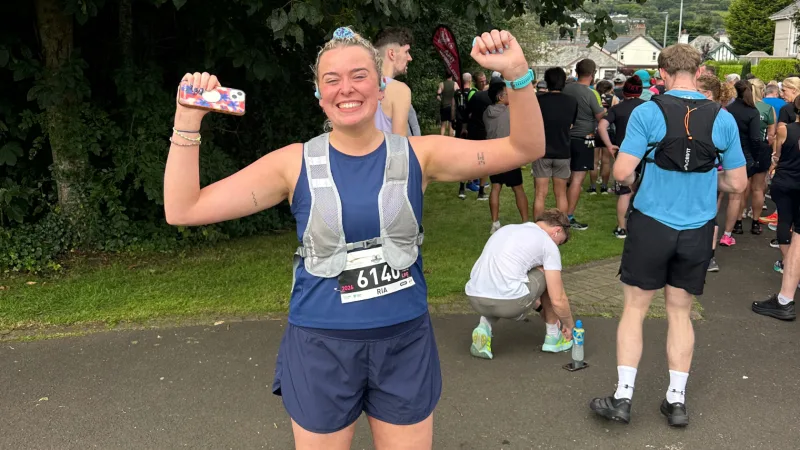
Elaine Murphy had never run in her life.
She had not played sport as a child and had no interest in starting in her thirties. Then the Prader-Willi Syndrome Association began running an annual 5K on Father's Day, and her son Tom, who has Prader-Willi syndrome, was the reason she looked at it twice.
"I decided, do you know what, I'm going to give this a go. If Tom can go through all the struggles he does every day, then surely I can run a 5K."
"So that's where my running started. Only for Tom, I wouldn't be running."
She says the same thing again later, in slightly different words, when asked whether she will be tempted to stop on the day.
"If he can get through what he has to, then surely I can do this."
That was 2016. On the last Sunday in October she runs her first marathon, for the same association, and the whole thing traces back to the same boy.
Killarney
Elaine is from Dungarvan in County Waterford. Her husband is also called Tom, and he is from Lismore, which he would want made clear. They live in Killarney.
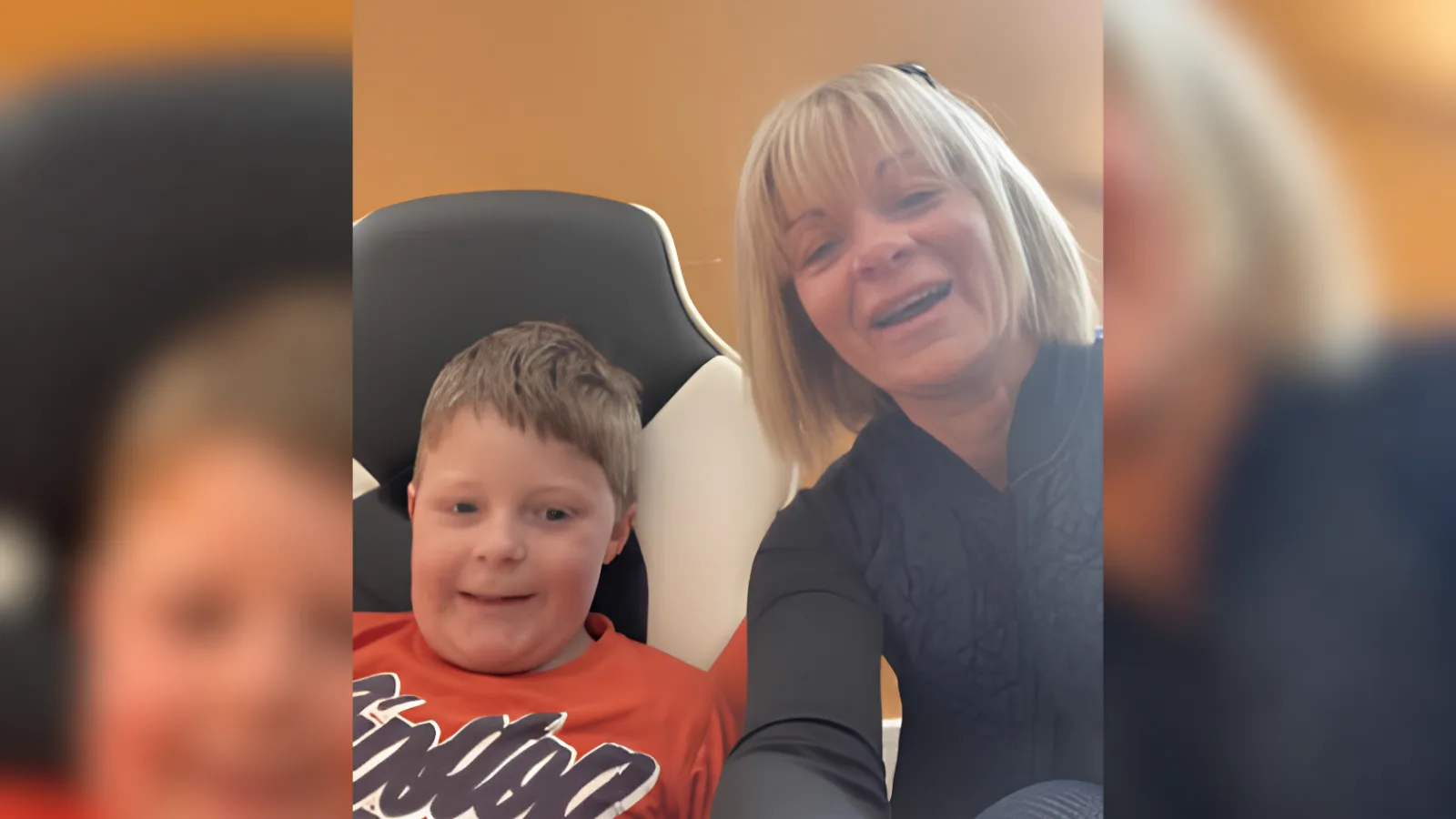
They have four children. Róisín is 17 and in fifth year. Robbie is 15 and in third year. Rory is 13 and in first year. Tom is 11 and in fifth class.
Tom was diagnosed with Prader-Willi syndrome in May 2015, when he was a few months old.
Elaine sat on the association's committee herself for a while, and came off it again.
"It was too much too soon."
She remains, as she puts it, very much part of it.
One Phone Call
What Elaine remembers about the diagnosis is how little there was to read, and how bad everything was made to look.
Then somebody from the association rang her.
"We got in contact with Emma, who contacted us. Her son Henry was three at the time."
"And I suppose just a phone call to say, you know, it's actually going to be okay. It's not as daunting as what you read on the internet, and it's going to be okay."
That is what a small charity does, reduced to its smallest possible unit. One mother who is three years further down the road, ringing another one.
The first family weekend came that October, in Limerick, and Elaine is honest that it was quite hard at the time. The support since has been constant, through workshops, family events, and a committee for teenagers and adults that the family will need in time.
There is a respite centre too, which Elaine's family have not used yet, and which she hears nothing but good about.
What she has gathered from other parents is that it comes down to one thing.
"They know that the kitchen is locked there. And they know that the people that are working there are quite aware of the food issues."
"What I gathered, they just feel safe there."
Her verdict on the organisation as a whole is the reason this article exists.
"The work they're doing is just something else, for such a small charity and for such an unknown syndrome."
Food Is Everywhere
Elaine is careful to say first that the syndrome does not present the same way twice.
"There is a broad spectrum. Everybody's different. No two people are the same."
The feature that defines it for most families is hyperphagia, which is a constant, insatiable hunger that does not switch off.
For Elaine's family it arrived in the hardest possible order. Tom had failure to thrive as a baby, so the early fight was to get food into him. Then it reversed.
"That was the hardest thing for us, to know that everything had to be put away, to be locked away, and that our take on food wasn't going to be the same anymore."
They knew it was coming, which did not make it easier.
"It was very hard to think that one of the days he's just going to be hungry all the time. And that stage did come."
With three older children already used to eating like any other family, the whole house had to change.
"There's no more lingering over dinners. You sat down, you had your dinner, and everything was cleared away after it and put away."
The part that proved hardest was not inside the house.
"If you go to somebody's house, there was a plate of biscuits put in front of you. And even though you said, just one plain biscuit would be fine, a plate of biscuits might have been put in front of you."
"It's just very hard on occasions. Christmas, communions, confirmations. And we learned to have to avoid those."
"It was just hard to try and explain that to people. I don't think they got it a lot of the time."
Elaine does not offer a tidy resolution on any of it.
"It's not easy, and I don't think it ever gets easy. And food is everywhere. It's just everywhere."
The Relief on His Face
The thing Elaine says that reframes the locked press entirely, and which anybody who has ever raised an eyebrow at it should read, is about what it does for Tom.
"If I lock that press and say to him, look, Tom, press is locked there, and I'm going out cutting the grass."
"You can already see the relief in his face, and the relief in him knowing that the temptation isn't there."
"You can see the relief that he can go away off and play his game then after that."
The lock is not a restriction placed on him. It is the thing that lets him stop thinking about it.
Tom
Tom understands his own condition well, and his mother is clear-eyed about where he is at.
"He understands that he can't eat the same way as everybody else. And in school, he's aware that he is different to his peers."
"But he's fantastic. He's managing things well."
What the association gave him, beyond anything it gave his parents, is other people.
"He knows that there are other people with Prader-Willi syndrome, and the association has been fantastic to see that there are other people the same as himself."
Elaine is also honest that the management of it falls short sometimes, and that she carries that.
"It's very hard to try and get it right all the time. It's something that I would struggle with."
His brothers and sister are part of the system too.
"His siblings are fantastic around him. They shout out, Tom's after taking this, or he's going into the press, or he's got too much there on his plate."
He does not play sport, because low muscle tone comes with the syndrome, but in a house where everybody else plays, he is nobody's spectator.
"He can kick a ball to his own level, but his brothers play sports, so he's involved in the background there. He'd be a great mascot for the soccer, and he helps out in the background with football."
"Oh Sure, I Have That"
Ask Elaine what the hardest part of all of this is and it is not the locks, the planning or the occasions they skip.
It is explaining it.
"I've kind of had to tell people about Prader-Willi, talking about the hunger part of it. And people have said, oh sure, I have that. I can't stop eating."
"So it's quite a hurtful thing. The understanding isn't there."
And then the part she says plainly, without looking for anything in return for saying it.
"It's always going to be hard, and the guilt is always going to be there. For him, for us."
That one sentence is the reason awareness matters more to her than the money, and it is the single most useful thing a reader can take out of this piece. A child whose brain does not register being full is not a child with a big appetite, and saying so to his mother lands badly.
Running Alone in the National Park
Elaine trains on her own in Killarney National Park, and she does it in silence.
Recently that has had a complication, because the deer are in the rut.
"On my long run, the rut is starting below in the National Park. So I was looking around for all these stags that were roaring, in case they'd run in my way or run in front of me."
Weekends are gone to her children's sport, so the long run goes in midweek, after the school run.
"Once the weekends come, sports and matches and training and all of that comes, so the weekends are out really for me. So you're trying to get your long run in during the week. Once I have Tom dropped, I'm gone then."
She has found the solo training fine, with one caveat that will be familiar to anybody who has done a long block alone.
"The long runs, you are kind of, you would like a bit of company, and you would like someone shouting come on along the way."
She has had no real injuries, having never played sport young, beyond a niggle in her back.
Fuelling is gels, of which she can manage about three before they get too sweet, topped up with mini flapjacks.
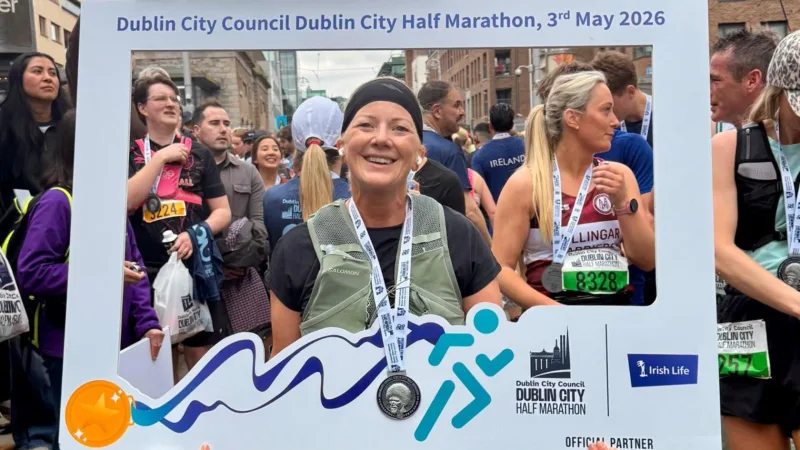
She is targeting somewhere between 4:30 and 4:40 for her first marathon, having run a few halves.
Her line on times is the one every first-timer should have taped to the fridge.
"First and last, you're going to get the same medal."
Instagram, in Minutes
Elaine set a fundraising target of €1,500 and has already passed it.
She had not fundraised in a serious way since 2019, and what surprised her was which platform did the work. A post on Instagram brought in a few hundred euro within minutes, and comfortably outperformed Facebook.
Starting Together
Elaine does not intend to start the marathon on her own.
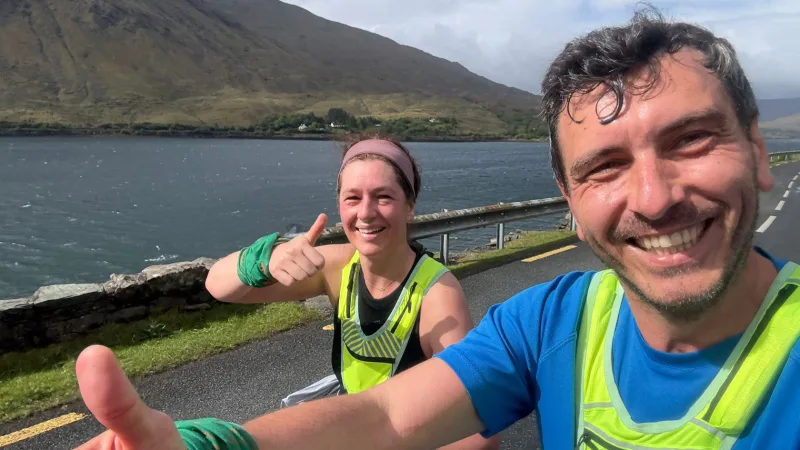
She has become friendly with Anne O'Neill, another runner fundraising for the same association, whose own son has Prader-Willi syndrome, and the plan is for the two of them to go off together.
Whether her own family travel up to Dublin is still undecided. They may head for Dungarvan afterwards instead.
"Running Is for Everyone"
Elaine's advice is aimed at people exactly like the version of herself that existed in 2015, and she is the proof of it.
"Running is for everyone. I wouldn't have run when I was younger."
"When I started off training, it was the parkruns that I did on a Saturday morning, and they're an absolutely fantastic start. Everybody's there. You can walk. You can run."
"So definitely running is for everybody, and parkruns are a fantastic way to start."
Pride
Asked what crossing the line is going to mean, Elaine circles the same word three times before she settles on it.
"Just the achievement to do it, and the fact that I have done it for Prader-Willi syndrome."
"Pride. Pride for the lot. I've done it for Tom and for my family."
"And just to show people that I can do this."
Ten years ago a woman who had never run anywhere was told her baby son had a syndrome she had never heard of, and a stranger rang her up to say it was going to be okay.
In October she runs 42.2 kilometres, in silence, having trained past roaring stags, to tell a few more people what Prader-Willi syndrome actually is.
You can support Elaine's fundraising for the Prader-Willi Syndrome Association of Ireland ahead of the Dublin Marathon here.