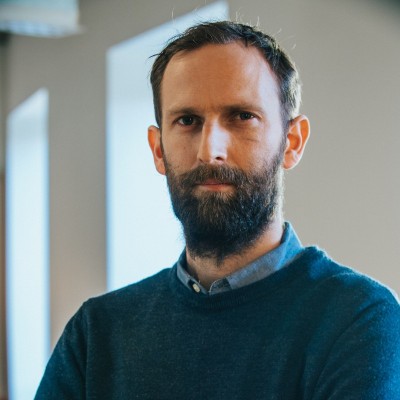
Two years ago, Stephen Leonard had never run 10 kilometres in his life. When his best friend Peter Mulvany asked him to run the Dublin Marathon, the answer was immediate and unambiguous.
"I said absolutely not. There are people who are runners in this world, and I was not one of them. That's just not us."
This October he'll line up in Dublin for his third marathon, chasing 3 hours 15, running for MS Ireland. He briefly considered going for sub three and decided he didn't have the weeks in him. That's the size of the shift.
Workday, Dublin 5, and a Two Year Old Called Eddie
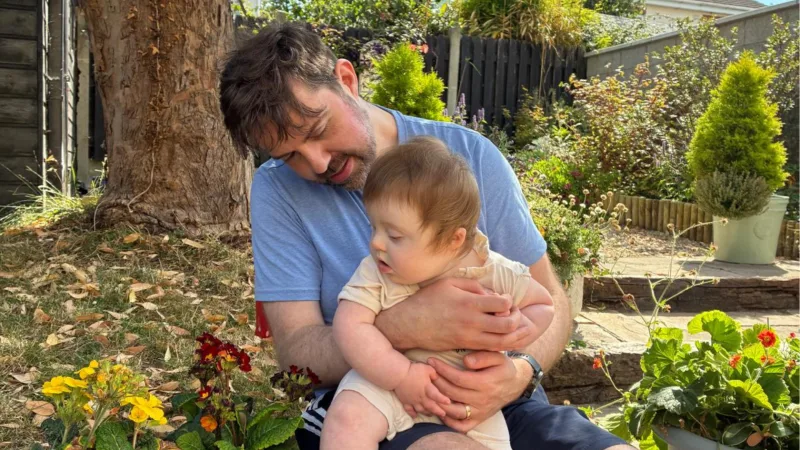
Stephen works for Workday, the US tech company, managing a team of support analysts covering payroll, absence, time tracking and scheduling. He lives on the northside with a seafront on the doorstep, which is a fine place to train as long as the wind is going your way, and he's a single father to a two year old son, Eddie.
He isn't in a club, and he'd like to be, but the maths doesn't work.
"It would be great and I'd love it, but my social calendar and work calendar and looking after my son just don't really align to every Tuesday at seven o'clock for a club run."
So he improvises. The morning we spoke he'd driven into the city the night before to drop his work gear at the office, then run in that morning. Twenty one kilometres before his first meeting.
Why He Said Yes
Peter kept asking, and Stephen kept saying no, until Peter told him why he was doing it.
Peter was fundraising for the PSP Association. His mother had died in 2017 after living with progressive supranuclear palsy.
"Once I heard that, I couldn't let him do it alone. So I started training with him."
To understand how far outside his comfort zone that was, look at the timeline. In August of that year he did the Dublin Triathlon, and the 10k inside it was the first 10k he had ever run, in any context.
"I decided I thought it would make sense to do it as part of a triathlon, for some reason."
Marathon training started straight after. They set a target of four hours and ran 3:55.
Becoming a Runner
Stephen is precise about where the mental shift happened, and it wasn't at the finish line of the first one.
Before Dublin, he'd be knocking out 30 something kilometres in training and still not believe it.
"You'd be doing 30 something kilometres and you'd think, yeah, but it's going to be different on the day. I still have to do another ten. I don't know if I'll be able to do that."
Then he did it, and something recalibrated.
"It kind of changed your mindset on things. Hold on a minute, it's not them and you. You're capable of so much more. You're imposing self limitations on yourself just because you've never done it before."
Milan came next, in April, trained through an Irish winter of wind and rain and dark mornings. He ran 3:30, and for the first time he actually enjoyed the thing while it was happening.
"I was enjoying it up until 32, 33 kilometres. I was joking with the crowd and all. And then after that I was tired."
Somewhere between the two, the reason changed as well.
"At the start I was doing it to appease him. Now it's transformed into more of, okay, let's see what I'm capable of."
Training Alone for the First Time
The big difference this year is that Peter isn't beside him.
Previously Peter, who trains with a group and is by Stephen's description an extremely focused man, would build the plan and Stephen would slot into it. They ran 80 or 90% of their training runs together and every long run together, adapting paces so they could stay side by side.
"This year it's totally different. It's a lot more self-discipline, because I'm training myself essentially."
His target came from testing rather than hoping. He went out on a few hard runs to see what he actually had, found the pace he could hold comfortably over distance, and worked backwards from that. Sub three was in the conversation. 3:15 is what the numbers said.
The baseline underneath it is substantial. Over the summer he did Hardman Ireland in Waterville, a couple of Olympic distance triathlons, and the Dublin half marathon.
Hardman is worth pausing on, because it happened during the July heatwave.
"Thirty degrees. A 1.9 kilometre swim, then about 90 on the bike, then a half marathon in 30 degree heat. It was one of the toughest things ever."
The Swimming Problem
Stephen would like it noted that he cannot really swim.
"The first triathlon I did was the Dublin one last year. They tried to rescue me about every couple of metres. I was doing breaststroke, doggy paddle, everything."
He gets around it by plodding. Front crawl for a while, breaststroke for a while, swallowing a fair volume of the Atlantic in the process.
"I drink a lot of water, unintentionally. And then once you start the cycle, for the first 20k you're just doing these belches."
He can get away with that over 1.9 kilometres. He is aware it will not work over four, which matters, because the plan is a full Ironman in Lanzarote in 2028. Peter has the next two years mapped out already, with Venice next April, Malaga next October and Hardman again in between.
So Stephen is going to go and learn to swim properly, from a coach with an endless pool who takes people out the back of her house. It may be the most sensible decision anyone in this series has made.
Fuelling, and the Breakfast That Isn't
Stephen takes High5 gels, one every 5k, roughly eight to ten across a marathon. He can't remember how the every-5k rule started and he's not particularly bothered.
"I look forward to them. It's like a little treat. Two kilometres and I can take out a gel."
He's honest that he doesn't know how much of it is chemistry and how much is his own head, though he had one data point recently he liked. On a windy long run he took a caffeine gel around the turn for home and his pace lifted about 30 seconds a kilometre. The wind was behind him too, in fairness, and he says so himself.
"Thirty seconds a kilometre is a big jump at the end of a long run."
He also uses salt sticks, which he took up on the recommendation of the shop when he told them he was doing a marathon, and he's had no cramping since. His attitude to that is the correct one.
"Again, I don't know. I didn't get cramps."
The one thing he's changed deliberately is breakfast, because he found there was no good version of it.
"I'd get up half an hour before a long run and have breakfast, and then you're just running with a bit of porridge bouncing up and down in your stomach. So I stopped all that. I have breakfast before I go to bed and just hope it's still there when I go for the run in the morning."
Why MS Ireland
Stephen's father was diagnosed with progressive MS more than ten years ago, and it has done what progressive means.
"He's in a wheelchair now. You have to be so careful about places you go. It can be a really debilitating disease and it just robs people of their life."
He describes the man his father was before it. Canoeing. Scouts. Very active. He loved his motorbike, a Pan-European.
"Everything just kind of goes, because your body is no longer something that you control. It's not something you have any more. It's controlled by the disease."
What MS Ireland do for the family sits mostly with his mother, who is the other person in this story doing something enormous quietly.
"My mam is a hero. She needs a break, so they offer respite. It gives her time to rest herself, even go on a holiday if she wants."
There's counselling and guidance too, which Stephen rates highly and thinks is underappreciated, particularly for men.
"It doesn't only affect the body, it affects the mind as well. For males especially, something like this is very difficult to accept."
He's also clear-eyed about how unpredictable the condition is, and careful not to rank anyone's version of it.
"It's such a strange disease. You see people far worse off, not able to move any part of themselves. And you see other people where you might not even be able to identify that they have it."
The Skydive
The marathon isn't the family's first go at this. A few years back Stephen, his mother, his brother and his uncle all jumped out of a plane for MS Ireland.
The bit he remembers is his mother at altitude with the door open.
"She stayed like a classic Irish mother up in the air. Hi Stephen, you all right? Just cracking jokes."
Not a nerve on her. This is a woman who's afraid of swimming.
What Eddie Sees
Some of what shifted for Stephen shifted when Eddie arrived.
"Once that happens you look at everything in your life and think, what is the person that I want to be? What is the person that I want him to think I am?"
He's careful to say this isn't about anything dramatic. He never had a problem with drink. It's about the default setting of a free weekend.
"I don't want him to grow up and go, ah my dad's grand, he likes a few pints. I want it to be, my dad can do this, my dad did this, he achieved this, and he's always there for me."
Running turned out to be the one thing that enforces it, because it's the one thing you cannot fake your way through the morning after.
"There are loads of things you can do with a hangover. You can look after your child with a hangover, you can go shopping. But you can't run. You can go for a run, but you're never going to run at the pace you know you're capable of. So it made me a lot more disciplined about how I spend my time."
He borrows a frame from David Goggins for the harder social side of it, the idea that the people closest to you are the ones in your foxhole with you, and that not everybody belongs there.
"You don't want people that don't have the same values or the same goals, or that don't respect your goals. Sometimes it's a hard thing to spend less time with people."
He's also very funny about the actual experience of the pints he's skipping.
"You hear the same person tell the same story you've heard 30 times. The same jokes, the same remarks. It's not that it's boring. It's just, I've done all this before."
Dublin Against Milan
Stephen has run two marathons in two countries and the comparison isn't close.
Milan was beautiful. The scenery, the city, all of it. But the crowd was another matter.
"You'd run two kilometres and the crowd has already gone. You're running to no one for the next stretch. You might see a few people towards the last five kilometres."
Dublin is the other thing entirely.
"It's literally nonstop from the time you start till the end. People lined up on the roads, music playing."
The detail that got him first time out was one that gets nearly every first timer.
"I didn't know my name was on my bib. There were loads of people going, go on Stephen, go on Stephen. It took me a while. I was like, oh, my name's on the thing. That's how they know who we are."
This year Eddie will be somewhere out there in the crowd. He's old enough to get it now, having been at the Dublin half marathon with his grandmother.
"That is enough to make anyone cry, seeing him like that. His little happy head."
What He Wants You to Take From It
Ask Stephen for the one thing and he goes straight to the self-imposed ceiling.
"Don't allow the self-imposed limitations to take control. Don't listen to that voice saying I can't do that, or that's too hard. If there's something you even imagine you'd like to do, go and do it."
He's equally quick to say that the flip side is not a motivational poster, and it's the more useful half.
"It is hard. The people running the marathons, they're not running along thinking this is easy. There's no easy way to do these things. You train and you do it. Everybody has to go through it."
Two years ago he was a man who had never run 10k telling his friend that runners were other people. He's now aiming at 3:15 and quietly wondering about Dubai in January.
You can support Stephen's fundraising for MS Ireland ahead of the Dublin Marathon here.