Laura Nicholson will represent Ireland in the women’s mile at the World Athletics Road Running Championships in Copenhagen tomorrow morning, with the race beginning at 9.10am Irish time.
We spoke to Laura just over a month ago, and found her outlook to be pragmatic, and honest. Laura talks about her first few years in athletics, which she now finds slightly outrageous, and she's right to.
She'd started at Bandon AC because a friend from primary school was doing it. While the results didn’t come early, she found that competing and being consistent, that she found her place.
She's 26 now, from Ballinascarthy between Clonakilty and Bandon, and she has a World Championships in Tokyo, an Irish senior 1500m title and a national silver medal behind her. She spent this year training in Melbourne with Sonia O'Sullivan and Nic Bideau.
The Everything Years
Before the running there was a bit of everything. Hockey. Camogie, at which she was spectacularly unsuccessful. Gymnastics. Ballet from the age of three until she was about eleven. A brief and expensive flirtation with horse riding that her parents were relieved to see the back of.
"I was so bad at camogie I couldn't even hit the ball in the air."
She isn't sure any of it made her a better runner in a direct way, but she thinks it mattered anyway, particularly as a girl arriving into her teens.
"A lot of stuff at that age is tied into appearance, and popularity. Sport really helped me to be more confident in myself."
Within athletics she did multi-events, and her two best were the high jump and the 800. Her multi-events coach, Frank, is one of the people she credits with keeping her in the sport at all, by pulling a smaller group out of the mass of kids and actually coaching them.
"That's when I started to feel like I might be good at something. Someone's taking an interest, so maybe I'm pretty good at this."
The other name she wants said is Catherine Duggan, who coached her as a young teenager and who passed away a few years ago.
"She was really good to me."
The Camp That Changed It
Laura was around 17 when she went to a junior endurance camp and got a fairly blunt education.
"I realised how much people were training. I was like, wait, I don't actually run at all. Everyone's training every day and I never did that."
So she asked Steve Macklin, then in charge of junior endurance, to coach her, and Steve took it seriously, which at the time felt like a lot.
"I was kind of going out with my friends every weekend and never running. He got us to be more serious."
A small group formed around it in Cork, which she remembers fondly. Even then she reckons she was only running about 25 miles a week. It was enough.
Recruited by DM
What happened next would sound ridiculous to anyone who left school before social media existed. American college coaches started sliding into her Instagram messages and texting her on Facebook.
"They were saying, hey, do you want to come to America, we'll pay for everything. And I was 18. So I was like, yeah, for sure."
She went on two recruitment trips, to two more or less random schools, with no real idea what she was supposed to be evaluating, and ended up at Temple University in Philadelphia.
Coming from West Cork, the size of the place suited her better than she expected.
"Being from somewhere small, everyone knows everything that everyone's doing all the time. It was pretty nice to be anonymous."
And the thing that stops a move like that being lonely is built into it.
"You have the built-in friendships that come with being on a team. There's eight or ten other girls you're going to meet every single day to go running."
Then it went wrong, at speed.
"It kind of went terribly for me. I got two stress fractures in both of my femurs the first two years, so I didn't run at all."
Add three or four changes of coach on top of that and it's not the American dream anybody sells you. By the end, though, she was running better than she had been, and because she'd lost those early years to injury she had eligibility left to use. She transferred to the University of Toledo as a graduate student, under Andrea McDonough, this time knowing exactly what she was looking for in a coach and a programme.
She studied recreational therapy, which is precisely what it sounds like. You take whatever recreation your client is interested in and you make it therapeutic, often working with older adults, people with additional needs, or young children. She started a master's in counselling afterwards and didn't finish it, because Australia happened instead.
The Realisation
The most useful thing Laura took out of four years of NCAA racing had nothing to do with times.
For the first two years she had no idea how good the best girls actually were. By the back end she did, and the discovery was not what she expected.
"They're not that much better than you. When you run a small bit quicker, you're right in the mix."
She never made NCAA Nationals. Last year she was ranked seventh in the country and still didn't make the top 24 who qualified, which taught her something less comfortable about timing, luck, and being fit in the right week rather than the right month.
But the mental shift stuck, and she extends it outward with a logic that's hard to argue with.
"A lot of the Americans, because they're American and they're good in America, immediately assume they're going to be good on the world stage. So I'm like, wait, if people are competitive with these girls in America, why can we not?"
Melbourne, and Normal People
After the NCAA she went to the World Championships in Tokyo, signed with an agent, and then hit the wall that every good-but-not-quite athlete hits.
"I wasn't good enough to join any programme, basically."
Melbourne Track Club took her anyway. She moved down in January, and she is unambiguous about what that meant.
"Sonia and Nick really treated me like family. I could live in their house."
She trains with Sophie O'Sullivan. She also found herself alongside Georgia Griffith, a world indoor medallist, and Sarah Billings, and this is where the thing she learned in America got its final proof.
"You'd never notice meeting her. She's actually just a normal girl. She's living a normal life. We're doing the same thing."
She puts it in contrast with how the very top of the sport looks from the outside.
"Someone like that seems like an alien, some sort of otherworldly figure, so high up. But I know girls, I'm training with girls, that have beaten her."
The set-up itself is different from America too, and she prefers it.
"In America it's really the team, the team, the team. Here it's a team, but not really. It's a lot of individuals training together. It's less of a babysitting service. People are a lot more independent."
They meet three or four times a week for sessions. She went from two sessions to three, and added mileage.
A Season That Ran in Circles
Laura's 2026 had a strange shape to it, which she describes with the flat honesty she brings to everything.
Her 1500m best is 4:07.17, and this season she kept running more or less exactly that, over and over. Perth in February. Another 4:10 in March. Then a trip to Japan that went poorly, then Germany and Norway, by which point the travel had caught up with her.
"I was going well, and then I was a bit tired and wasn't used to that much travel. So I ran really bad and was feeling really bad."
A training camp in June reset it.
"After that I felt like I was ready to race again. I feel like I'm just ready to get going again now."
Which is a slightly cruel place to arrive, given where it left her in the calendar.
Nationals
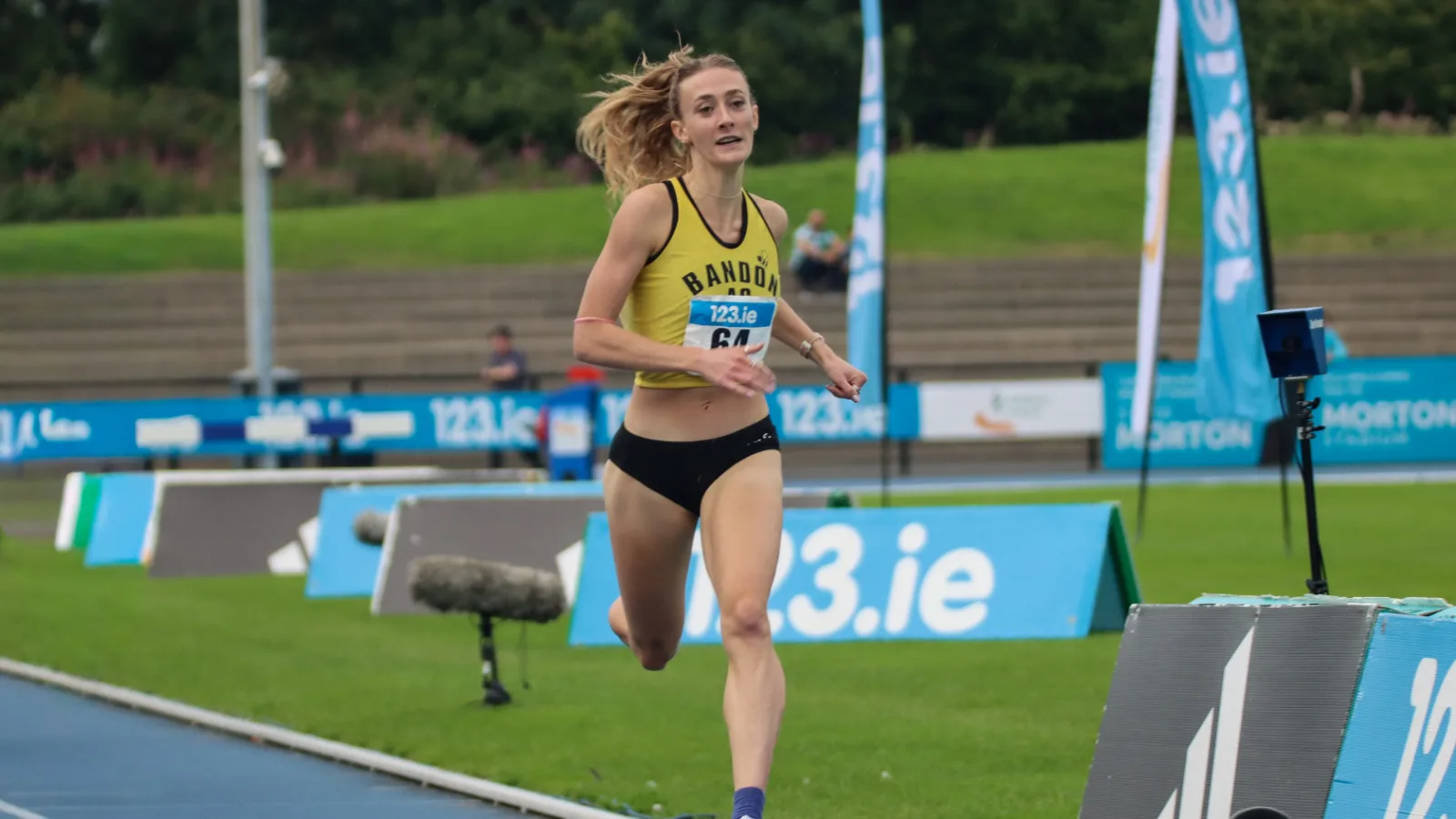
The plan at Morton Stadium was simple enough and it was built around a number. Laura needed 4:07.00 for the European Championships in Birmingham. She was inside the quota. She'd run 4:07.1. She needed to find a fraction.
So she went to the front, with the intention of taking the first two laps quick and having Sophie take over for the third.
What she didn't account for was how the rest of the field would read it.
"As soon as they saw her taking over, they kind of thought maybe I was cooked. So they were all trying to go around me and I was getting squished back a little bit."
Instead of sitting on Sophie for the last lap, she ended up racing Jodie McCann and the others around her. She finished second in 4:08.27, behind Sophie's championship record of 4:05.62, and missed the standard by just over a second.
Her reaction to it is the most revealing thing in the interview.
"I didn't really care about winning or not. I just wanted to run the B standard, which I didn't do. But I wasn't upset afterwards, because I felt like I gave it a good go. It was still a good run and I tried at least."
She also points out something that gets lost in the reporting of a near miss. She hadn't been failing at this all season. She'd barely had a chance to attempt it.
"I hadn't been in a single race that anyone ran 4:06 in. It's not like I tried and failed multiple times. I never even tried, because all the races turned out to be tactical."
Letting the Contract Go
This is the part of the story that anybody outside elite athletics tends not to see, and Laura is refreshingly unembarrassed about it.
She didn't get a professional contract after college. She went all in for a year anyway, on the basis that a half-in year would be worse than either option.
"As soon as I had the opportunity to go all in for a year, I definitely wanted to take it instead of half working, half doing it."
Melbourne made that financially survivable. Accommodation is the expense that breaks most young athletes, and she didn't have one. They also sent her to races where she could win prize money, so she was close to breaking even.
The harder part was in her head.
"I was really set on getting a contract when I first started with them. Even in every race I was thinking, maybe this race will get a contract. Thinking about it in the race."
So she let it go, deliberately.
"I had to remind myself why I was running. I just like racing. I enjoy it. It's a good way to express yourself, the way you race. That was getting clouded. So I kind of let that dream go. If it happens it happens, if it doesn't it's fine."
And if next year means getting a job alongside it, that's fine too.
"I can do both. I just want to run. There's no point training if you're not enjoying the race. That's the whole point."
Bandon AC's Track
One thing Laura specifically asked to have said, and it's a good one.
Bandon AC opened a new track this year, after fundraising for it in the community for the guts of a decade. Raffles, the lot.
"They were actually fundraising for like a decade. Then they finally got it and it's so good. Kudos to Bandon AC."
They let her train on it quietly before the World Championships, and it's now fully open.
"It's so nice to have a track that's 20 minutes from the house instead of an hour."
She's affectionate about the club itself in a way that will be familiar to anyone from a strong parish club.
"I think it is a really big club, but it feels small. Everyone knows everyone."
And she remembers what it did for her as a kid to have senior athletes around the place.
"When you're a kid you don't really know what the older people are doing. They're just out there wearing a jersey. She seems a bit famous to you when you're a kid, so that's always cool to have from your club."
Laura off the Track
The life, she'll tell you, is not glamorous, and she has no interest in pretending otherwise.
"People ask about travelling and they're like, it's so amazing. But we go to the cafe in a different country, basically. Sometimes you see a little something on your run."
She isn't remotely bothered by that.
"I don't feel like I'm missing out. I just like what I'm doing at the time. I want to run well. If I saw all the tourist stuff and then didn't run well, it's probably not a good trip anyway."
The one thing Melbourne did change her into is a coffee snob, which she reports with the resignation of someone who did not see it coming.
"I never knew I could become a coffee snob, but I did, and Melbourne did it to me. We'd go to training and then all go to the cafe afterwards, three times a week."
Her other hobbies are gloriously unmodern, and mostly exist as an alternative to a phone screen. She makes collages out of cut-up magazines. She draws and paints. She reads. She does sudoku, for which her teammates gently pity her.
"Some of the girls are like, oh my god, you live like a granny. But I just like doing sudokus. It's pretty relaxing."
Mostly, though, she talks. On the phone, for hours, ideally to someone with an equally open diary. She misses the version of this she had in college, where twenty girls with nothing on all day would end up in someone's kitchen over tea.
She tells one story that lands harder than she probably intended. Back home in Ireland for a month with most of her friends gone elsewhere, she bumped into a friend's mother.
"I talked to her for five minutes and I was so happy afterwards. And I'm like, wait, this is so tragic."
What She'd Say to Young Athletes and Their Parents
Ask Laura for advice on kids coming into the sport and she doesn't talk about training. She talks about identity.
"The main thing I see is doing too much, too young. Or getting too serious about it too young."
Her real concern is the attention.
"The amount of social media attention that athletes get when they're borderline children. As a teenager you're already trying to find yourself, and then people are putting this label on you and it's all over the internet. So you're seeing it in the real world and in your virtual world. You're an athlete, you're an athlete, you're an athlete. But you're also a person."
She's equally relaxed about the possibility that a kid simply won't want it, which is not always how running people talk.
"Maybe you're not going to be an athlete, and that's also fine. You can be good at something else. Running's a bit of a cult. If someone quits, people say, ah, they're lazy, they didn't want it enough. But you can do whatever you want. Not everyone has to run."
She doesn't exempt her younger self from the appeal of recognition, mind. She kept every mention of herself in the primary school newsletter.
"Anytime they'd say well done to Laura Nicholson for running this race, I stuck them all into my diary as a child."
Which is, when you think about it, a paper version of the thing she's worried about. She's the first to say so.
Where Will You Be in Ten Years
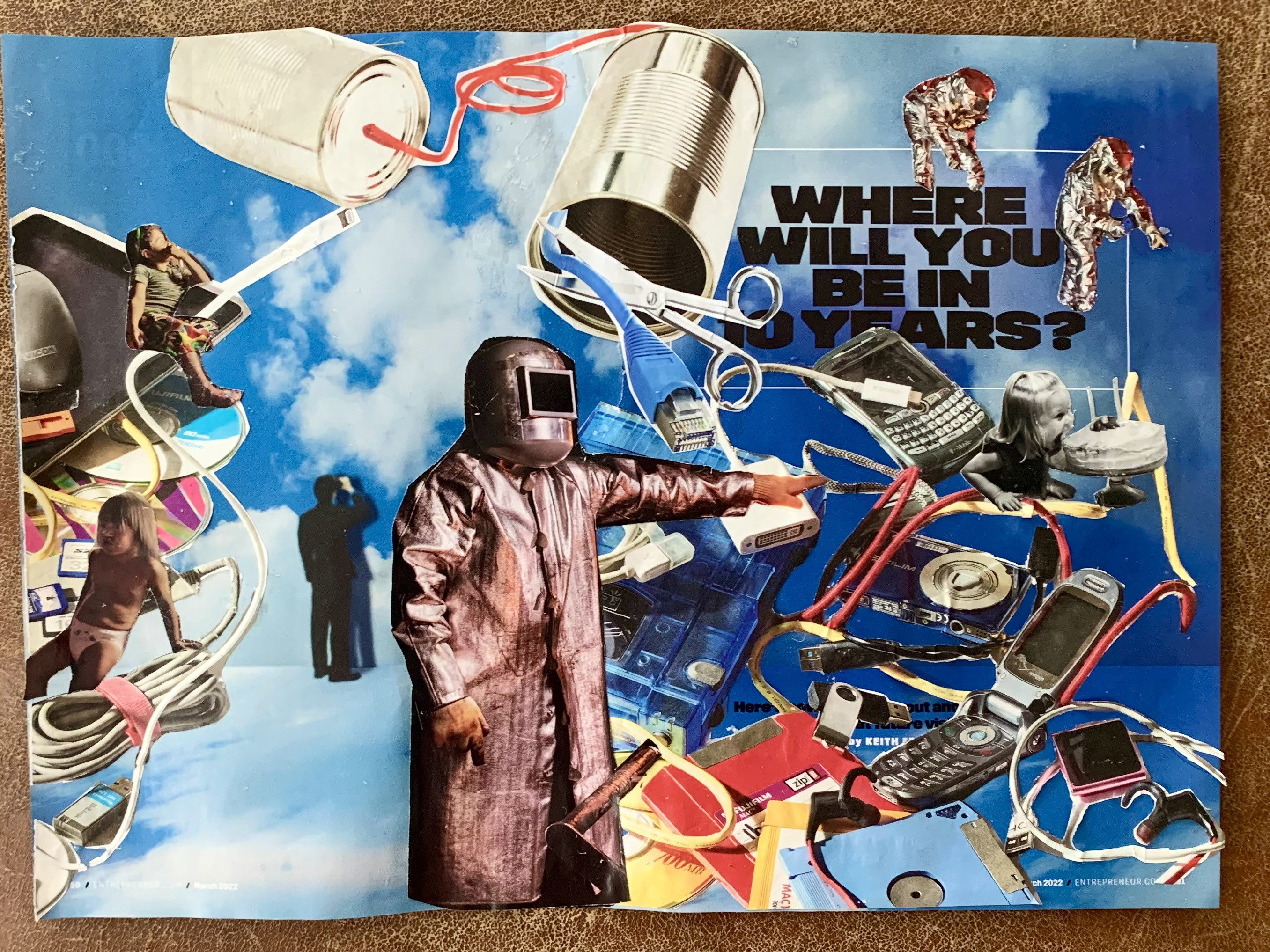
Among the collages Laura has made, there's one she rates as probably her best. It's built from magazine cuttings, assembled into something that doesn't quite exist in the real world.
The title of it is: where will you be in ten years?
She hasn't answered that, and she isn't in any hurry to. What she has done is take a year where the contract didn't come, the standard didn't come by a single second, and the European team went on without her, and arrive at the other end of it still enjoying the racing.
She was in Belgium when we spoke, with another 1500m the following evening, hoping to go a bit quicker.
"Maybe faster. I was thinking like 4:04, something good."
We wish Laura every success as she competes in the Women's Mile tomorrow morning at the World Athletics Road Running Championships in Copenhagen.