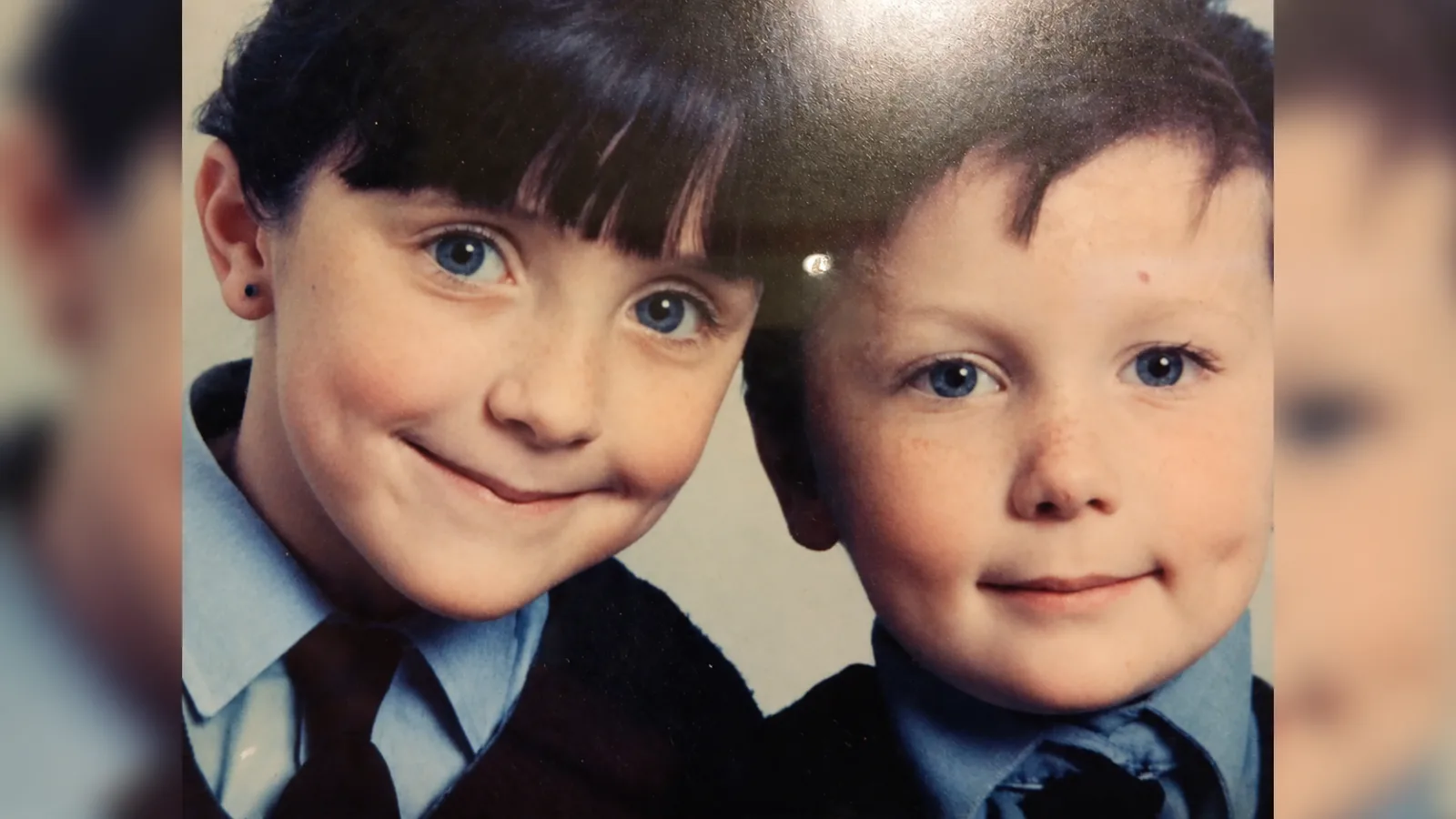
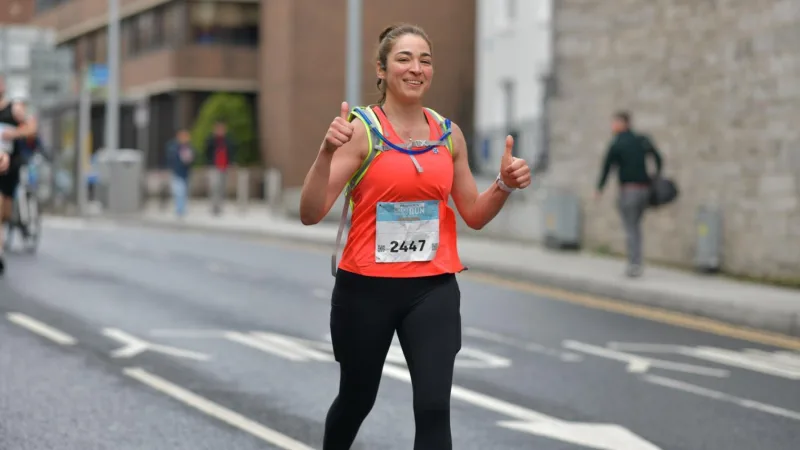
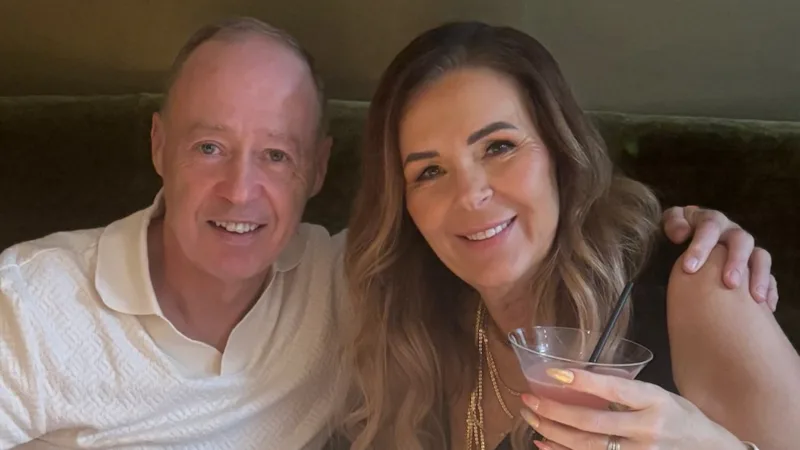
Carol Forster's brother Jonathan died on the October bank holiday weekend in 2000. He was sixteen. Carol was eighteen.
This year the marathon falls on his anniversary. His twenty-sixth.
"Well, now I could run 26 miles for the twenty-sixth anniversary, couldn't I?"
She is running it for the Irish Road Victims Association, and her reason for choosing them is one sentence long.
"It's a charity that didn't exist when my family needed it."
Twenty-Six Private Years
The decision was not Carol's alone, and that is the part of this she tells most carefully.
For twenty-six years, her family had chosen to remember Johnny privately. There had been no public memorials or fundraising events in his name. His memory had always been something they held close, within the family.
So before she entered, she rang her parents, her sister and her brother.
"I said, would you mind if I did this this year? But bear in mind, if I'm fundraising, I'm going to have to tell a story here, and that story is ours."
"And they were very pleased. They were like, no, it would be lovely that Johnny is finally remembered in terms of something that's positive. That's a contribution to something."
Johnny
Asked what he was like, Carol goes first to the age rather than the person, which is its own answer.
"He was 16 when he died. So remember back to when you were 16. You were really getting to know yourself. You were really beginning to find your place. You had a little bit of independence. The apron strings had loosened."
"He was a very placid, gentle character when I compare him to the rest of us. I have two other siblings, a sister and a brother. We're loud and we're chatty. And Jonathan, even though he was next to me in age and older than the other two, he was quieter. He was a more laid-back kind of a guy."
"He had a very tight-knit group of friends."
Those friends are in their forties now, with children and marriages and lives, and a number of them have been in touch with Carol in the last few weeks.
"One of them messaged me and said, he was my best mate, and I think of him every day."
"That's like winning the lottery."
"He was a kind guy. He was a good friend. He had a sense of humour. I'd say there was a wild streak coming, that rebellious kind of want to get out there and do it my way."
"He was lovely. He was a lovely fellow."
What Her Parents Had to Do
Carol was eighteen when it happened, and she is clear that she understood very little of what it took.
"I probably didn't quite appreciate all of the things my parents had to navigate at that time, during the immediate aftermath, as well as trying to keep a family moving and getting up every day and doing all of these things."
She is a parent herself now, and the perspective has changed.
"I kind of reflect now and go, oh my god, how did they get out of bed every day? How did they function? How did they pull themselves together for the rest of us?"
Donna's Charity
The Irish Road Victims Association was set up in 2012 by Donna, who lost her own son Darren in a road collision in 2006.
Twelve years after Johnny died.
"I think she's marvellous to have done something so positive out of something so bleak."
Carol has never used the service herself and is upfront about that. What she has done is read a great deal about it, and what she admires is the breadth.
"It's completely voluntary-led, first of all. The people running this organisation give their time voluntarily, and I think that's remarkable."
"It goes beyond the support at an inquest into an accident, dealing with police. It goes into counselling for family members where that might not otherwise be available to somebody."
"It provides advice and information, a helpline. But I think it's bigger than that. They actually also hold remembrance days, so that people like me come together and remember their person."
And then the other half of it, which most people would not know about at all.
"As well as fulfilling this completely other role, liaison with departments of transport and infrastructure on policy and driving safety."
"On a completely voluntary basis, they're doing everything from advocacy through to that phone call to a person that's probably having their darkest day."
"I think that's something that merits a spotlight."
She is also blunt about why the work has not got any easier.
"Road safety is still such a massive issue in Ireland. It's crazy that it's actually got worse since my brother died. People driving with phones and all the rest of it."
Then the line that is the sharpest thing anybody has said about a charity in this series.
"In my view, if Donna succeeded, her charity wouldn't be needed anymore. You wouldn't need this type of a service or an intervention. But unfortunately, we still do."
Downpatrick
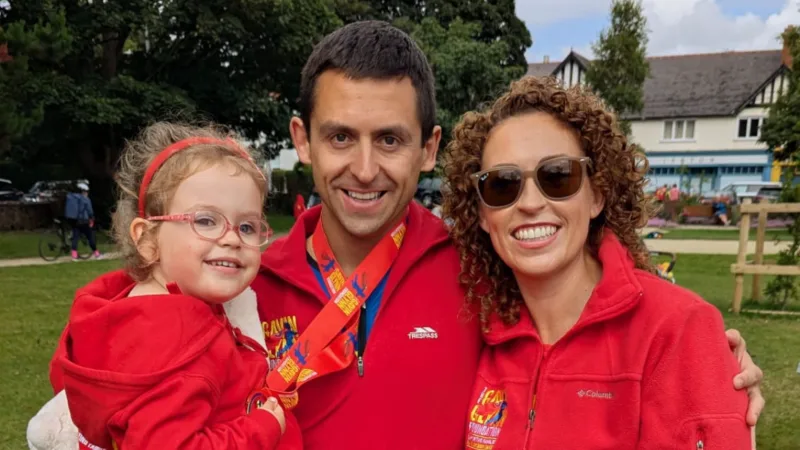
Carol is from a small town in County Galway, close to the Roscommon border, and has lived in Downpatrick for years. She is married to a Downpatrick man and they have two children, Robyn, who is nearly ten, and Matthew, who is six.
Her family are all still in Galway apart from a brother who is a guard in Dublin.
She has worked in the NGO sector for over a decade, mostly on environment and climate, and about a year ago joined an international charity she now works for from her living room, flying to its head office in Copenhagen about six times a year.
If you have heard of Green Schools in the Republic, or Eco-Schools elsewhere, or the Blue Flag on a beach, that is the organisation.
She is sanguine about the state of the world she works in.
"It's a fast-moving world at the minute. You could feel doom and gloom about where we're going as a world and as a society, but we keep plugging away and trying to do our bit."
Five in the Morning
Carol joined a running club in Downpatrick when she first arrived, largely to meet people.
"I realised I didn't know an absolute sinner in the town, with the exception of my husband-to-be and his family."
She stayed with them a few years, then the children came and she dropped out. Now she is in the local triathlon club, which has become a family operation.
"Our daughter is also in the triathlon club now as well. My husband's in it. It's a full family affair."
Of the three disciplines, running is the one she is best at and likes most. Her swimming, by her own account, is nothing to write home about, and she is there for the craic rather than the competition.
She has done half marathons. She has never run a marathon.
"I thought if I do one, I could be a one-trick pony here. This could be one and done. I thought I'd do it for charity and do it for something that was worthwhile."
The training happens before anybody else is awake.
"I get up at five in the morning and run before everybody else gets up."
That includes the long runs.
"The long runs on the weekend happen from 5am. It's just sacrificing a few hours on a Sunday. Usually you're done early, and you're trying to pretend you're not exhausted for the rest of the day with everybody else."
"You're just going, oh no, I'm fine. I'm fine. I'm just after running 30 kilometres, but I'm fine."
Two Toenails
Carol has one piece of hard-won knowledge she would like passed on, and she offers it with a flourish of self-deprecation.
"I didn't realise you need to go up half a size in your trainers when you go into marathon training."
"And I am down a couple of toenails that I hope will come back. At the risk of oversharing, I did not know that. I know that now. I'll know that forevermore."
"I had run a half marathon in my usual size trainers, never as much as a blister, and then I realised, oh my god, what's happening to my toes?"
It has been rectified, the rest of the toenails are fine, and she is taking the long view.
"There'll be no sandals for a while now. It's as well we're going into the winter."
On fuelling it is gels, a sports drink and jelly sweets, and she is honest about the gels.
"Gels are grand, but you know yourself after a few, you're like, I just want to brush my teeth."
"They are what they are. They serve a purpose."
The Thing She Did Not Expect
Carol has done most of her long runs alone, and had company for a couple of the last ones.
"I didn't quite appreciate how much I like running on my own. I thought that was going to be harder."
Her longest is 32 kilometres, and the internet has been unhelpful about what comes after that.
"Everything I watch, because my algorithm is skewed now to marathon. All I keep hearing is, the race starts at 32 kilometres. And I'm like, oh my god, am I going to be able to finish it?"
"I was okay to 32, but I have no idea after that."
Under four thirty would delight her. She has no real idea what to expect.
"I'll find new levels of myself in that last 10K."
Her husband and children are travelling from Downpatrick. Her parents, her brother, sister and her sister's children are coming up from Galway.
She expects two things at the finish line, and names them in order.
"I suspect it could be quite emotional. But if I'm being honest, I think there will also be a bit of relief."
"I've put myself out there to do this for charity, and I want to do it well now. If I cross the finish line, I've done what I said I would do."
"Even talking to you this evening, I am trying to compose myself. After all these years, it can still catch you in the back of the throat."
A Tonic
The part Carol did not anticipate is what the training itself would do.
"I said to my sister, I don't think I realised, after twenty-six years, how beneficial this journey has been in grief that still lives on for Jonathan."
"The past three or four months preparing for this, it's been a tonic."
Her parents have found something in it too.
"Very often when you remember somebody, particularly in those circumstances, there can be a negative kind of feeling around it. This has really flipped it for them a little bit. This is a nice way to remember him."
"His name comes up in a positive discussion, as opposed to something sad that happened."
"It's not easy training, but I've thought about him a lot, and it's been lovely."
And at the end of the conversation, unprompted:
"It's nice to hear his name being said, and his life being talked about, even though it was quite short."
What She Would Tell Anybody Else
Carol's advice arrives after a certain amount of protesting.
"Don't do it. Oh jeez."
Then she gives it properly.
"Don't take yourself too seriously. You're going for a run. But at the same time, I don't think you can fudge a marathon. I think you need to follow a half-decent training programme to keep yourself right."
"And if that's tough for you, find someone to go with you to keep you accountable."
"Bring plenty of gels and sweets with you along the way."
"And get trainers that are half a size bigger."