He was six foot five and built like a brick house. He could be quiet in a room, and then he would tell a story and have the whole lot of them.
"Dad would be a very quick-witted person. Very, very witty," Tara says. "He'd speak when he wanted to speak, and annoyingly nearly knew everything."
Her sister Aideen is the youngest of the five, and she puts it more simply.
"My dad's my hero, kind of thing."
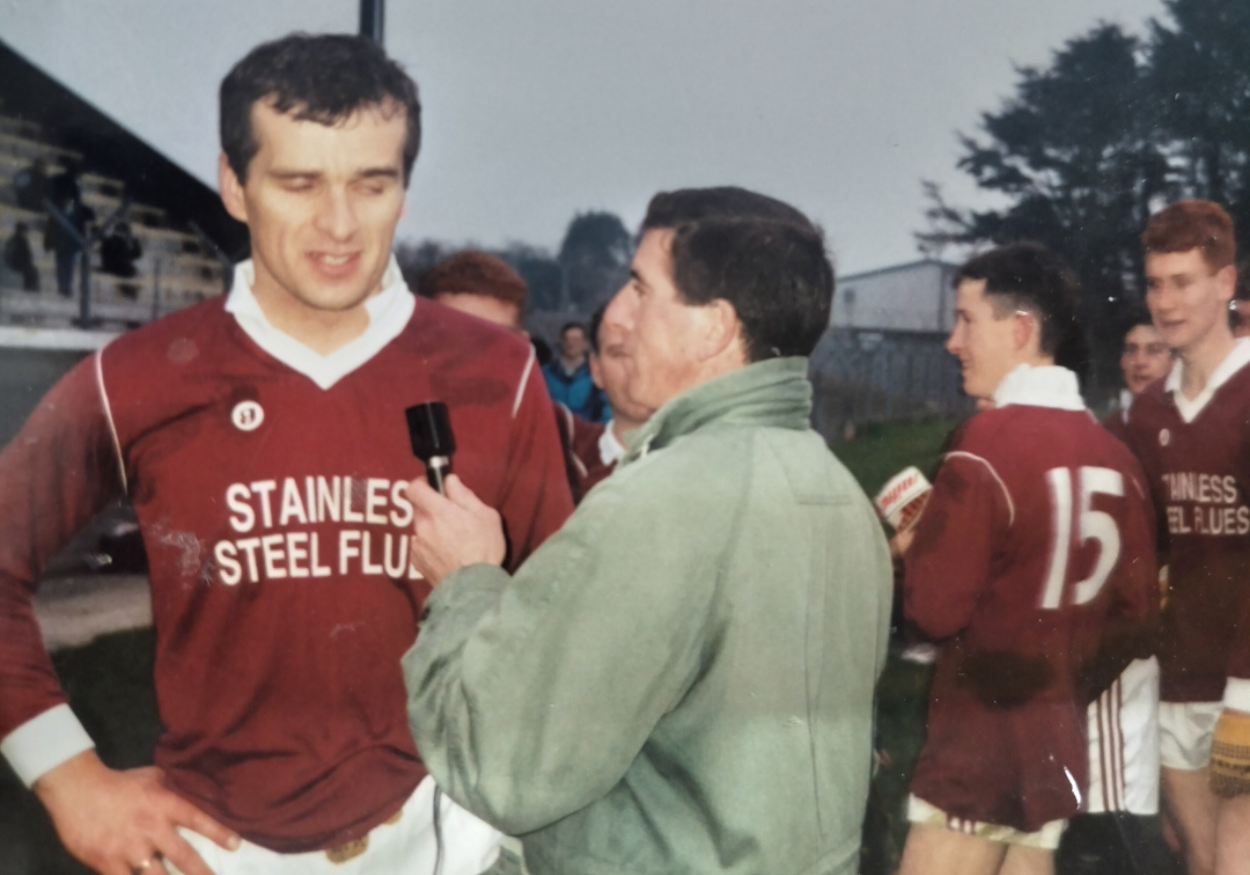
He loved being out in the garden. He loved a match. Their club, Moynalvey, is mainly a football club, with hurling played on the other side of the parish. He would watch hurling too, but football was his first love.
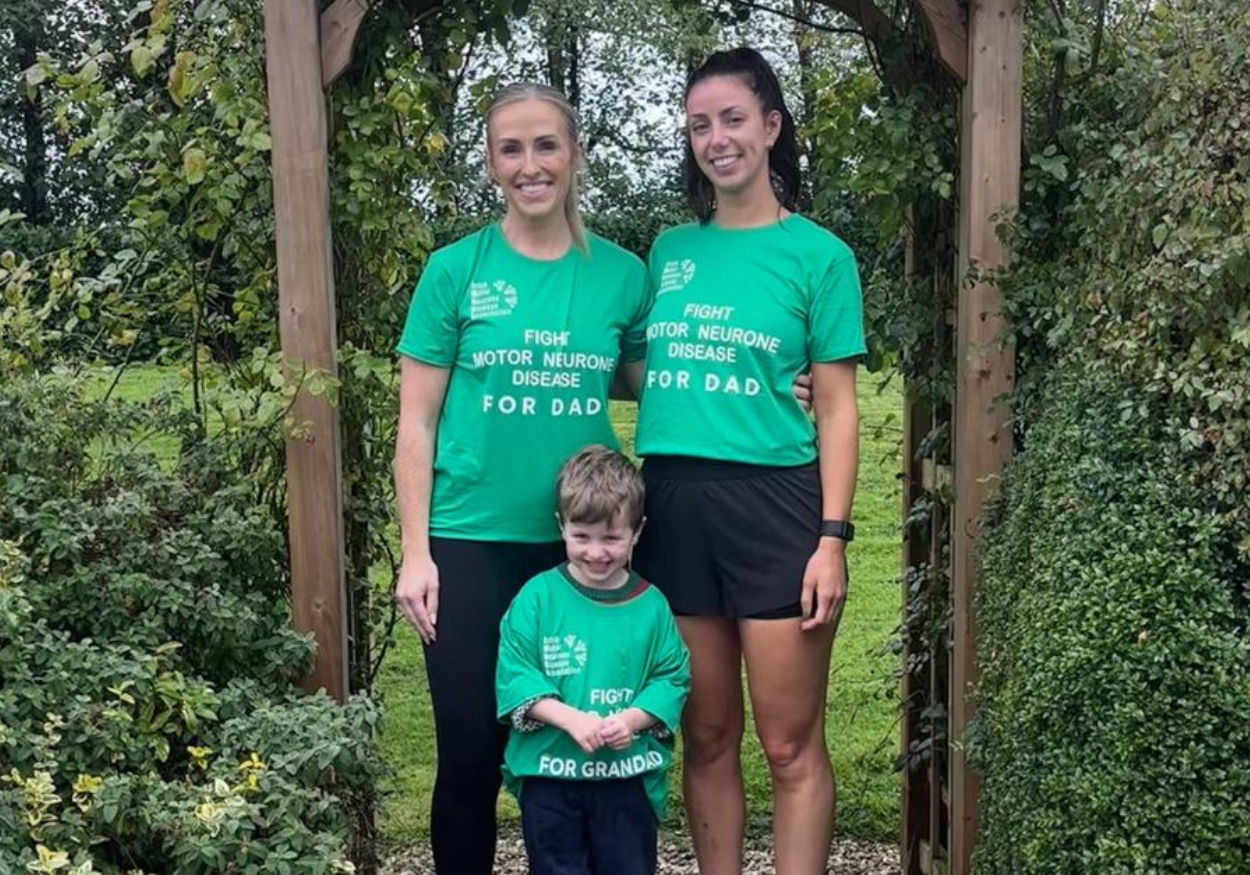
He died in June. On the last Sunday in October his two daughters will run the Dublin Marathon together, side by side, for the Irish Motor Neurone Disease Association.
Two Sisters
Aideen is the youngest of five. She works in banking in Dublin city centre, lives in the city, and plays camogie and football.
Tara is eighteen years in An Garda Síochána and is a detective. Their father spent thirty years in the guards himself and retired out of the same unit she now works in. She has worked alongside both men and women who served with him.
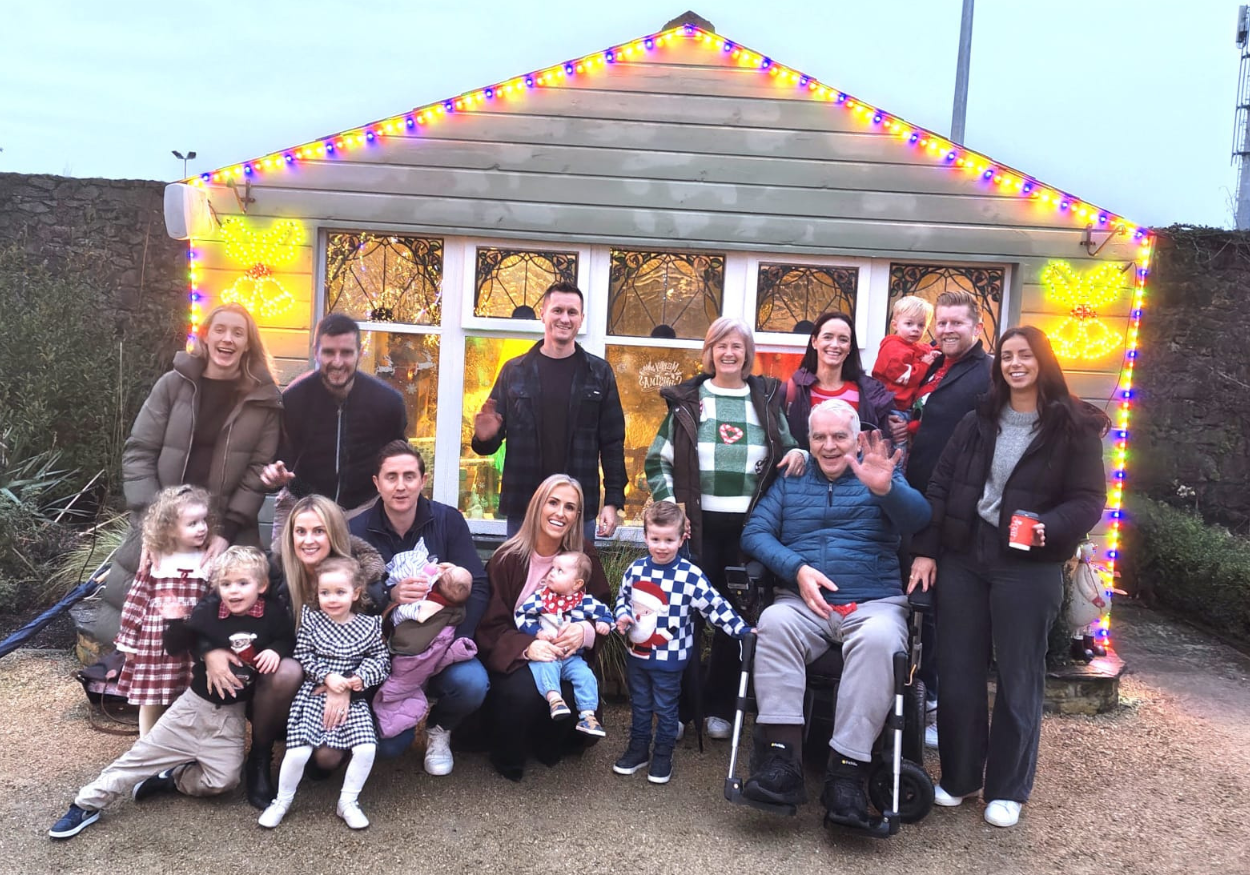
There are five of them altogether: Ciara, the eldest, followed by Tara, Donal, Ailíse, who lives in New Jersey, and Aideen. Their sister and her husband first signed up for this marathon at the start of the year, when their father was still with them.
When their sister got injured, Aideen took her place about three months out.
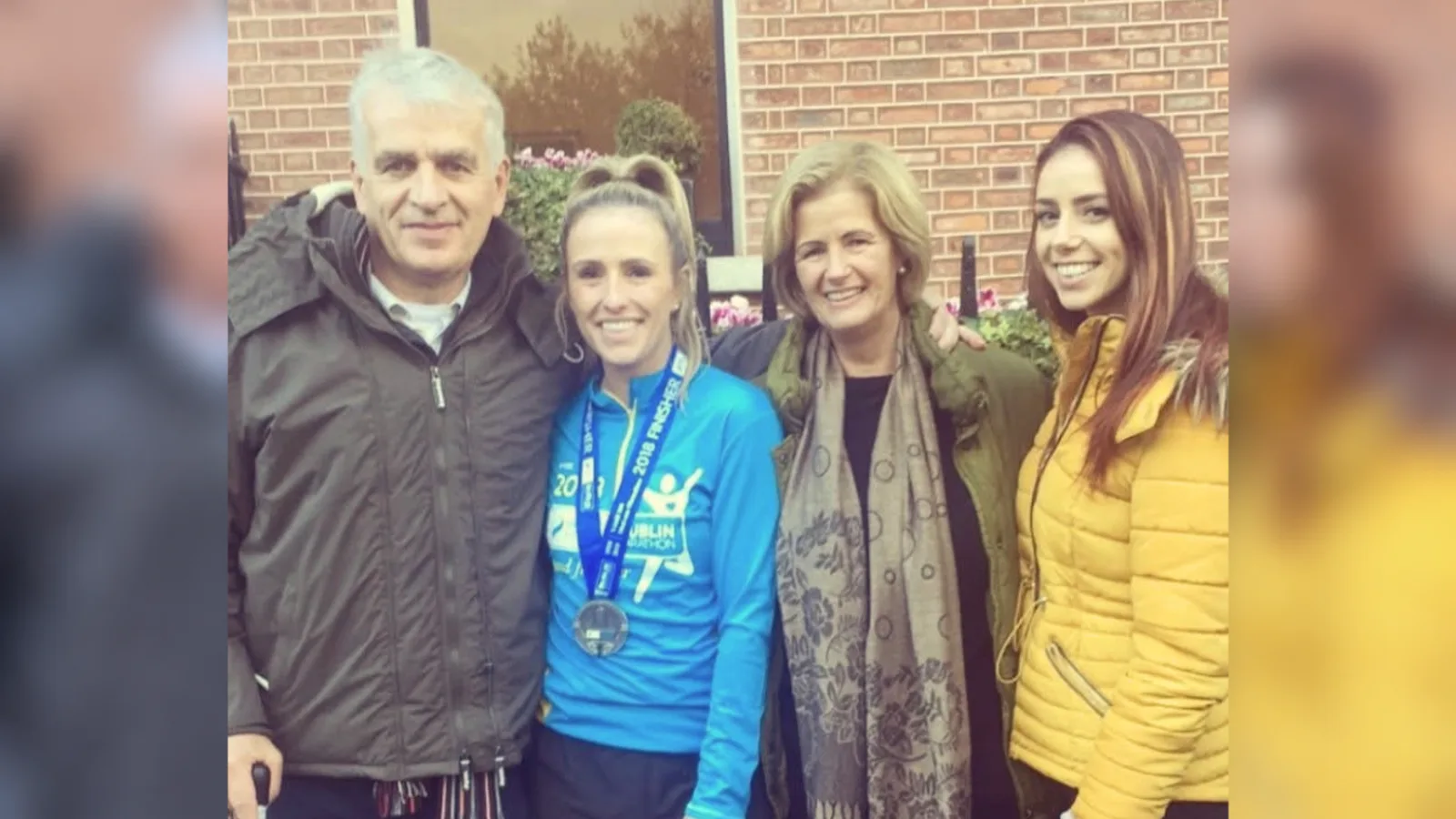
So this will be Aideen's first marathon. Tara has run Dublin once before, in 2018, with their father out on the course watching her.
They are, by their own account, a family that closes ranks.
"We are lucky that we are a very close family. We all kind of stick together and support one another."
Ailíse was home from New Jersey every six weeks or two months through it, and more often than that towards the end, which meant she saw the changes in steps rather than day by day.
August 2024
The back pain had been there for as long as any of them could remember, and for years it was put down to nerve damage.
"He always had back problems, as far back as we could all remember," Tara says.
"He went through a load of different testing, and unfortunately it came back that he had motor neurone disease. So that was August 2024, and I think it kind of shook us all to the core."
Neither sister knew much about what was ahead of them.
"We didn't know what the disease really entailed, what would come, what would happen."
"As a family, none of us knew what was going to happen, and you're kind of just looking for a bit of direction."
The People Who Gave Them the Direction
That is where the association came in, and the sisters describe eighteen months of practical help rather than a list of services.
There was a dedicated nurse, employed by the association, out to the house regularly. There were review appointments arranged every few months. There were links into occupational therapy, physio and the public health nurse, and advice on the grants to adapt the house.
"They are your go-between," Tara says.
A hospital bed arrived for the bedroom. Aideen is clear about what the adaptations bought them, and equally clear that not every family gets the same chance.
"We were lucky that we had the IMNDA involved, because she got to keep him at home for so long. There's so many other people who wouldn't be as lucky as we are to have a house that you can adapt."
Their mother attended a carers' course provided by the IMNDA, where she met other carers going through similar experiences. They had a WhatsApp group where they could compare notes.
"For her, it was great," Aideen says. "Comparing notes of what's happening in your household, what changes have you experienced. Some people are a few months ahead and a few months behind on what was happening."
"For her, that was a great kind of thing to lean against."
The Bike, and the Chair That Got Him to Tullamore
The association also loaned him a motorised exercise machine he could strap his hands and feet into.
"I think it gave him a sense of being active still," Tara says. "He was able to strap his feet into it and use his hands, and it was his exercise machine."
He used it every day for about a year and a half.
He went through three wheelchairs in that time, a manual one, a small electric one, and then the big motorised chair, which had to be sized for a man of six foot five.
That chair is the one they talk about, because of where it took him.
It got him, with the wheelchair-accessible van, to a Meath against Kerry match in Tullamore.
"When do you ever get to see Meath beat Kerry?" Tara says.
It was an experience he would not have had without the chair.
"It gave him a freedom for those few months that he still had his speech and still was able to use his arms," Tara says.
"Even going out into the garden with the grandkids, he was able to have a bit of fun with them still, and just have a small bit of himself still."
What It Took
Both sisters are honest about what the disease did, and they say it without dressing it up.
"It takes everything from you. It strips you of who you are as a person," Tara says.
He lost the use of his arms. He lost his speech. And the thing that stayed intact is the thing that makes this particular illness what it is.
"His mind was fully functional, but he was just stuck in a body that wouldn't work."
He stopped going to matches, which for a man who had spent his life on a sideline was a loss of its own, and it was not only about the chair.
"He couldn't even answer the phone really to some of his friends, because his speech was going, and he didn't want to have to put other people through it."
"He wouldn't be a man who would want any pity either. He was a proud man. A stubborn man. A very, very stubborn man."
There were still moments.
"You'd get maybe a bit of laughter out of him when the grandkids were around."
For Aideen, as the youngest, it came at her from a particular angle.
"That man, six foot five, built like a brick house, the strongest person. So watching him deteriorate was quite tough."
The Hospice, and Their Mother
The last weeks were spent in a hospice, with the association liaising with the Meath palliative care team to get the bed. Nobody wanted it, him least of all.
"He had no comfort in those final months until he went into the hospice," Tara says. "And he didn't want to go in. None of us wanted to see him in there, but it was really the only way he was going to get any comfort."
What it gave their mother is the part worth reading twice.
"Mam kind of said to us, it's the first time in the last eighteen months or so that she felt like his wife again, and not just his caregiver," Aideen says.
"Someone else was looking after him."
And what it gave the rest of them was each other.
Their father came from a very big family and had a lot of friends. At home, towards the end, visitors had become complicated. Nobody knew if they were intruding. Their mother would be answering the door on two hours' sleep and putting on a front, and he would be trying to put on a front too.
In the hospice, all of that went.
"Everyone could just relax," Tara says. "The staff were fantastic. They couldn't do enough for you."
His family came in and sat with the two of them and told stories, and their mother got to enjoy the company instead of managing it. If something needed doing, the door closed and the rest of them went down to the canteen for tea.
"We still got to keep social, and it wasn't this big ordeal."
Their mother could go home for a few hours. She could go out for lunch.
"As awful as it was seeing him go into the hospice, it was lovely spending those last couple of weeks with him, just altogether as a family."
Afterwards there were bereavement sessions and counselling offered to all of them.
Their Mother, Again
It is worth stopping on her, because the sisters do.
She raised five children. She trained as a nurse, then requalified as a psychiatric nurse in her late forties. Before any of this she had already cared for her own mother and her own father through their last illnesses.
Then she cared for her husband for eighteen months, in a house she could barely leave, because he wanted her and nobody else.
Tara says it in nine words.
"I feel like mam, for her, life has just been caring for people."
"Get Up Off That Ground"
Their father got all five of them into athletics as children and trained their football team, and the sisters are very clear about what kind of coach he was.
"Dad did not believe in gentle parenting," Tara says. "Tough love was the only way, I'm telling you."
"If you ask anybody in the parish what kind of coach dad was, if you fell on the ground, he'd be saying, get up off that ground. There's nothing wrong with you."
"That was his way of encouraging us."
Their mother and father were always their biggest supporters in everything they did. He was happiest on the side of a pitch.
"He was at every one of our matches nearly. He trained us. He was over our football team, and he was so into sport."
Why They Are Running
Neither sister took this on because she fancied a marathon.
Aideen explains the thinking, and it comes from eighteen months of watching somebody lose the use of his body.
"When you're watching someone lose the ability to do anything physically, you want to take advantage of it while you still can."
"This is a massive challenge for me and for Tara."
Tara is honest about what she had in her head when she first signed up, back at the start of the year.
"I think initially when we signed up for this, I think I was quite naive. I thought he might still be with us, and he might be able to make it in."
Neither of them is in a club. Both are following the same training app, mostly for the accountability. They train apart, around a bank job in town, shift work and two small children, and come together for the long ones.
The worst of those was a three-quarter-distance run around Longwood, on rolling country roads, into a wind, with nobody out watching.
The plan for Dublin is to run every step of it together at around 6:15 a kilometre, and they would like to be under 4:30. Their brother-in-law is running it too and is a good deal quicker, so he will be long gone.
Running it side by side is the point rather than a convenience. Neither of them particularly wants to do this alone.
The Last Sunday in October
"It'll be very emotional. It's very personal to us," Tara says. "We're doing it for the Irish Motor Neurone Disease Association, but we're doing it for our dad."
"He was there in 2018 when I ran that marathon, and I know if he was alive today, he'd be there cheering us on as well."
"So we just want to do him proud, and raise as much money as possible for an association that did so much for our family, and for him as well."
This interview took place on their parents' wedding anniversary, four months after he died. The two of them spent the guts of an hour talking about him so that an organisation that helped their family might get a few more donations.
They are sending on photographs. One from Longwood. A family one with their father in it. Something from 2018 if they can find it.
And, if there is one, him on the sideline, roaring in at somebody to get up off the ground.
You can support Aideen and Tara's fundraising for the Irish Motor Neurone Disease Association ahead of the Dublin Marathon here.