Grace Lehane has heard the same story from parents more than once.
They bring their child along to the local soccer club. They are told the club cannot facilitate them, because it does not have the resources.
"That's just an awful feeling for a parent, and for an athlete themselves."
Then she asks the question that the rest of this piece hangs on.
"But why is it the child that has to be excluded, instead of the club finding resources to facilitate a child?"
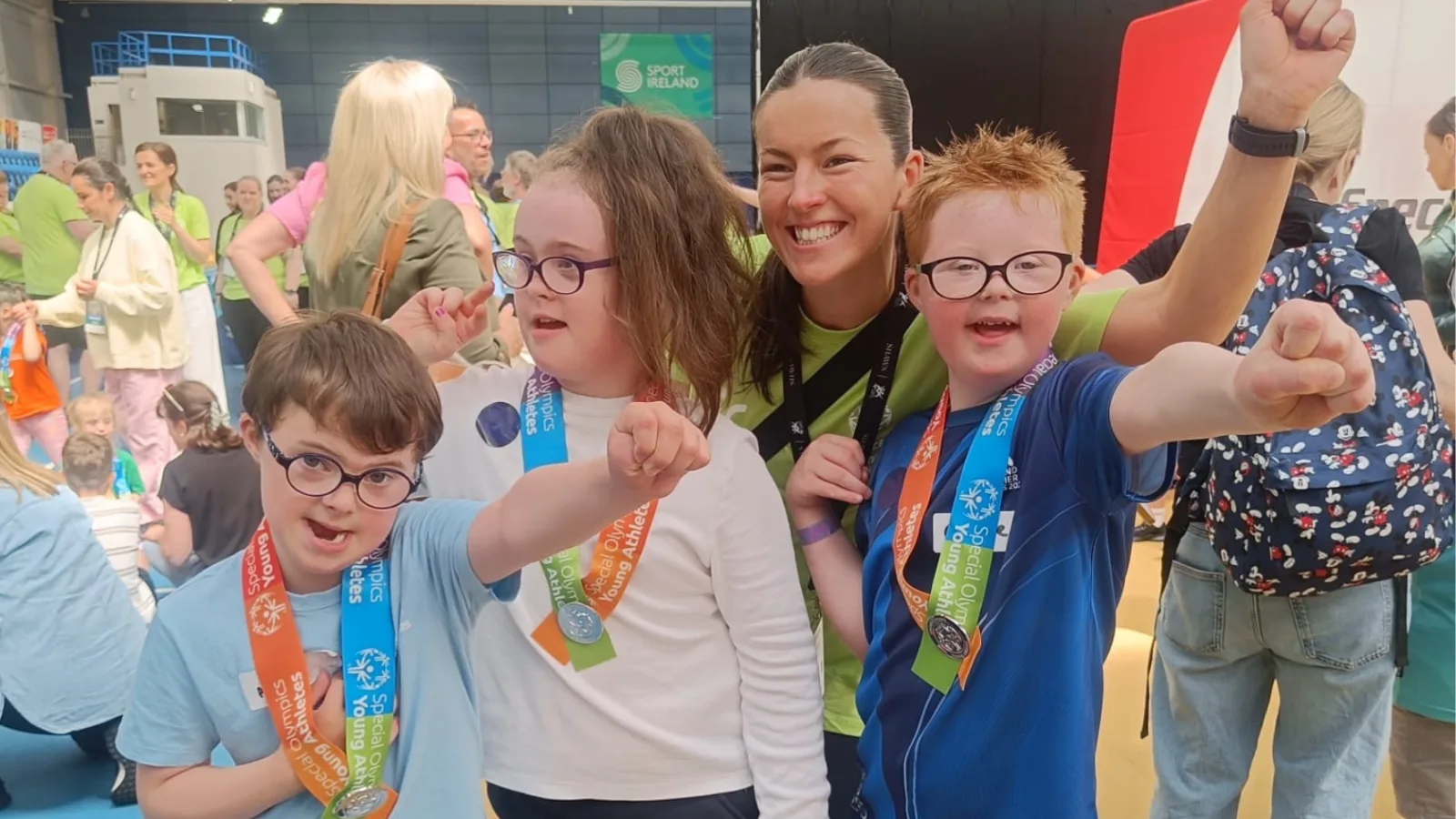
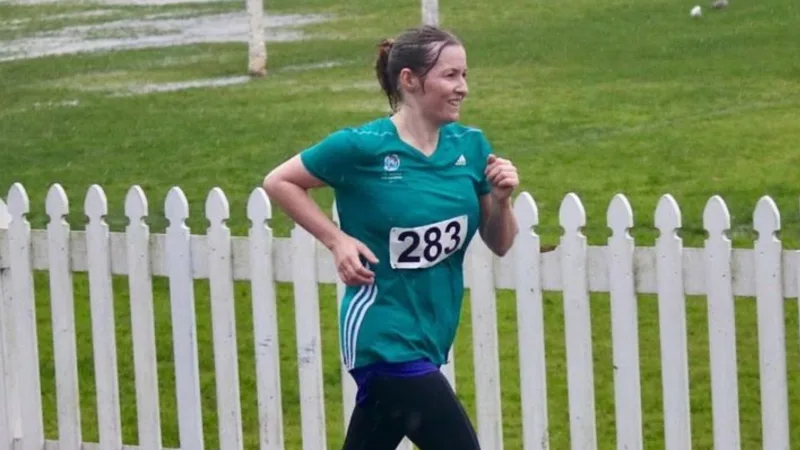
Grace is 27, from Cabinteely, and on the last Sunday in October she runs her fifth marathon, for Special Olympics Ireland, in her fifth year volunteering with them. She coaches a young athletes football team in Dundrum, and she is the reason this piece is less about running than most in this series.
The Late Late, and Three Years of Waiting
The route in was a television appeal.
Back in 2017 there was a call-out on the Late Late Show looking for volunteers for a major para swimming championships coming to Dublin the following year. Grace signed up, worked the event, and got talking to a Special Olympics swimming coach who was volunteering there too.
She told her she should sign up properly.
Then came Garda vetting, then safeguarding clearance, and then COVID, and the whole thing stalled for the guts of three years.
When it finally moved, it moved by word of mouth. She got hold of Paul Malone, the head coach of a young athletes club in Dundrum, and picked that club for the least romantic reason going.
It was the closest one to her.
She has been there five years, coaching football, a sport she has never played formally in her life.
Which is worth saying out loud for anybody reading this who assumes volunteering requires expertise. It does not. It requires a Sunday morning and a Garda vetting form.
What a Young Athletes Club Actually Is
The team starts at age four. There is no upper age limit on the young athletes side, and competitive Special Olympics competition begins at 16. The same club runs a large adults team alongside it.
What they are doing at that age is not football in the sense most people picture.
Balance is the single biggest area of difficulty among the children, which is the headline finding Grace points to from Dr Hayley Kavanagh's PhD evaluating the young athletes programme. Kavanagh, now lecturing at DCU, ran baseline physical testing, a structured eight-week programme, and then re-tested.
Grace cites it because it is the concrete answer to where the work actually gets you, and it is published on the Special Olympics website for anybody who wants to read it.
So the sessions have stepping stones and a balance beam in them. Parents film their children on the equipment and send the footage on to their occupational therapists.
And Grace is clear that the sport is the smallest part of what the children are getting.
"It's more than just physical activity. It's community. It's fun. It's inclusion. Learning to be part of a team is a massive form of development."
She sets that against her own position without any self-congratulation.
"I'm lucky enough to not have a physical limitation or any sort of limitation, really. And to think that I could really just decide one day that I want to get involved in any sport, and have no barriers to that, when there are kids as young as five, six, seven who just want to go and be part of the team."
The Thing She Asked to Have in the Article
There is one point Grace made a point of coming back to, twice, and asked specifically to have carried into print.
The clubs are one hundred percent volunteer-run. Nobody on that pitch in Dundrum is being paid.
It funds the organisation, the programmes, the equipment, the structure that lets a volunteer-run club exist at all.
Her target is €1,500, and she came across the marathon call-out on LinkedIn, which given she already had five years of personal connection to the organisation made the decision a short one.
TILDA, and a PhD on Fainting
Away from the club, Grace is a research assistant and PhD student in TILDA, the Irish Longitudinal Study of Ageing, which is affiliated with Trinity College Dublin.
She did economics and sociology as an undergraduate, then a master's in applied social research at Trinity, and arrived at TILDA through a two-month placement that turned into about a year and a half as a research assistant before the PhD came up.
Her doctorate is on syncope, which is fainting and blackouts, approached from the social side within the school of medical gerontology.
TILDA's principal investigator is Regius Rose Anne Kenny, a geriatrician and cardiologist who set up the falls and syncope unit at St James's Hospital.
What interests Grace about the field is that medicine has widened its definition of what counts as health, to take in the social side of a person's life as well as the clinical one.
Which is, if you think about it, the same argument she is making about a football club in Dundrum. Health is not only what happens in a clinic, and development is not only what happens in a classroom.
Her Dad
The running came from her father, who took it up at 50 after his younger twin brothers started doing half marathons. Grace was about 13 at the time.
She played GAA and basketball locally, drifted away from sport in college, and came back to it through a friend group where everybody was active. Her best friend is a personal trainer. Her boyfriend is a serious runner.
What turned running into racing was her father's Parkinson's diagnosis.
"My dad has Parkinson's."
The family decided to do something about it together. Her father is from Cork, where the half marathon, marathon and 10K all run in June.
So in June 2022 the lot of them ran the Cork half. Her mother, her brother, her father, her boyfriend, an aunt and a cousin.
"We raised over €7,000 for Parkinson's Ireland."
Four Marathons, and a Banana
Dublin in October 2022 was her first full marathon, run for the Down Syndrome Centre in Sandyford with her friend Issy, off about three months of preparation.
Madrid, Barcelona and Paris followed. Barcelona came in at four hours and an eighth of a second, which is the sort of number that stays with a person.
There was a year off after that first Dublin before the run of European races began.
Dublin will be her fifth marathon, and nothing she has run abroad comes close to it.
"No marathon we've ever done compares to the support that comes from the Dublin Marathon. The sheer amount of people out at every step of the way is just amazing. People out giving you anything that they can, everybody out with fruit, with jellies, with water, with Lucozade."
She knows this because of what happened in that first one, which is the best story in the interview.
"A massive fear of mine is running out of fuel."
"Because during my first marathon, I was starving, and I had to stop this poor man who had a baby to his chest."
He was handing out bananas and was distracted by the baby, so Grace had to stand there and wait for him.
"I actually had to stop and wait for him and be like, can I have a banana please. I was starving."
It is the reason she now carries her own food and does not leave any of it to chance.
Three Runs a Week, and Madeleines
Grace trains three times a week. One long, one easy, one a bit quicker, with gym work around it, because her knees will not tolerate five or six runs.
Her routes run from home into town and back, about 11 kilometres each way, taking the lower road rather than the N11 to avoid the hills past UCD. Otherwise it is the family home out to Bray along the seafront, or laps of Shanganagh Park. The biggest climb she does is from Blackrock back up to Cabinteely.
The strength work is at a CrossFit gym in Sandyford, and what she values is the structure, eight-week blocks aimed at building quads and glutes.
On fuelling, Grace is coeliac. She uses High5 Aqua gels, which are liquid rather than jelly and therefore easier on the stomach, and alternates them with gluten-free madeleines roughly every 5 kilometres.
"I'm a hungry person in general. I don't know how people run for that long and not get hungry."
"It's probably not most people's take on nutrition, but it's what works for me."
The harder part of being coeliac and running marathons is not the food at all.
"When I've travelled for the marathons, there's just a lot more prep that goes into it, in terms of researching where we're going."
It does have one advantage, which she enjoys.
"It works in my favour sometimes, because a group go away and I get to pick the restaurants. Europe is excellent for fully gluten-free restaurants, much better than Ireland."
"It's more the prep than the actual food that's the difficulty."
She also had to work out which gels were safe, which took a while.
"It's just random, the things that have gluten in them. So bizarre."
She is emphatic that none of this is expert advice, and said so twice during the interview, so it goes in with that attached. She is not a dietitian and is not pretending to be.
She is also very funny about the idea that marathon running is a health kick.
"Ask anyone. I have a massive appetite, and I am not the healthiest eater you've ever met in your life."
"There's this misconception that marathon running is the healthiest thing you'll ever do. Unfortunately, sometimes I feel like on the contrary. The amount of food and gels and all that kind of stuff. You'd be buzzing after the marathon just with the gels."
Her actual advice to people who come to her for it, caveated to within an inch of its life, is to eat more.
"Training for a marathon, whether you run six times or three times a week, it's a big toll on your body, and you need to keep fuelled to keep the endurance going."
"Have that extra bit of toast with your cereal in the mornings. It's not that everything you eat has to be super healthy. Just keep the carbs going."
The one piece of logistics she rates above everything else for travel marathons is the food. Europe, she says, is far better than Ireland for restaurants that are genuinely fully gluten-free, and the prep for a race abroad is less about the running than about working out where you can eat.
Not in a Club, on Purpose
Grace is not a member of a running club. Her friends serve the function instead, and her reason for it is one of the most relatable things in this entire series.
"When I left college, I thought meeting friends would actually be easier, that everybody was kind of in a structured nine-to-five job. It actually became much harder to meet and socialise with people."
"So now, since a lot of my friends run, what we'll do is we'll meet for a run and just chat away as we run, and it's two birds, one stone."
"Put Your Name Somewhere"
The most useful race day tip Grace offers is specific to Dublin, where names are not printed on the numbers.
"Bit of advice to anybody doing this. Put your name somewhere."
"Do not underestimate the boost it gives you when someone just says, Grace. It could be someone you don't know."
She also wants credit given where it is due on marathon day.
"Supporting is also a sport. Getting from A to B to C to D is honestly. I feel like I've had a longer day than the people in it sometimes. I look worse off than them."
She has proof of this. The first year she supported her boyfriend at Dublin, they went back to his house afterwards and his mother took one look at her.
"She was like, god, Grace, are you okay? Do you need to lie down?"
Grace was not the one who had run the marathon.
What she wants out at the side of the road is not really a sign anyway.
"I just love seeing someone, a face, even if it's for a second. People jog along with you for a hundred metres. It's the people rather than the sign."
The Watch
Grace is aiming for 3:45 and has been hovering around four hours in recent races. She would be happy enough under four.
She also does not look at her watch while she is racing. The approach is to keep the legs going and keep feeling okay.
What she says about times is the thing a lot of people take five marathons to arrive at.
"I can honestly say this. It took me a long time to come to this, but the time does not matter."
"You've put in the work. The training is the hardest bit."
Then she catches herself, which is why the quote works.
"This is me telling myself affirmations. You have to be proud of yourself and enjoy the day."
The Finish Line
Asked what crossing the line is going to mean, Grace stopped.
"It's hard to describe what crossing the finish line means, because it's really just a mix of emotions."
"What I hope people feel is pride in themselves."
"It's really hard to put into words. I don't think anybody's ever asked me that."
What she lands on is not about her own race at all.
"There's very little people who are doing this professionally. You've got a job. People have kids. People have other responsibilities."
"Hopefully people have had the time to put aside so they can run and do this challenge for themselves."
"It's just a nice feeling of, okay, I've put in the work, and whatever the time, it's worked out, and you've had a good time doing this."
Doing it for a charity, she says, is the cream on the top. And in this case the awareness matters as much as the total.
"Special Olympics is about sports. Money is great, but getting the awareness out there that this is what Special Olympics are trying to do, break down barriers. It's about inclusive sports."
"Nothing Clears My Mind Like Running"
Grace's argument for taking up running is about the head rather than the legs.
Winter is the part of the year she finds hardest, and it is not about the cold.
"I feel like I'm never outside. You leave your house, get the bus to the office, you're in the office, you get the bus home."
"Even going to the gym, it doesn't give me the same feeling as running, just because you're outside in the fresh air."
"I really love going to the gym, my gym is brilliant, but nothing clears my mind like running."
"I know loads of people say this, but you solve a million and one problems in your head while you're running. It's getting your mind completely detached from work, from home, from whatever. You get out there, and the endorphins after, I'm like a different person."
And then she does something almost nobody does in an interview like this, which is take a swing at the inspirational line everybody repeats.
"I remember someone famous said something like, oh, running's great because running is free."
"I understand that, but you might need a pair of runners, or you might injure yourself, or you might need to go to the physio. I don't want to be ignorant and say, people go ahead and start running a marathon and it's free. Because like most sports, it's not, in that sense."
Which is a more honest place to leave it than most, from a woman whose whole volunteering life is about what it costs to let somebody take part, and who would rather you knew that up front.
You can support Grace's fundraising for Special Olympics Ireland ahead of the Dublin Marathon [LINK].