In the O'Neill house in East Cork, that question gets asked most days.
The kitchen is locked. If somebody is heading out, they announce that they have the key with them.
"I say, don't tell Oisín where you put the key," Ann O'Neill says, laughing.
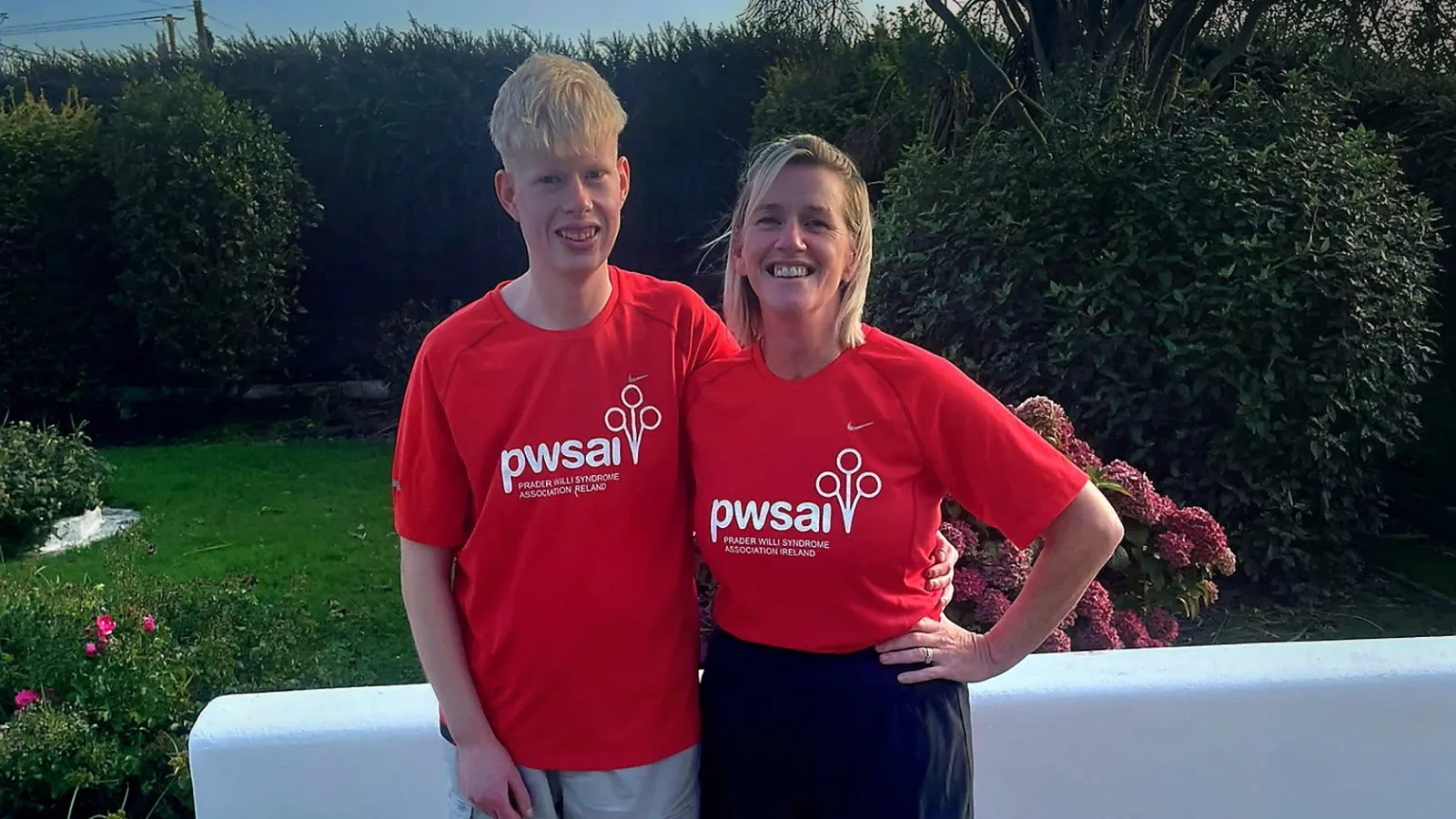
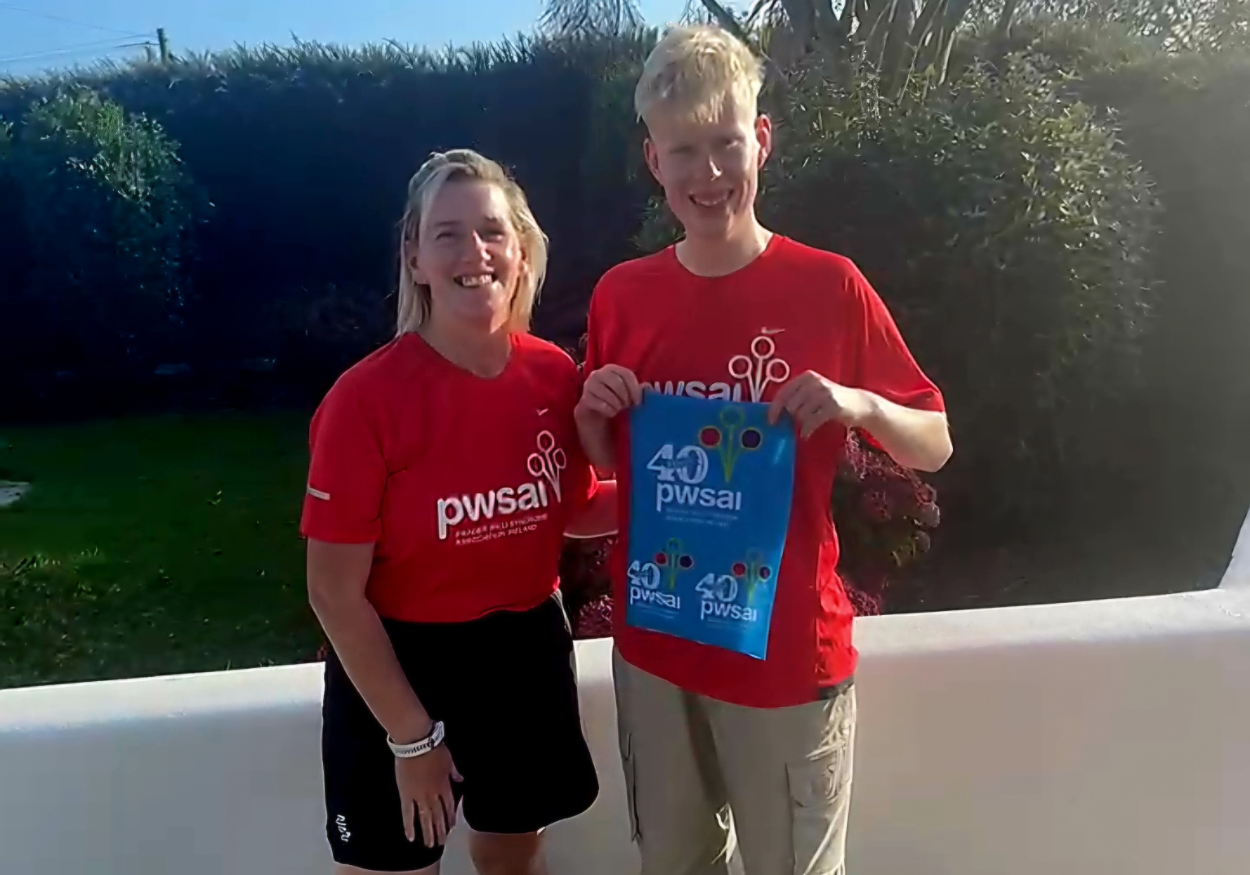
Oisín is 23, the eldest of Ann and Ray's five children, and he has Prader-Willi syndrome. Ann explains it better than any leaflet manages.
"There's loads of medical terms. Prader-Willi is a deletion of chromosome fifteen. But actually, the part of the brain that tells you you're full from eating, or you're satisfied from eating, doesn't work. So food is a huge priority in Oisín's life. He thinks about it all the time, and his access to food obviously has to be controlled and limited."
That is the reason for the locked door, and for the milk being put away, and for the fruit bowl that does not get left sitting out.
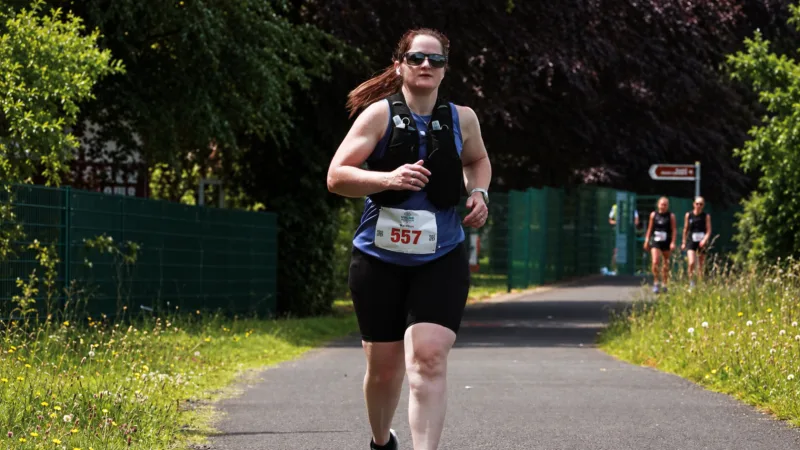
On the last Sunday in October, Ann will run the Dublin Marathon for the Prader-Willi Syndrome Association of Ireland. She was never supposed to be the one running it.
"Life Is Different. And That's All It Is."
Oisín has grown up knowing exactly why the kitchen is locked, because Ann has never dressed it up for him or for anybody else.
His brothers and sisters have known all their lives too, to the point where one or two of them were half convinced they had it themselves, because the house was so strict about food.
What changed their perspective was going to other people's houses.
"My kids were starting going to other places, and they began to realise, oh, life is different. And that's all it is. It's just different."
One of them came home genuinely puzzled to report that so-and-so's family do not lock their kitchen at all.
"It's those small things that you realise."
Oisín does take food sometimes. Ray's line about the two of them is that they are like the drug lords of the place, catching him most times and missing him occasionally, which is a joke about themselves rather than about him.
He is always sorry afterwards. There are no punishments in that house, and there never have been.
"I always say, Oisín, it's not your fault. It's what you have, and we'll go again tomorrow."
"Sometimes when I just hear myself saying it, I'd say, Oisín, you have Prader-Willi. That's just the way it is. I can't fix it. I can't take it away. But I'm only doing this to make it better for you."
The SNA From East Cork
Ann is 52 and lives in East Cork, near the coast, with the beach at Garryvoe the nearest one to the house.
She works as a special needs assistant in a primary school about twenty minutes away in Saleen, where she has spent nine and a half years in a unit for children with autism. Before the children came along she worked as a healthcare assistant in Marymount Hospice in Cork.
She was asked once in an interview what the hardest part of her job was, and her answer says as much about her parenting as her profession.
"The hardest part about my job is getting people to understand that children with special needs or additional needs or autism are still a kid at the end of the day. They can be your best friend one day and not able to stand the sight of you the next."
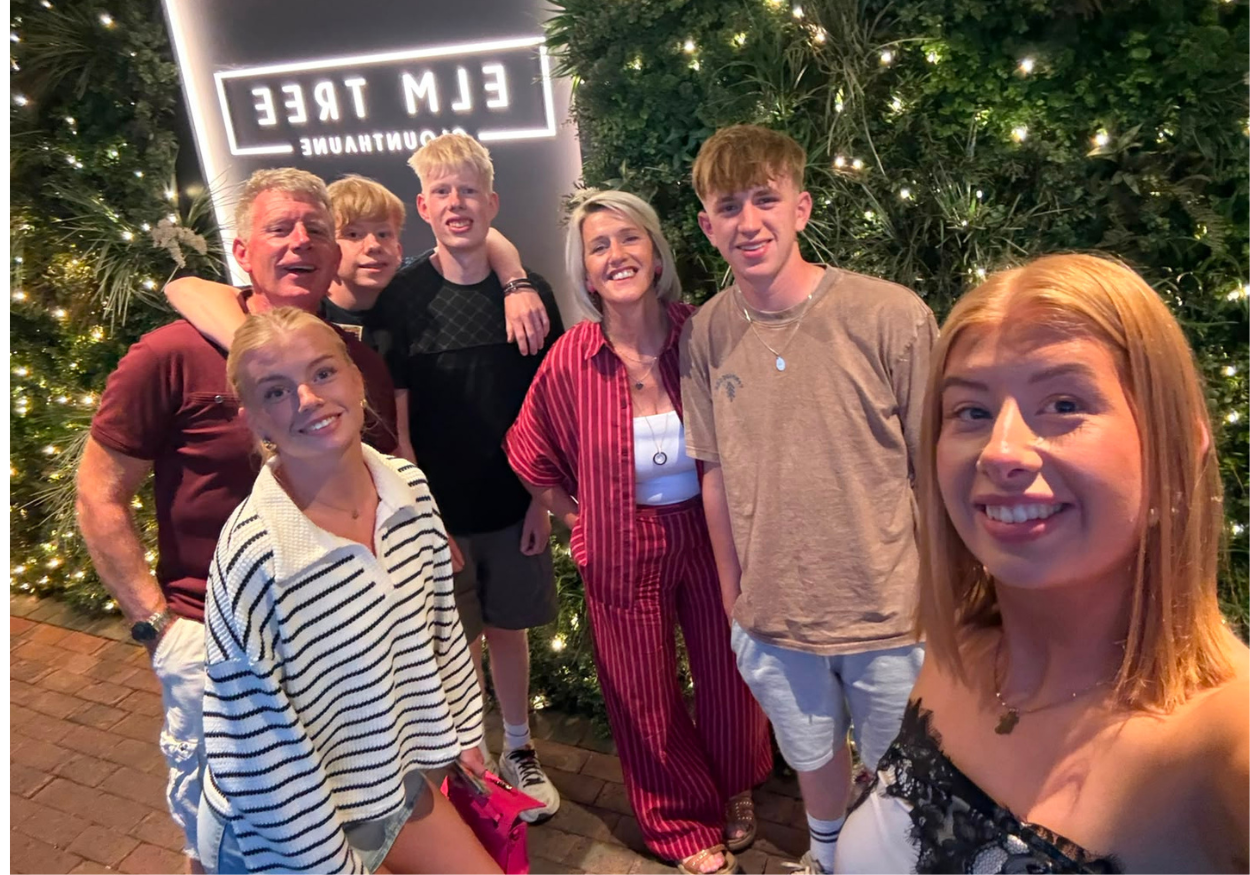
She and Ray have five, from 23 down to 15. After Oisín there is Gráinne, in third year of paediatric nursing at UCC. Then Rory, in second year of an electrical apprenticeship. Then Tara, just finished the Leaving Cert and starting early childhood studies at UCC. Then Fiona, in transition year.
Ann herself is one of ten.
Oisín's Week
Oisín attends a day service in Dungarvan and works at West Waterford Golf Club, which he loves, and he is very good at it.
"Ask him to cut a hedge and you won't find a leaf left after him. It could take him a bit longer than a regular person, but he loves it, and he's excellent at it."
He runs three times a week. He walks the dog morning and evening. He entered a 10k that his mother was quietly worried about and finished it well.
None of that is accidental. Keeping busy is the whole strategy, because an unoccupied hour is an hour in which the thought of food takes over.
A Number Handed Over
The reason Ann is running Dublin at all is that her daughter could not.
Gráinne had the number first, and she had taken it on for her brother. Then she did her knee for the fourth time.
"She was so upset to be leaving the association down. She said, mam, would you take my number and do it?"
Ann's response was unambiguous.
"I said, absolutely not. I am not a runner. I couldn't run more than five miles, never mind 26.2."
Gráinne's answer was that she actually thought her mother could, and that there was enough time in it if she planned it properly.
Ray agreed with Gráinne. He also pointed out that Ann had run the Cork City Marathon years earlier with five small children in the house, so a Sunday morning to herself now was hardly the obstacle it had been then.
So she sat down, wrote out a programme, and stuck it on the fridge.
"I will never forget writing out the programme and putting down 20 miles as one of the longest runs, and thinking, I will never run 20 miles."
She ran it the week before we spoke.
"And I did that last week, and actually did it fine. Got through it fine."
What Came Before
Ann is not quite the non-runner she introduces herself as, though it has been a long time.
She did the Cork relay marathons in her mid thirties, then let a friend talk her into the full Cork City Marathon, which she finished in 4:28.
Then came years of matches and training sessions and lifts and five children, and the running went entirely. Never consistent, never stretching, picking up injuries when she did go out.
The last three or four years it has been 5ks, often with one of her sons alongside her, although their watches never agreed at the end of them.
"He was doing 10ks, because he kept running ahead, running back to check on me, and then going ahead again. He's one of those greyhound breeds. He can just pop on a pair of runners and go off for a run, and does not have an ache or a pain."
No Club, One Felicity, and Three Teenagers With Cars
Ann is not in a running club. What she has instead is Felicity, a colleague at work who is on her seventh or eighth marathon and who has supplied every tip and trick of the last nine months.
Felicity has also been working on her about joining Fit for Life afterwards, because Ann had assumed clubs were for serious people chasing times.
"She said, actually, they're not like that at all. You can opt in or opt out, and they have meetups. So yeah, I might do that maybe when I'm done this."
Her rest day is Friday, and she will shift a run onto it now and again so she can have a drink on the Saturday.
The logistics of her long runs are the best thing in the whole interview, and they exist because she cannot stand loops or running back on herself.
So she leaves the house, tells whichever of the three teenagers who can drive to keep an eye on their phones, and runs out in a straight line for ten or twelve miles. On the last mile, she rings one of them with her location.
They have always come.
"Even though on my last one there, I was ringing a few people and they were like, oh, I can't come get you, I can't come get you. I said, somebody better come get me, because I'm sitting on this bridge until. There's no way I'm running back."
Niggles, Gels and Disbelief
There were niggles early on, and the physio's verdict was that this is simply what happens when you go from very little running to a lot of consistent running in a short space of time. Do the strength work, do the stretching, and it will hold.
It has held. She has nothing sore at the moment and is reluctant to say so out loud in case she jinxes it.
Fuelling took a bit of working out. After a few runs where she felt flat, a colleague told her bluntly that she was under-fuelling, so now it is a carbohydrate drink before she goes out and gels during. She never got on with carrying the sachets, so the gels go into the netted pockets of her shorts instead, which she rates highly.
The hardest part of the whole build, though, was not physical. It was believing it.
"I would come back and I would check my watch, and then I checked the phone app, and I said, yeah, that's telling me I ran ten miles, but I don't know. Would I have lost connection, or is there something wrong?"
Her children find the change in her vocabulary hilarious. She will describe an eight mile run as only a short one now, and one of them will remind her that eight miles would have flattened her in January.
She also has a meme she keeps coming back to.
"There's a little meme on Facebook and it always makes me laugh. It says, why do my legs pretend this is the first time we've ever run? And I feel that so many times."
What the Association Actually Does
Ann sat on the committee of the Prader-Willi Syndrome Association for a couple of years, and ran workshops for parents of younger children with the condition, which mostly meant passing on the mistakes, the pitfalls and the things that turned out to work.
She also points to Gary Brennan, who works for the association and goes out to schools to explain the small adjustments that change a child's entire day.
Her own example of why that matters is the classroom bin.
"When Oisín was in school, he was obsessed with the SNA in the classroom taking the bin out, because he knew that there was scraps of food put into it. And he couldn't concentrate in class thinking, I know that there's food in there. There's half a roll left in that bin."
Then there is the respite house in Portlaoise, organised through the association, which Oisín loves going to for a weekend. He sends his mother photographs of a pint in the middle of the day from up there, purely for the pleasure of announcing that he is having a pint in the middle of the day.
The adult members have their own meetups every three months, in hotels around the country, with the room and the food covered, and sometimes bingo and sometimes a disco. Ann is clear about why that one matters more than it looks.
"Especially as an adult, I find it's really hard to have friends and to make friends, because everything around meetups normally involves food. Going for food, going for coffee, going for scones. And for some, it's not easy to go alone to those things."
And then there is the annual family weekend, which was in Donegal just before we spoke, and which is the highlight of the year for a lot of families.
A Room of His Own
The Donegal weekend produced the detail that tells you most about how Ann parents.
Oisín books his own room and stays in it on his own, which he likes. He lets his mother in first to go through it, and they take out the sugars and leave one tea bag and one little sachet of coffee.
The easier thing, obviously, would be to put him in with Ann and Ray.
"The easier option would be to say, look, no, Oisín, don't have your own room, just stay in a room with myself and dad. But the guy is 23. He wants to do his own things, and there has to be an element of letting him do that too."
€3,000, and a Theory About Why
Ann's original target has already gone, with €3,000 raised, so she is putting it up by another €500.
Her theory on why the money came in so quickly is characteristically unsparing about herself.
"I think because I'm not actually a runner runner, people feel, god, if she can do it, we better sponsor her."
There is more to it than that. Nine siblings of her own, a sporty household, a husband involved with teams locally, and a community that turns out.
"Here I Am. I'm Doing Both."
Somewhere in the middle of the conversation Ann arrives, without being asked, at the thing the whole piece is about, and she is at pains to say she was making this comparison long before she ever took on a marathon.
"There's loads of comparisons, because you look at people and you say, I could never do that. I remember doing a relay marathon and seeing marathon people cross the line and thinking, I could never do that."
"And I remember meeting parents who had children with special needs saying, oh, I couldn't do that. I couldn't be that parent."
"But yet, here I am. I'm doing both."
What she takes from that is not that either one is easy.
"You have to train for it. You have to work at it. You have to have support. You have to look for advice. I will always say, having a marathon, my physio is now my best friend."
"Isn't Ray Mighty?"
There is one story from the Cork City Marathon that has clearly never fully left her.
She met a local man afterwards who asked had she really run it. She said she had.
"God, he said, isn't Ray mighty? I said, Ray? I said, I ran the marathon. He said, but he had to wait. He'd wait for five hours? I said, it was actually four hours and twenty eight minutes, actually."
She does give Ray his due, mind. The commitment from him was real at the time, including driving in to meet her at the swimming pool so she could get a run in, and the support in the house now is the only reason the plan on the fridge ever got finished.
Nobody Is to Ask Her About a Time
People keep asking, and Ann keeps giving them the same answer.
"So many people are saying to me, what time are you hoping for? I said, genuinely, lads, I want to run the marathon. I just want to run it. I want to feel good after it. I want to say, yeah, I gave that my best shot."
"Whether the clock says five hours, five and a half hours, I actually don't care what the clock would say."
She is 52 and says she feels fitter and healthier than she has in a long time, sleeping better and with more energy about her.
"I would have run a marathon that, if you told me in January I'd be running, I'd be like, are you off your head?"
Two Country People in Dublin
Ann travels up on the Saturday with Elaine, another association parent she met at a family weekend, and the two of them are booked into a hotel that they have been told is near the start line.
Their husbands seek each other out on the Friday night of every weekend away and do not leave each other's side all weekend, and get slagged about the bromance for it.
Ann has not looked at the route and has no intention of looking at the route.
"The two of us are two country people. We have no idea of Dublin. Everyone says, are you planning through it, are you looking at the route? I said the route would mean nothing to me, because I don't know Dublin. I'll just follow everybody else."
Gráinne, whose number she is running, will be on a bike, cycling between spots to see her. The rest of the family depends on who has a match.
Who She Is Doing It For
Ann already knows what is going to be going through her head out on the course, because she has thought about it a lot.
"I will be very proud of myself. And I suppose I will be running the whole time thinking, why am I doing this, and who am I doing it for?"
"And I am doing it for Oisín. I'm doing it for Oisín for so many reasons, because he works so hard. If I think of the work that I put into training for a marathon, Oisín has to do that all the time, every day, three hundred and sixty five days a year."
Her advice for anybody wondering whether they have a marathon in them is short, and the first part of it is the part most people skip.
Tell people you are doing it.
"Because the amount of support that's out there, the amount of advice you get. If you think, god, could I do a marathon? You can. You definitely can."
"It is a lot of miles in the legs, and there is effort and training to be put into it. But you can do it. And it is nice to be able to say, yeah, I ran a marathon."
You can support Ann's fundraising for the Prader-Willi Syndrome Association of Ireland ahead of the Dublin Marathon here.