Each month, we’ll be sitting down with Emmett Hartigan and Ciaran Coyle, owners of Galway Bay Physio, to explore a common running-related injury and how to manage it effectively. Galway Bay Physio has clinics located in Oranmore, Ballinasloe, Athenry, and The Docks in Galway City.
As training plans peak in the fine weather, many runners find themselves grappling with an all-too-common issue: a nagging pain at the front of the knee. Known widely as “Runner’s Knee”, this condition, officially called Patellofemoral Pain Syndrome, is one of the most frequent complaints we treat at Galway Bay Physio - especially in the weeks leading up to a big event.
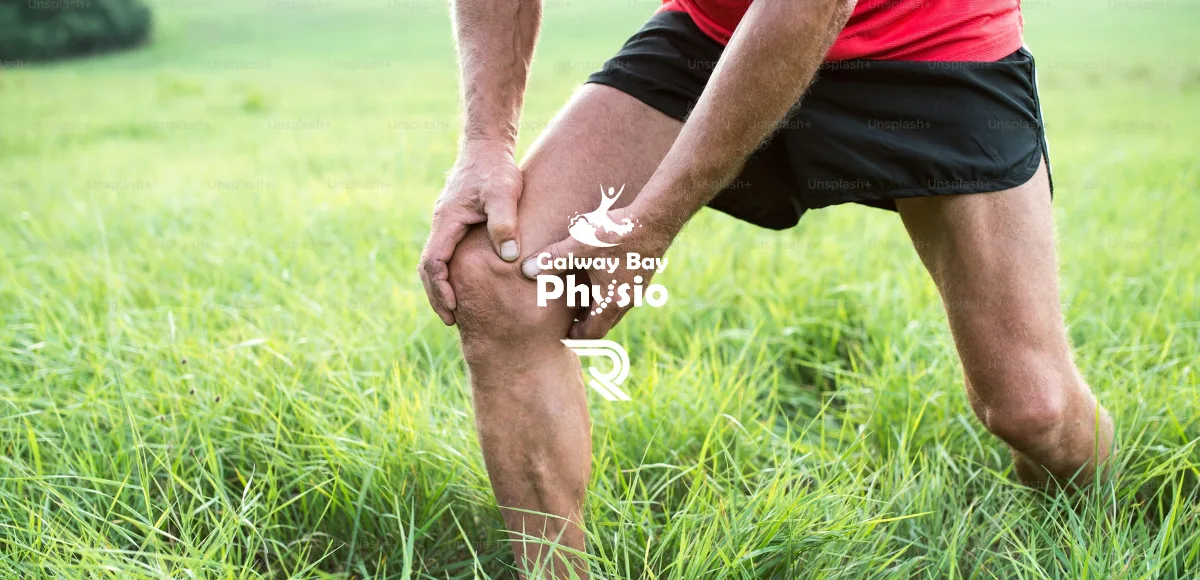
Runner’s Knee refers to pain that typically occurs around or behind the kneecap, often triggered by repetitive movement or overuse. While it’s especially common in runners (hence the name) it can affect anyone who engages in regular physical activity involving the legs. The discomfort tends to build gradually, becoming noticeable during or after runs, particularly when going downhill, descending stairs, or sitting with knees bent for long periods. It may or may not have associated swelling depending on the severity of the case.
There are several factors that can contribute to the development of Runner’s Knee. One of the most common is a sudden increase in training load, such as ramping up mileage too quickly or adding hills and speed work without adequate adaptation time. Poor lower limb mechanics and alignment can also play a role. This may result from muscle imbalances or biomechanical issues. These can vary greatly and need to be well assessed. These can include disproportionate quad strength compared to hamstrings, weak glutes or adductors, tight hips, or collapsed arches in the feet. These problems can alter the way the kneecap tracks over the femur during movement, leading to irritation and inflammation.
Footwear is another key player. Running in worn-out or poorly fitting shoes can undermine your natural biomechanics and increase the strain on your knees. Runners are often surprised to learn that even small issues, like tight calf muscles or reduced ankle mobility, can influence how the knee functions and contribute to discomfort over time.