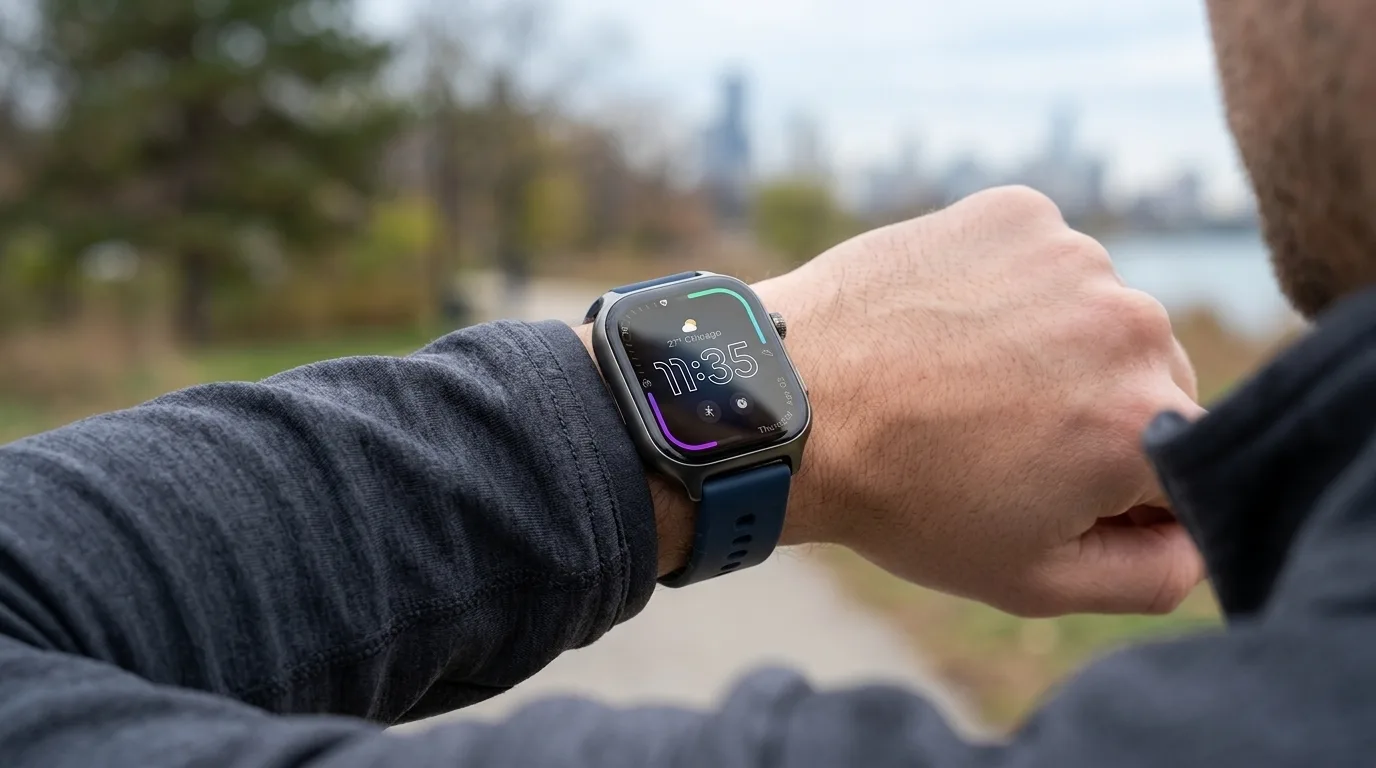
You generally expect the clever running metrics to come with a fairly serious price tag.
Garmin, COROS, Suunto and Polar itself have spent years packing more training and recovery information into increasingly sophisticated sports watches.
Motorola is now taking a rather different approach.
The new Moto Watch 2 Fit, announced on November 5th, costs just £99.99 in the UK and €99.99 in Ireland, yet comes with a collection of fitness, running, sleep and recovery tools powered by Polar.
That includes Polar's Running Index, Nightly Recharge, Sleep Plus Stages, Active Intensity Zones and Energy Sources.
There is also dual frequency GPS, up to 12 days of normal battery life and automatic tracking for more than 100 activities.
For a watch sitting around the £100 mark, there is quite a lot going on.
Polar Technology Without Buying A Polar Watch
The most interesting part of the Moto Watch 2 Fit is the partnership behind it.
Motorola has licensed a collection of Polar's established fitness algorithms rather than attempting to create an entirely new training system of its own.
For runners, Running Index is probably the standout.
Polar uses workout data to produce a score intended to give an indication of aerobic running performance. Rather than treating one run as definitive, the score can be followed over time to see how running performance is progressing.
It is the first time Running Index has appeared within the Moto Watch Fit range.
There are also Active Intensity Zones, which divide daily activity into different levels according to heart rate and movement, while Energy Sources estimates the proportion of energy coming from fat, carbohydrates and protein during exercise.
None of those ideas will be unfamiliar to long term Polar users.
Finding them on a £100 Motorola watch is considerably more unusual.
It Looks At Recovery Too
Motorola has not restricted the Polar partnership to exercise.
The Moto Watch 2 Fit also gets Nightly Recharge, one of Polar's better known recovery tools.
Nightly Recharge combines information about sleep with measurements of how the autonomic nervous system settled during the early hours of the night. The idea is to give the wearer an indication of how well they have recovered from the previous day.
There is also Sleep Plus Stages, which records time spent in light, deep and REM sleep before producing a sleep score.
Again, this does not turn a £100 smartwatch into a replacement for a coach, nor should a recovery score automatically decide how somebody trains.
What it does provide is a much deeper set of information than many people would traditionally associate with a budget smartwatch.
Dual Frequency GPS Is A Big Addition
The other specification that should catch the attention of runners is dual frequency GPS.
Rather than relying on a single satellite frequency, compatible devices can use multiple frequencies to improve positioning in difficult environments such as built up city streets or areas with heavy tree cover.
That technology was once largely restricted to expensive performance watches.
Its appearance here is another sign of how quickly premium running technology is moving down into cheaper devices.
Motorola says the watch can record pace, distance and outdoor activity independently using its built in positioning system.
For somebody who simply wants to record a regular 5K, parkrun or Sunday run without bringing a phone for GPS, that is an important feature.
Up To 12 Days Between Charges
Battery life is another area where the Moto Watch 2 Fit looks impressive on paper.
Motorola quotes up to 12 days of battery life with the always on display switched off.
Turn the always on display on and that falls to up to seven days, while a low power mode can stretch the figure to as much as 16 days.
As always, those are manufacturer figures produced under specified usage conditions, so heavy GPS use and frequent workouts will reduce them.
Even so, charging once every several days is a very different proposition from many conventional smartwatches.
That is helped by Motorola using its own operating system rather than Wear OS.
A Bright OLED Screen
The watch itself uses a rectangular 1.85 inch gOLED display capable of reaching up to 1,500 nits of brightness.
There are slim 2mm bezels around the screen, Gorilla Glass 3 protection and an aluminium frame.
It is rated to 5ATM for water resistance and also carries an IP68 rating, meaning rain and everyday wet conditions should not present a problem. Motorola also positions it for swimming, subject to its stated water resistance limitations.
Heart rate and blood oxygen monitoring are included, alongside stress information, menstrual cycle tracking, step counting and automatic detection for more than 100 workout types.
You Can Take Calls From It Too
This is still intended to function as an everyday smartwatch rather than a dedicated running computer.
A built in microphone and speaker allow Bluetooth calls when the watch is connected to a phone.
Motorola also plans to bring its Qira assistant to the watch through a later update. When paired with a compatible Motorola phone, users will be able to ask questions from the wrist and access features such as Catch Me Up.
There are compromises.
The Moto Watch 2 Fit does not run Wear OS, so users do not get the enormous selection of third party apps available on Google's smartwatch platform.
There is also no LTE connection, meaning it cannot operate as a completely independent mobile device away from a phone.
For runners interested primarily in GPS, heart rate and training information, those omissions may not matter much.
Is It Really A Garmin Or Polar Alternative?
Not quite.
Serious runners buying a Garmin Forerunner, COROS Pace or one of Polar's dedicated performance watches are getting considerably more than basic run recording.
Those devices can offer deeper structured training support, navigation, race pacing tools and more detailed performance analysis.
The Moto Watch 2 Fit is not trying to match all of that for £100.
Its appeal is simpler.
Someone starting to run, returning after a break or simply looking for a relatively inexpensive watch can get dual frequency GPS, heart rate tracking, recovery information and some genuinely established Polar training metrics without spending several hundred pounds.
That makes the price particularly interesting.
£99.99 In The UK And €99.99 In Ireland
Motorola lists the Moto Watch 2 Fit at €99.99 through its Irish website, with UK pricing set at £99.99.
The watch comes in several Pantone colour options and Motorola says availability is rolling out across selected European markets.
At that price, the Moto Watch 2 Fit does not need to beat Garmin's top running watches.
It only needs to provide enough useful information for somebody who cannot justify spending £300, £400 or considerably more on something they mainly wear to record a few runs each week.
That is what makes Motorola's decision to use Polar technology so interesting.
Running watches have spent years becoming more complicated and more expensive.
The Moto Watch 2 Fit takes several of the metrics runners already recognise and puts them into a watch costing around £100.
For a lot of runners, that might be more than enough.