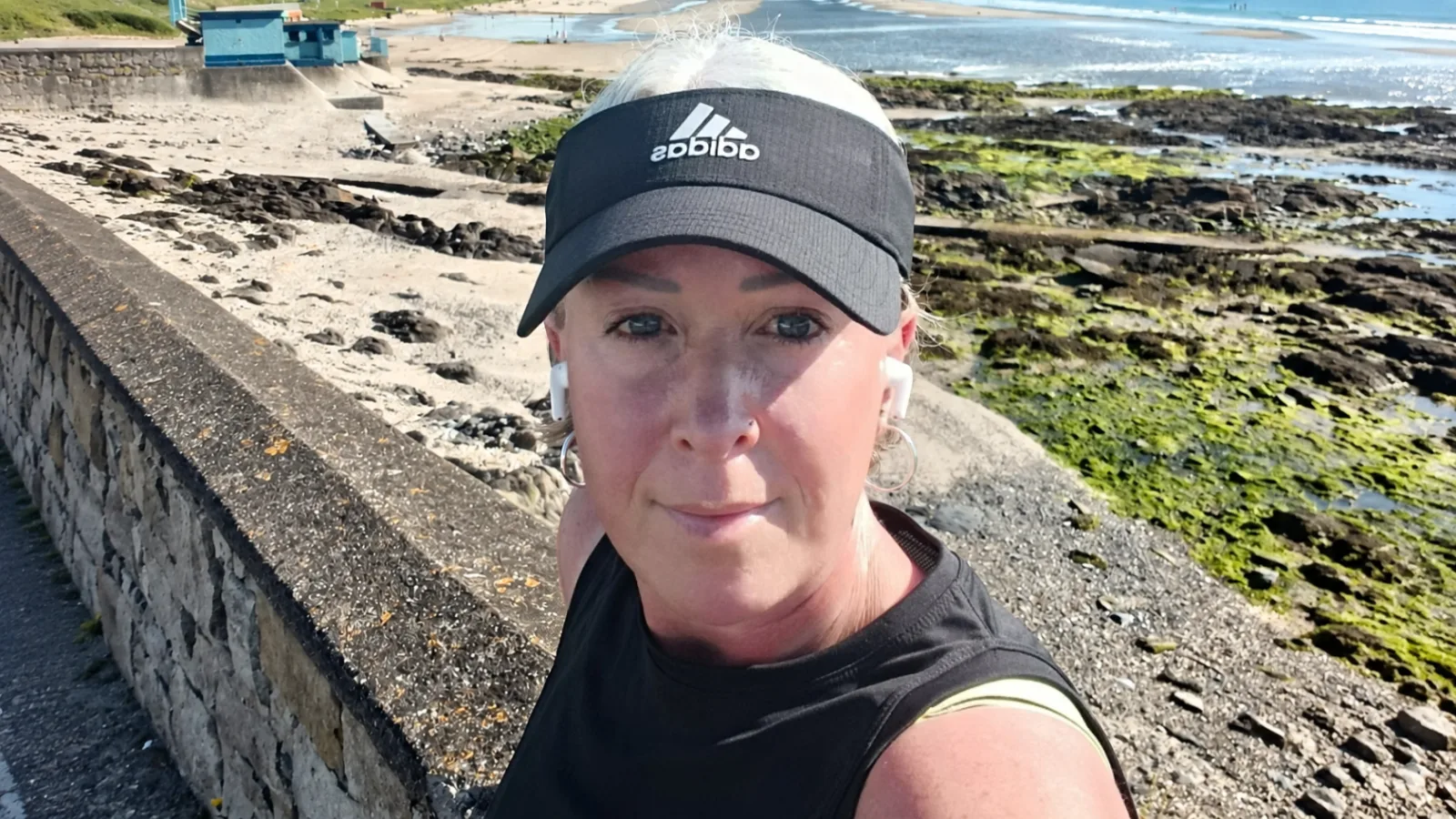
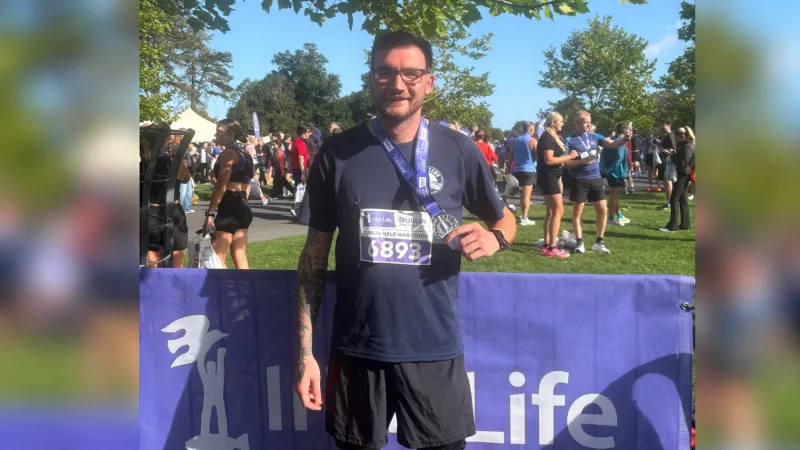
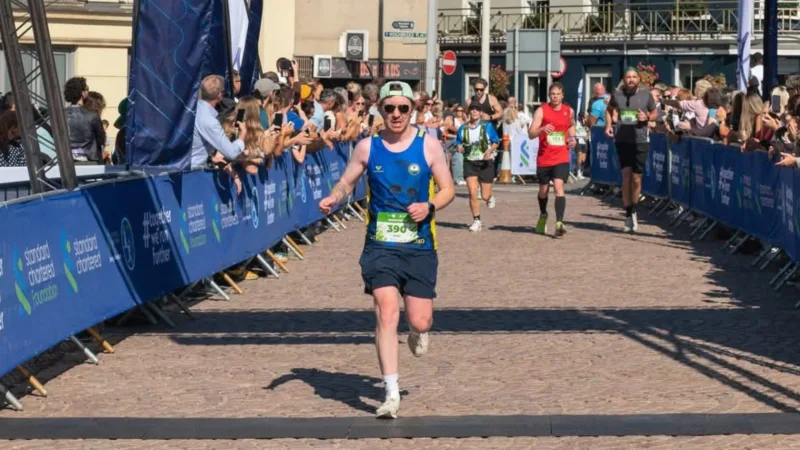
Cara Duffy has already run a marathon, in a manner of speaking, and she would rather you knew the circumstances.
It was October 2020, the year Dublin went virtual. Her brother had died two and a half weeks earlier. The furthest she had ever run was a half. She put her runners on, met a friend, and the two of them did the 42.2 around the roads near home.
"I just decided on a whim, oh, do you know what, I'm going to do it. But in hindsight, it wasn't a great idea."
Her hips went afterwards, and they stayed gone. She tried to come back for the marathon in 2023 and again in 2024, and both times the hips said no. Six years on, she will finally start a Dublin Marathon properly, for the Irish Cancer Society, alongside her husband Brian.
https://eventmaster.ie/fundraising/pages/CD27839979
Malahide, Four Kids, and a Year of Her Own
Cara is 50, from Malahide, married to Brian, with four children ranging from 26 down to 11. The eldest moved out last year. The youngest is an 11 year old boy who is, by his mother's description, all fun and games and full of the crack.
She has been a stay at home mother for a long time, though that is about to change, and the way it is changing matters to the rest of this story.
Two years ago she went back to college to train as a healthcare assistant.
"I just decided, you know what, I'm going to do something I want to do."
She was extremely nervous about it, and then she loved it, and then she finished it. The plan now is to wait until her youngest starts secondary school next year and then go out to work.
That course turns out to be the hinge of the whole thing. Having proved to herself that she could pick something up and see it through, the marathon stopped looking impossible.
From Irish Dancing to Couch to 5k
Cara did no sport at all growing up.
"Nothing. Was never sporty. Did Irish dancing, but quit that. Was a bit of a messer."
Running arrived in her thirties, after her third child, when Portmarnock Running Club started a new Couch to 5k under their Fit for Life programme. She went along with no ambitions whatsoever, and that was precisely the appeal.
"It was just time out of the house, time for myself, just an hour a few times a week. I loved the whole ethos of it. Getting out, a bit of fresh air, a bit of exercise, chatting to people."
For years after that it was on and off, back and forth, never competitive, always social. Then her brother got sick in 2018, and 2020 happened, and then the hips went, and running more or less stopped for the guts of four years.
Turning 50
What finally changed it was a birthday.
"When I turned 50 last October, I just went, fuck it. You know what, I'm going to try."
She had wanted Dublin for a long time. Brian has done it a few times, and she has stood on the footpath watching friends go past, thinking it looked like great crack. So this time she went at it properly rather than half-heartedly. She got in touch with a physio, told her straight out that she wanted to run the marathon, and has been working off her programmes ever since.
It worked, right up until it nearly didn't. She got the entire block done without a single injury, and then last week she stepped down off a chair and twisted her knee, which cost her the half marathon she was meant to run the day before we spoke.
"I've had my pity party for about a week, feeling sorry for myself. But look, I'm doing all the right things. If I have to crawl over that finish line. I will. Just pure determined now to do this and enjoy it."
The one thing the knee did do was settle the question of a time, which she had been quietly getting caught up in.
"I was like, oh, I wanted to do it in whatever. But does it matter? It really doesn't. I just want to be there and enjoy the day and have everybody at the finish line."
Four Days a Week, on Her Own
Cara trains alone, four days a week, sometimes half an hour and sometimes an hour.
She did not go back to the club, because the times never suited, so the whole year has been solo. A few friends ran with her early on and dropped off as the distances got longer, which she is entirely relaxed about.
"At the start I was like, oh, I'd love somebody to run with. And now I'm like, no, actually, I can do it on my own."
Her long runs take the new path out to Portmarnock, then on through Baldoyle and up the coast towards Clontarf, which is a lovely stretch of coastline right up until the wind turns and meets you head on.
She is honest about what solo training is actually like, in a way most people being interviewed are not.
"I did have a few little breakdowns and pity parties feeling sorry for myself, but I always got them done."
The sessions are the part she hates.
"The tempo and interval sessions, I absolutely hate. I dread them every single week. I'm nervous, which is silly, because I'm not competing against anybody. It's only myself."
She finishes them anyway, every week, and feels great afterwards.
The consistency is what she keeps returning to, and it clearly means more to her than any distance on any given Sunday.
"I'm doing it for me, and the consistency has really paid off. I don't think I've ever stuck to anything for a year ever. Apart from work and kids and all of that. Something just for me."
Getting Yourself Back
There is a thread running through most of the conversation that will land with a lot of parents reading it, and Cara names it without being asked.
"You just kind of lose who you are. Life just ticks by. There's this exam or that exam, or the kids have sports, or they have guitar, and life just rolls around."
She and Brian, she says, are passing ships in the night most weeks.
"You definitely lose the sense of who you are. And yeah, just in the last eight or nine months, I'm like, this is who I used to be. I used to be a bit of crack. I used to do stuff for myself."
The bigger shift was the guilt, which took longer to shake off than the hips did, and she says it out loud like it cost her something to get there.
"I've actually got over feeling selfish, which is a big step for me."
The children have noticed, which she is quietly delighted about, not least because it has handed her some useful ammunition on wet evenings.
"They'd be like, oh, I don't want to go to training. And I'm like, you have to go. You go to training, you'll play better at the match. My eldest plays the guitar, so it's, you practice hard, it'll work."
"And you see me, I'm just in their ear all the time. Look, I'm going out, it's lashing rain, it doesn't matter. Still go, because I'll get better if I keep going."
Her own summary of the whole thing came at the very end of the interview, unprompted, and it is the best line in it.
"It's just something for you. Something just for you that nobody can suck the joy out of."
Fuelling and Recovery
On the long run Cara takes a gel every thirty minutes and has never had any bother with them.
The addition this year has been a carbohydrate drink, which she went looking for because of one specific problem, and which she approached with a healthy amount of scepticism.
"I don't normally fall into the big advertising trap. But I was just wrecked after my long runs. Absolutely wrecked."
The problem was not the run itself, it was two days later.
"If I was going for a long run on a Sunday, on Tuesday I'd be absolutely zapped. Just zapped. And I just don't find I'm like that now."
She is careful to say she cannot be sure whether it is the drink, or what she is eating, or her own head. She gave some to Brian before one of his long runs, and reports that he was grand the next morning, which for a man who believes he is still 30 and does not take gels counts as evidence. The absence of sticky hands is, she notes, a secondary benefit.
Recovery is the strength work her physio prescribed, plus a four or five kilometre walk on the coast road or up at the castle, rather than stretching, because at this stage of the year she is wary of aggravating anything.
One of her daughters is training as a Pilates instructor and keeps trying to get her onto a mat. That is filed under after the marathon.
Her Brother
Cara's brother was diagnosed in 2018 with squamous cell carcinoma of the maxillary sinus, which sits up behind the teeth and into the nose.
She knew early what the survival rates looked like, because she looked them up, and because she knew a few nurses and asked them for their honest opinion and got it.
He decided he was going to beat it anyway.
"My brother stayed very positive. He was like, no, I'm going to try and beat this."
He had major reconstructive surgery, which took a great deal from him and did not give him what they had hoped for. He spent more time in hospital after the operation than he had before it, and he hated every day of it, mostly because he could not stand people feeling sorry for him.
He died in October 2020, at 47, during COVID, so they could not have people at the funeral.
There is a lot of cancer in the family. Cara's father died 22 years ago, at 57, and there have been uncles, aunts and cousins over the years since.
It is his age that she thinks about most.
"Because he was only 47, every time I get to another year I'm like, oh Jesus, if he was here now, he'd want to be doing this. It gives you a little push to do things, because you are here. So make the most, because you don't know when it's your turn."
And she is clear that grief does not mean everything stops.
"It is good that there is life after death. I know that seems a bit dramatic, but there is, and you have to move on."
What the Irish Cancer Society Actually Did
Ask Cara what the charity gave her family and she does not describe a service or a programme. She describes an attitude, and she does it in the present tense.
"They're just so kind. They're just there for you whenever you need them. They're giving you their number and saying ring me, or they'd sit with you in the hospital."
"It's the time. The time they give everybody. You're never in a hurry, you never feel rushed out the door. You can talk to them about anything, and you don't feel it's going to go anywhere else. They don't make you feel stupid for asking questions or being upset."
It is the small things, she says, that let you walk out of a hospital feeling a bit better than you did going in, and knowing that the person you left behind is being properly looked after.
One of her daughters, now a qualified nurse, saw all of it up close, and Cara reckons it left a mark on her too.
€1,500, and Then €3,950
Cara set a fundraising target of €1,500. By the time we spoke she had raised €3,950.
Getting started was the hard part, and she thinks that is a national trait rather than a personal one.
"Very difficult at the start. But I suppose that's an Irish thing, isn't it? We don't like asking for anything."
She is not big on social media, but she set up a small Instagram page at the start of the year anyway, to post the ups and downs of her training. The logic was modest.
"It wasn't about getting followers. It was really just to put it out there that if I got one more follower and they threw me a fiver, well, great."
The bigger lift was a coffee morning in her own back garden a few weeks ago, and the run-up to it took over the house. People kept arriving with donations. Hundreds of books ended up in the cabin in her garden. Neighbours dropped in takeaway coffee cups and bags. She spent the morning itself convinced nobody would come.
They came at five to eleven, for an event advertised from eleven.
So she opened the back gate and let everyone in, and the sun came out. Around 60 people came through the garden, including neighbours she would not see from one end of the year to the next, and a few her husband did not know at all. Her son set up a book sale on the green at the side of the house, where people were passing on their way back from the park, and took €250 off them.
The raffle was somebody else's idea, and Cara did not want to go asking local businesses for prizes. She went anyway.
"I put my big girl pants on and walked to the village and just went around the businesses and asked them."
SuperValu gave a hamper. Restaurants gave vouchers. The butcher chipped in. One shop donated a handbag. She had a QR code taped to the wall, and people walking past stopped to scan it and buy tickets.
People sat in the garden drinking tea and talking for hours, and she was, by her own account, buzzing for about a week afterwards.
Her lesson from all of it is worth the attention of anyone sitting on a charity place feeling queasy about asking.
"If you don't ask, you don't get. Don't be afraid to ask, because people are really generous. They really are."
What She'd Tell Someone Starting Out
Cara's advice comes from a woman who did no sport until her thirties and who is about to run a marathon at 50, so it carries more than most.
Start. Walk a bit, run a bit, walk a bit. Do not spend a fortune on gear. She began with the free Nike Run Club app and a voice in her ear telling her what to do.
"We put a lot of pressure on ourselves to keep up with the Joneses. Oh, she's much faster than me, she's got better runners than me. It doesn't bloody matter. You just need to go out and do it."
On self-consciousness she is brisk.
"Don't worry about who's looking at you, because actually nobody's looking at you. Nobody cares what you're doing. I see other people out running and I actually don't care what they're doing. I'm just like, oh, they're out, that's great."
On the weather, brisker again.
"It doesn't matter if it's raining. You're not going to die in the rain. Where we live, you have to expect the wind and the rain."
The payoff, she says, arrives after about eight or nine weeks, when you go and run your first parkrun.
"You're like, yeah, I've done that. That's brilliant. It's just a little moment for yourself. And it encourages you to keep going, because if I could do five, I can do six. You get a little competitive with yourself."
She recommends finding a run buddy, for the accountability if nothing else, because then you have to show up at a certain time on a certain day. And she is unequivocal about what it has done for her head.
"Very good for your mental health. For me personally, it's very good."
November 15th
Cara is thinking about a club again next year, once this is out of the way, or possibly setting up her own Couch to 5k, on the basis that somebody did it for her once.
But the date she actually has circled is not race day.
It is 15 November, when the knee should be right, and she and the girls she used to run with are starting into training together again, this time for the Raheny 5 mile. They are, she says, excited to get back to it.
As for the marathon itself, she has landed somewhere very simple, helped along by a sister-in-law who runs and who keeps telling her that it does not matter how slow you go as long as you keep going.
"At this point I actually don't care how long it takes me. As long as I get over that finish line. I just want to be there in Dublin on the day and suck in all the joy."
You can support Cara's fundraising for the Irish Cancer Society ahead of the Dublin Marathon here
The Irish Cancer Society Support Line is free on 1800 200 700, for anyone affected by cancer.