Fresh from the Athletics Ireland National Championships in Morton Stadium, Anika Thompson sits down with Paddy Ryan.
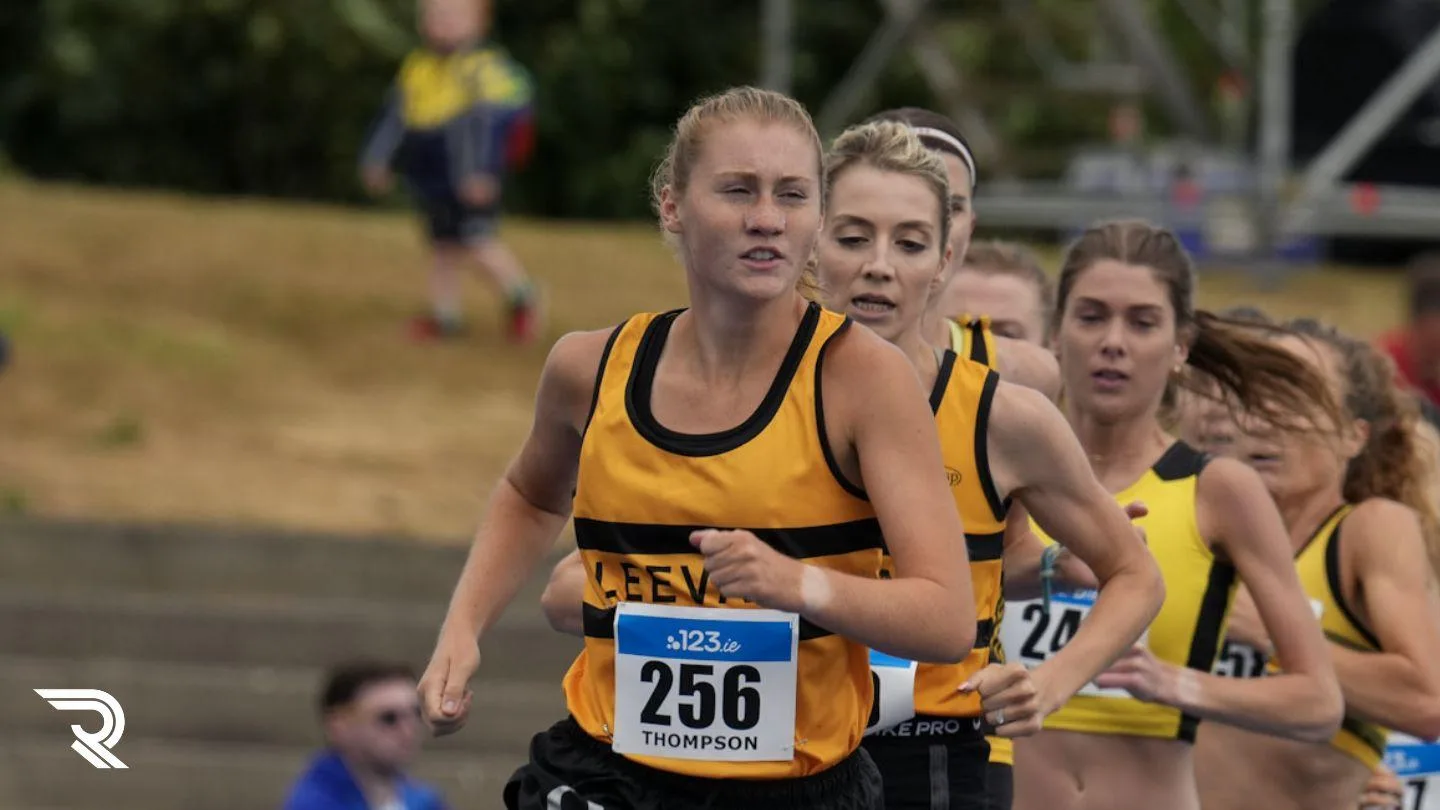
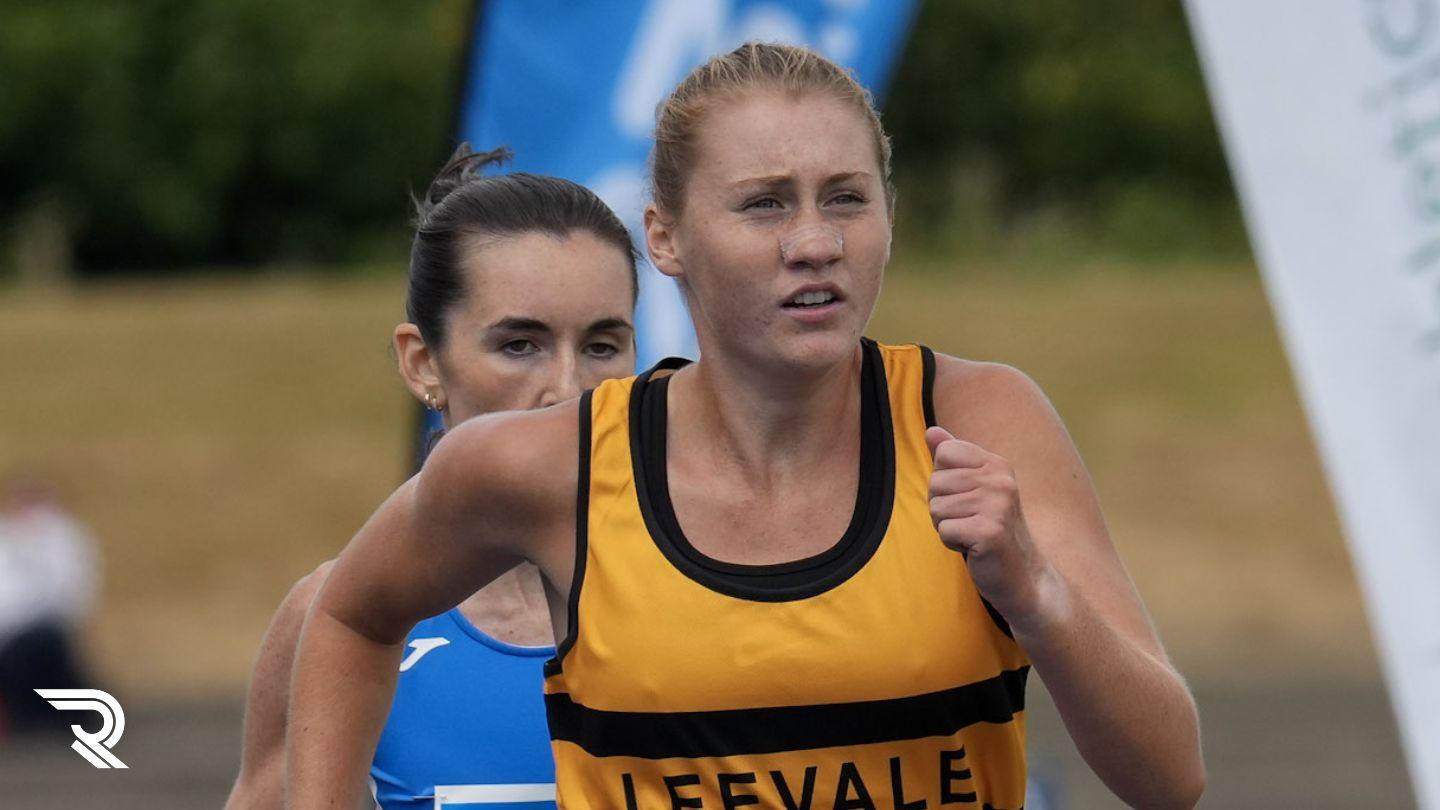
Anika Thompson is barely off the bus from the nationals when we spoke. Late arrival into Cork, bed around midnight, then a lie-in at her granny's house in Ovens is about as good a recovery protocol as any of us could ask for. She had just run 15:58 for fourth in the national 5000m final, and she was in the sort of humour you only get after a race that went honestly.
Speaking with Anika, there are two sides to her, the American collegiate athlete who has spent five years inside one of the biggest track programmes in the world, and the Cork woman who ends up at her granny's, running up the same hill her mother used to cycle up. She's driven to succeed, but grounded.
Fairbanks first, Eugene second
Most people assume Oregon is the whole story. It isn't. The first seven years of Anika's life were spent in Fairbanks, Alaska, which she describes, fairly, as a tough place to be a child. Ice hockey and Nordic skiing were the passions of the day, both of which turn out to be reasonable groundwork for a distance runner.
"You couldn't go outside without almost freezing to death," she says. "So you have to be ready to prepare for the harsh conditions." Her father has a theory about this. "My dad always jokes, we have Alaskan blood, so that's why we're really tough." She half credits it, and half credits being the middle child, wedged between older sister Kira and younger brother Connor, competing for everything going.
Then the family moved to Eugene, Oregon, and the track capital of the world did what the track capital of the world does. She saw Hayward Field and that was that. Her first love was the 100m, of all things, which is worth remembering the next time someone tells you a kid has to specialise at ten. Her parents signed her up to a club, the natural talent was obvious early, and she played everything else too: basketball, golf, volleyball, soccer. Running only became the sole focus at around fourteen.
The genetics are split neatly down the middle. Her father was a mid distance runner, 800 and 1500. Her mother is where the engine comes from. She cycled for Team Ireland, raced with the Cork club, and put in years of hard miles around the county, finishing every day by climbing the hill to the family home in Ovens.
"I appreciate it now," Anika says. "I run up that hill and it's hard enough. I bet it's harder on a bike." What stuck with her wasn't the racing so much as the work rate, and the fact that a gift plus graft got her mother travelling around Europe. That, she says, was the bit that made her think: I would love to do something like that.
Her mother also, inadvertently, put her off cycling for life by telling the story of waking up in hospital with a broken wrist after a crash. Athletics it was.
The cookies at Hayward Field
The Irish thread was never in doubt. Her mother is one of eight, most of the family are still around Cork, and the Thompsons came home to granny and grandad every single summer. She grew up watching old footage of Sonia O'Sullivan. One of those summers she joined Leevale and met Donie Walsh.
But the moment she points to is 2013, when the Irish team came to Eugene for the World U20 Championships. Anika was ten or eleven. The family baked cookies for the Irish athletes, made signs, went down and roared them on.
"I remember watching Team Ireland at U20 Worlds, and I'm like, geez, I want to do that someday."
The second dream, the Oregon one, took longer to feel real. She was good in high school, not a superstar, and the idea of the Ducks felt out of reach until a strong sophomore year changed her maths. So she did the sensible thing and just asked. She emailed the coach and said, straight out, what times do I need to hit to walk on here? She got an answer, and she went to work on it.
Then Covid arrived in her junior year, which happens to be the year American athletes get recruited. No season, nothing. She kept grinding anyway.
"Work in the dark for your time in the light" is the line she repeats to herself, and it earned its keep that year. When racing came back she hit the times, walked on to Oregon in 2021 with no scholarship money, and got to be coached by Shalane Flanagan. Not a bad outcome for a cold email.
Bergen, and a promise made in a medical tent
Her first Irish vest came in her sophomore year, and the first European cross country course in Turin was a genuine shock to a woman raised on American golf course racing. But the race that defines her so far is Bergen, and the road to it started badly.
Two years earlier at the U23s in Finland she was in the shape of her life for the 10,000m. She sat fourth through 5000m and then the wall arrived, heat exhaustion with it, and she finished eleventh. She still remembers what she said walking out of the medical tent.
"I'll be back in Bergen. I'm going to medal in Bergen."
She then spent two years visualising it. She skipped the NCAA spring season entirely, spent a month at 7,000 feet in Flagstaff and went all in on the one race. She won the 10,000m, then came back and took bronze in the 5000m. A double medal at a European championships, and the first one arriving in the same year her grandad, the man who got her into Leevale in the first place, had passed away.
"I felt him looking down from heaven," she says. "He's always in my heart when I'm racing."
The workhorse
Ask her what her actual gift is and she doesn't say speed. She says durability, and then knocks on wood.
Six years or thereabouts with maybe one day off a year. Seventy to ninety miles a week. Barely an injury to speak of. "I'm not a thoroughbred, I'm a workhorse," she says, and the numbers back it up: she has never broken 60 seconds for 400m, her best is 64, but she can run ten miles under the hour on any given day.
Which is a fairly loud signal about where this is all heading.
Image Credit: Eric Bellamy / ShutterDublin
Flagstaff, Houston, and 2028
Oregon is finished now, degree in sociology done, and the plan is to move up to Flagstaff this autumn or winter and join the group of coach Jack Polerecky, a road and marathon specialist who has guided a world championship marathon bronze medallist.
There is no pro contract yet, and she is remarkably relaxed about that. Her model is Rocky. Get a simple job, get the runs in morning and evening, pay the bills, no excuses.
"I don't need a pro contract to be a good runner."
The immediate diary reads: Streets of Galway 8K in a fortnight, a prize money road race back in Oregon, then two weeks of easy running with the watch ignored, then a full lock-in on the Houston Half Marathon on 17 January. She races sparingly and by design. "When I race, I like it to be a very good race."
After Houston, the marathon debut, and she is already picturing Dublin 2027. The target beyond that is not complicated: Los Angeles 2028, in the marathon, for Ireland. "That's something I think about every day, probably."
She isn't abandoning the track to get there, mind. She wants the 5K as close to 15 minutes as she can get it, a sub-31 10K, and a senior national title. On yesterday's evidence she is honest about the gap: aerobically flying, but short on sharpness after months of grind and not enough speed work, unable to shift gears when Danielle went. Her fix is characteristically unglamorous. "I just got to get back to work. I need more hay in the barn."
Leevale, and why the club matters
The last word goes to the club, because Anika keeps circling back to it. Her grandad coached at Ovens Athletic Club years ago, and it was him who brought her into Leevale.
Donie Walsh gets the biggest billing. "How cool is it to be coached by one of your heroes?" She lights up talking about Tuesday and Saturday sessions, the stories, the training chat. She also asked that Chris Harrington be remembered, a man she says was nothing but kind to her and whose energy will stay with the club.
And she is genuinely bullish about where Irish athletics is going, from the U18s up. Her parents are hosting the Irish team for dinner in Eugene during the World U20s, which tells you plenty about the family.
"For a country so small, Ireland sure puts their foot on the map. And I think it starts at the club level."