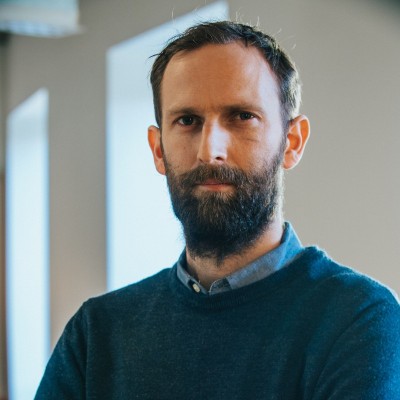
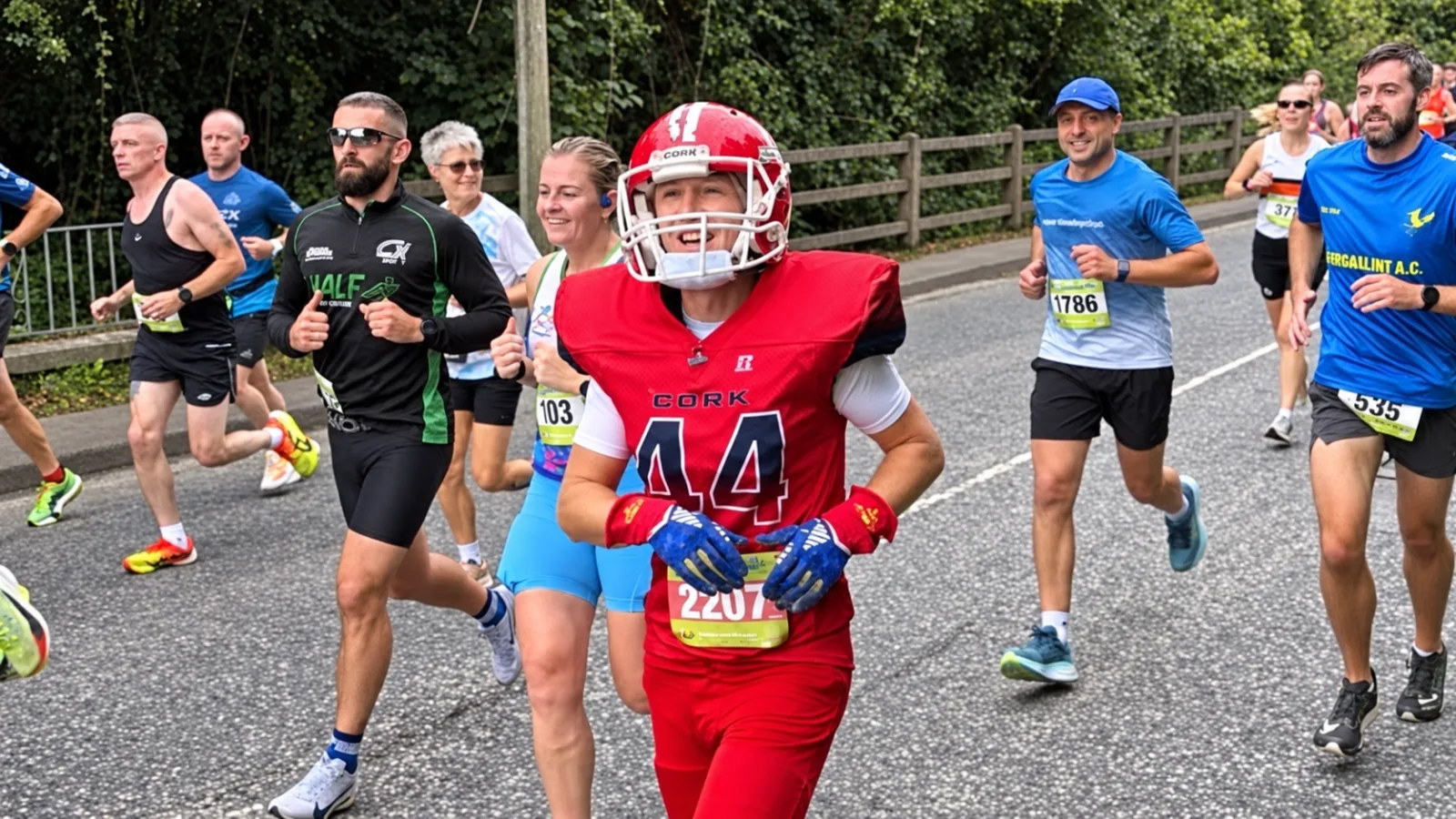
Somewhere in the Dublin Marathon field this year there will be a man in full American football kit. Helmet, shoulder pads, leg pads, long socks, the lot. Roughly three kilos of gear that nobody has ever designed with 42.2 kilometres in mind.
That's Anthony Creed, from Cork, and he's going after the Guinness World Record for the fastest marathon run in American football kit. The mark to beat is 3:29. He's aiming for 3:20.
He's also running it for the Irish Motor Neurone Disease Association, in the number 44 jersey to honour a former teammate who passed from MND in 2024.
The Cork Fella in the Bank
Anthony works in IT at Permanent TSB as a business analyst, on the changes and functionality that go out to customers, in a sector where the regulatory ground shifts under you every few months.
"There's always a scramble," he says, with the weary cheer of someone who has met a new compliance framework recently.
He's from Clogheen, and a UCC man who never saw the point in leaving.
"I only live a few kilometres away from UCC anyway, so it was a no-brainer for the ease of commuting."
Not Built for Contact, Allegedly
Ask a Cork man why he didn't play hurling and you expect a certain answer. Anthony's is that he wasn't built for contact.
So he swam instead, from about eight or nine years of age, up to Munster level, four times a week, right through to his Leaving Cert.
"I never made the Irish team. There was probably another level or two I could have gone if I really wanted to, and I just burned out of it by the end."
Then, having established that contact sport wasn't for him, he joined the Cork Admirals and played American football for two years.
He's aware of how that sounds.
"I'd been into American football, watching it, so I said I'd join the local team and see how I got on."
The Patriots are his team, and the reason is lovely. His mother worked with a Boston company for the guts of twenty years, and every time she came home she brought something back, so he simply grew into the kit he was given. He's been to games in America, one at Wembley and one of the early college games at the Aviva.
What ended the football was running. Trying to do both meant being eaten alive by lads considerably bigger than him, and picking up injuries for the privilege.
His Father, and Dublin 2018
The running came from his dad, which is the part of this story Anthony tells most warmly.
His father joined the local running group in Blarney and started signing up for 10ks and half marathons. Anthony was on a six month placement in Boston at the time, so his dad ran his first half while he was away.
When he got home, they started running together, and the ball kept rolling until his father entered Dublin in 2018.
"I said I'd do it too. So at that point we did the Dublin Marathon together in 2018."
Together in the sense that matters rather than the literal one. Anthony came home in around 3:50, his dad closer to 4:15, but they got to the start area together and finished the same race, and the pair of them went back and did Cork the following year.
He's honest about the preparation, which will comfort a lot of first timers.
"I don't think we prepped as well as we should. I think we did one long run, 25 or 26k, in the rain, and I was like, that's enough now, I'll be fine."
It wasn't, quite, but it's the medal he still points to.
"When you've done an awful lot of stuff, that's one of the ones that sticks out."
He remembers almost nothing of the course, mind, which is why Dublin this year will feel close to new.
"I remember going into the Phoenix Park and the rest of it I could not tell you."
The Wall Behind Him
Anthony has a lot of medals hanging up, and there's a reason they're on display rather than in a box.
"If you don't know anything about me and we hop on a call, you kind of have an idea."
Four of the six majors are there: London, Chicago, Boston and New York. Cork, Seville, Valencia, Amsterdam, Dingle and Dublin alongside them. There's Ironman hardware, and a medal from a 12k swim. And there's a marathon he ran in June inside the Arctic Circle, six days after running Cork.
"Two marathons in the week was tough on the legs."
For all of it, Cork is still his favourite.
"It's just home. You know a lot of people who are there. It's not somewhere you go, like a major. Everyone's kind of out there."
Sixty Kilometres a Week, and a 2:49
Here's the part that should be read carefully by anybody convinced they need to be logging 100k weeks.
Anthony's marathon best is 2:49, run in Valencia. His biggest week in that build was 64 kilometres.
"We were going quality over quantity. It kind of does show you don't need massive mileage."
The thing that made it possible, he reckons, is the strength work he's kept up consistently for four and a half years, since Boston, where he ran about 3:53 on an Achilles that wouldn't cooperate.
"The gym is probably the biggest thing I've kept consistent. Twice a week for the past four years. If you get any niggles you find them quickly, because you're in the gym."
The rest of the load goes into water. He did a huge amount of open water swimming over the summer, including a 12k in the Shannon at Lanesborough in May, where he finished second, and he's clear about what it does for his running.
"If I swim a lot it kind of keeps me from bashing the legs too much."
He'll admit the swimming is where his real talent lies.
"I'd say I'm a better swimmer than I am a runner. I can win swim races on their own, depending on who shows up. But running, I'm not going to be near the front of people running a 1:04 half."
Cycling, for the record, is his least favourite of the three and gets about one outing a week.
For Dublin he doesn't expect to go above 60k in a week, and he's relaxed about that.
"I don't feel the need to hammer the 80k and 100k weeks. It never works really, unless you're on a proper strict plan."
Fuelling
Anthony uses Precision Fuel and Hydration, having moved off Maurten after it turned on him mid-Ironman.
The system is worked out to the gram. A carb mix in a flask, 60 grams of carbohydrate and 1,000 milligrams of sodium, carried in the two side pockets of his long run shorts, with gels alongside depending on the intensity.
"Every 25 minutes I'll take a 30 gram gel."
Averaged out that's around 70 grams of carbs an hour for Dublin, and closer to 90 if he were racing hard, which would mean going every 20 minutes instead.
"Twenty-five minutes feels like a good sweet spot."
The other half of the strategy is the pizza the night before a long run, which he mentions with no ceremony whatsoever.
The helmet, needless to say, complicates all of this. In his dress rehearsal in Charleville he ended up tossing cups of water at his own face because he couldn't get them through the grille.
Pacing Cork
One of Anthony's better days this year had nothing to do with his own time. He paced the four hour group at Cork, his first time pacing a full after several halves.
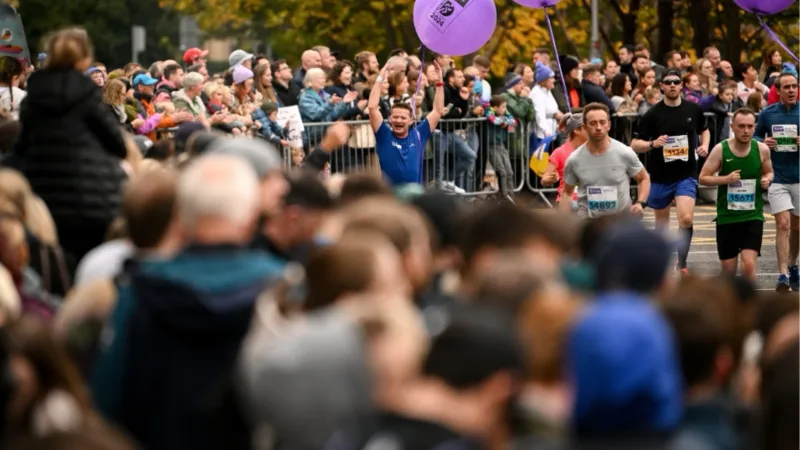
"It's nearly one of my favourite finish lines in running. The crowd really came out. I'll probably do it again next year."
He's full of praise for Eamonn Hayes, the race director in Cork, who paced races himself before taking the job on, London among them.
"He knows his stuff when it comes to what we should be doing, and taking care of us so we can take care of everyone else."
He rates it as a challenge worth trying for anyone who fancies something different, with one honest warning.
"Mentally it's tougher than physically. You're going, oh God, am I gone too fast, are we under, are we over."
He also had the good fortune of a colleague with a boom box in a bag on his back, playing tunes the whole way.
"It was great crack. A great sense of achievement, helping other people out."
Bob
The reason for all of this sits with a man Anthony briefly knew.
When he decided to go after the record, he needed American football gear, so he went back to the Cork Admirals to borrow it. As a gesture in return, he offered to fundraise for whatever cause the club wanted.
The club had one.
Brian O’Brien, known to everyone as Bob, played for the Admirals. Originally from Carrigaline, Cork, he was diagnosed with motor neurone disease in early 2024 and sadly passed away on June 14th, 2024, in his early forties, leaving behind three children.
"We kind of crossed paths for a year when I played."
Anthony went to the family before doing any of this, which is exactly the right instinct.
"You don't want to be fundraising for someone or using their name without checking with the family."
Bob's brother Dylan, a guard in Dublin, was fully behind it. The family had Bob's jersey framed at home, and they took it down and sent it to Cork.
So Anthony will run the Dublin Marathon in a helmet, shoulder pads and the number 44.
"It has more of a personal connection as regards why I'm fundraising, and for him. It all comes together nicely."
He's blunt about what the disease does, in the way people are when it's landed near them.
"He was a young man in his forties. It just shows the severity of these things. You think you're completely fine, and something comes along and ends everything."
Where the Record Idea Came From
The seed was watching London, where the costumed record attempts are part of the furniture.
"You see all the people doing all their records, dressed as Big Ben or in a suit. You just think they're mad."
So he went through the Guinness list looking for something reasonable.
"Some of them are 2 something and you're like, I barely do that anyway."
The American football record was 3:33 when he first looked, and has since been lowered to 3:29. Given he's usually around three hours, 3:20 in the gear looked achievable, if uncomfortable.
He tried to set it up back in early 2024 and badly underestimated the logistics. Guinness requires an application, verification, and the gear itself assessed against their standards, then photographs, video, witness statements and finish times submitted afterwards. The ratification comes back a month or two later.
There was a fitting process too, and it was not glamorous. Helmets that gave him a headache. Pads too big and pads too small, until they found a combination that worked.
The Dublin Marathon organisers know he's coming, which he sorted early.
"I didn't want to rock up with the pads and the helmet and have them say, sorry, no."
The full dress rehearsal was Charleville, in heat and humidity, where he ran 1:36 and learned a lot about drinking.
"One guy thought he was hallucinating when he saw me coming up behind him."
The Fundraising
This is Anthony's third proper fundraising effort, and the previous two say something about him.
At the start of COVID, with Boston cancelled, he ran around his local GAA pitch 84 times and raised around €3,000 for Pieta House.
Last November, he raised €2,500 by running 10k every day for a month, including a 30k run to mark his thirtieth birthday. Permanent TSB's community fund matched the amount raised, with the proceeds split among its community partners across the country.
He's found people generous, and he's not shy about asking.
"I won't say sell myself, because it's for charity, but I can put myself forward out there if need be."
The response since he started running in the gear has been immediate.
"Since yesterday another fifteen or sixteen people chipped in."
What He'd Tell a First Timer
For all the numbers, Anthony is careful about perspective, and he brings it up unprompted.
"It's all perspective. I'm trying to remember that there are people just starting out. People doing 5ks. You say you only did ten miles, but someone could be killing themselves to get to ten miles."
He got a reminder of it last year in Cork, when he ran his fiancée's first marathon alongside her.
"It was a lot slower, obviously, but it was getting her through it, and getting the journey of that. There's an awful lot more of that than there is of where we are, thinking about times and paces."
His own advice comes from a man who has run everything from 2:49 to a pacing job, and who remembers what it felt like to arrive at Dublin in 2018 off one long run.
Pace yourself. He went out too hard on his first and paid for it.
Break the thing into pieces, and use whatever pieces suit you. He counts in gels.
"Okay, it's 25 minutes to my first gel, then another 25 to the next. Really segmenting it works."
Accept that the last part is horrible regardless of how fit you are.
"The last hour and a half, or ten kilometres, will not be fun. Whether you've trained loads or you haven't, it's going to be a tough slog."
Use the crowd, but be smart about when. He took a huge lift from the support early in his first Dublin and reckons he spent too much of himself hyping it up.
"There are parts of nearly every marathon where it's not as busy. That's where the mental focus has to come in."
Run-walk is a perfectly good strategy, three minutes running and one walking, if that is what gets you round.
And don't be precious about walking.
"Walk the aid stations. For a lot of my Ironmans I walked the aid stations. It's not going to kill you and it's really going to help you get the fuel in."
Dive In
Ask Anthony for a closing thought and he doesn't reach for anything profound.
"Just sign up. Just dive in. Everyone can sit on the couch and do nothing, but that doesn't seem like the way. At least get out and do something. You just feel way better."
He's getting married next year, and he's already quietly thinking about what comes after that, which tells you everything.
"Always have something to aim for. It makes life way more interesting. When you don't have a race to sign up for, or a group to go out with, you can say ah, I'll leave it off."
His last word on it is the simplest thing anybody in this series has said.
"Movement is medicine. Go to the gym, or swim, or run. Just do something."
You can support Anthony's fundraising for the Irish Motor Neurone Disease Association ahead of the Dublin Marathon here.