Marathon courses are usually discussed in terms of bridges, hills and famous landmarks. New York’s latest alteration began with a rather more ordinary concern: people in the Bronx still needed to buy groceries and wash their clothes.
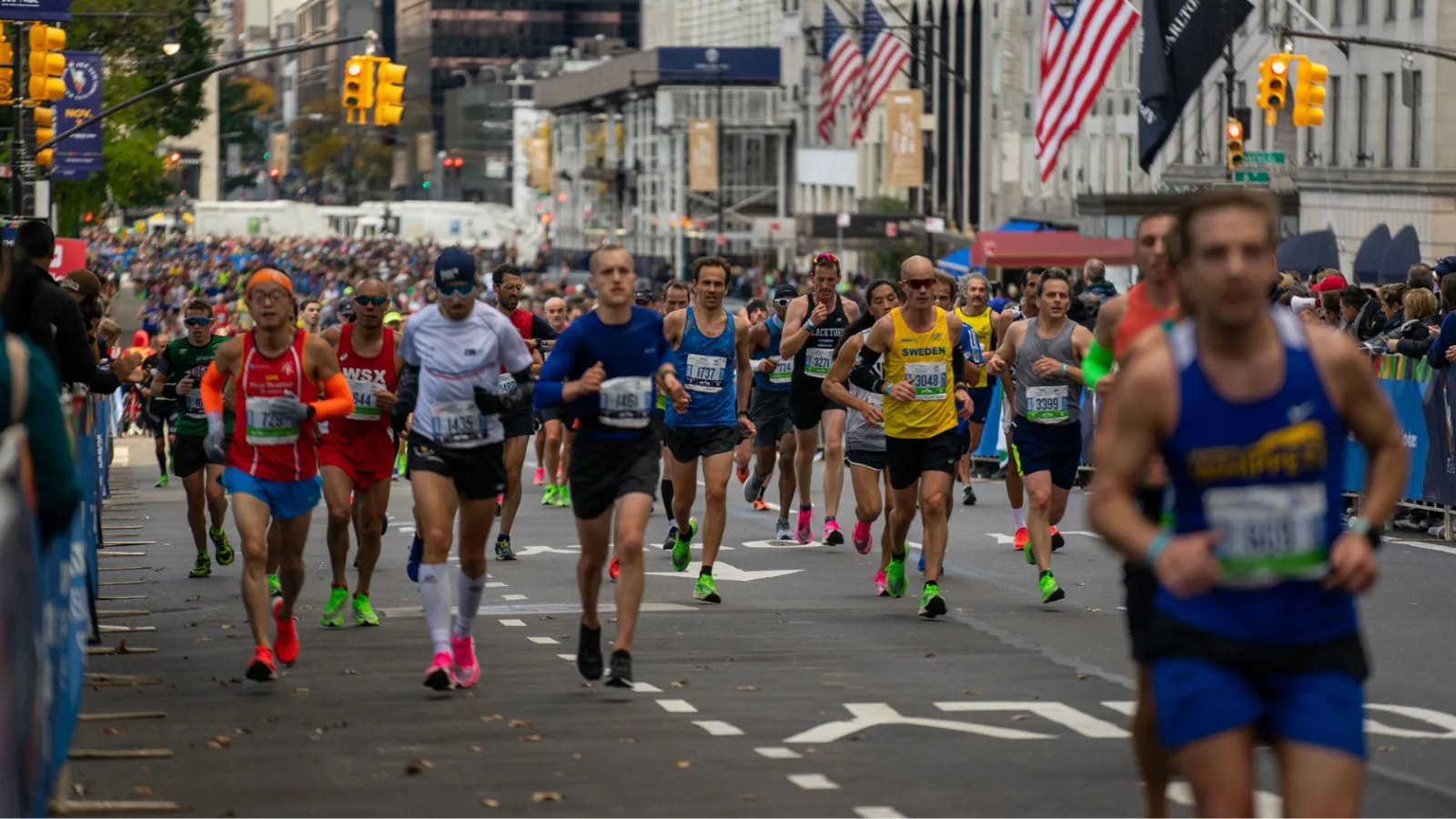
The TCS New York City Marathon will take a revised path through Mott Haven on Sunday, November 1st, when tens of thousands of runners make their annual journey across the five boroughs.
It will be the first alteration to the course in 15 years. The distance remains 26.2 miles and every borough retains its place, but one complicated mile in the Bronx has been redrawn.
Runners will now make five turns rather than seven between miles 20 and 21. More importantly for those living beside the route, the race will no longer surround a block containing a supermarket and a laundrette.
When One Mile Became a Barrier
The Bronx forms a relatively short but memorable part of the marathon.
Runners arrive across the Willis Avenue Bridge after the long passage north through Manhattan. They spend just over a mile in the borough before crossing Madison Avenue Bridge and returning to Manhattan for the closing stages.
Under the previous arrangement, the course curled around a block close to East 140th Street. Inside that loop were a Western Beef supermarket and the Clean Rite Center, a laundrette which operates throughout the day and night.
Once the roads were secured for the marathon, reaching those businesses became difficult for local residents. Vehicle access was restricted and even journeys on foot could become considerably more complicated.
The road closures also affected an important access point for the nearby Patterson Houses, a public housing development containing almost 1,800 homes.
Closing off a shop for several hours can be a minor irritation in some neighbourhoods. In an area where grocery options are already limited, restricting access to a large supermarket carries far greater consequences.
New York Road Runners said the revised course was intended to reduce the event’s effect on the Bronx community and make it easier for residents to reach local businesses.
The New Route Through Mott Haven
After crossing the Willis Avenue Bridge, runners will continue through East 135th Street and Alexander Avenue.
Instead of leaving Alexander Avenue at East 138th Street, the field will continue north until East 141st Street. The course will then pass along Third Avenue before turning on to East 138th Street and heading towards Madison Avenue Bridge.
That new line removes two corners from the Bronx section and keeps the marathon away from the block occupied by the supermarket and laundrette.
Two fewer turns will not suddenly make New York a fast marathon. Its bridges, changing elevation and demanding final approach through Manhattan will remain. At approximately mile 20, however, many tired runners may appreciate any opportunity to maintain their rhythm for a little longer.
The alteration also has no effect on the identity of the event. Competitors will still begin on Staten Island, cross into Brooklyn, continue through Queens, enter Manhattan, visit the Bronx and return to Central Park for the finish.
A Marathon Cannot Ignore the City Around It
The unusual reason for the change provides a reminder that a major city marathon is not drawn on an empty map.
For runners, the streets become a race course for one extraordinary day. For residents, those same streets remain the routes to their homes, workplaces, shops and essential services.
Road closures are unavoidable when almost 60,000 people are being moved safely through one of the busiest cities in the world. The challenge for organisers is to prevent those closures from placing an unnecessary burden on individual communities.
Mott Haven has supplied crowds, volunteers and a passage through the Bronx for decades. Revising one small section acknowledges that the people living along the route are part of the marathon rather than background scenery.
The result is a rare course change which appears to benefit both sides. Runners receive a more direct mile with fewer corners, while residents retain better access to businesses they use every day.
A Small Change During a Historic Year
The adjustment arrives as New York marks 50 years since its marathon first travelled through all five boroughs.
The original event was held entirely inside Central Park in 1970. Six years later, organisers moved the marathon on to the streets for the United States bicentennial.
That first citywide edition attracted 2,090 entrants, with 1,549 reaching the finish near Tavern on the Green. Its success established the format which later helped turn urban marathons into enormous public events around the world.
Half a century later, the course has become one of the most recognisable in running. Yet its longevity has depended on the willingness of New York’s neighbourhoods to accommodate it.
The latest revision may amount to only a few streets on a vast map, but it neatly captures the compromise required to stage a race of this size.
Most runners will pass through the altered section in a matter of minutes. For people in Mott Haven, the difference could be as simple as being able to cross the road, collect their shopping or use the laundrette.
It is a modest change with a very New York explanation: fewer turns for the runners and fewer obstacles for everybody else.
The 2026 TCS New York City Marathon takes place on Sunday, November 1st. Course maps and further race information are available through the official New York Road Runners website.