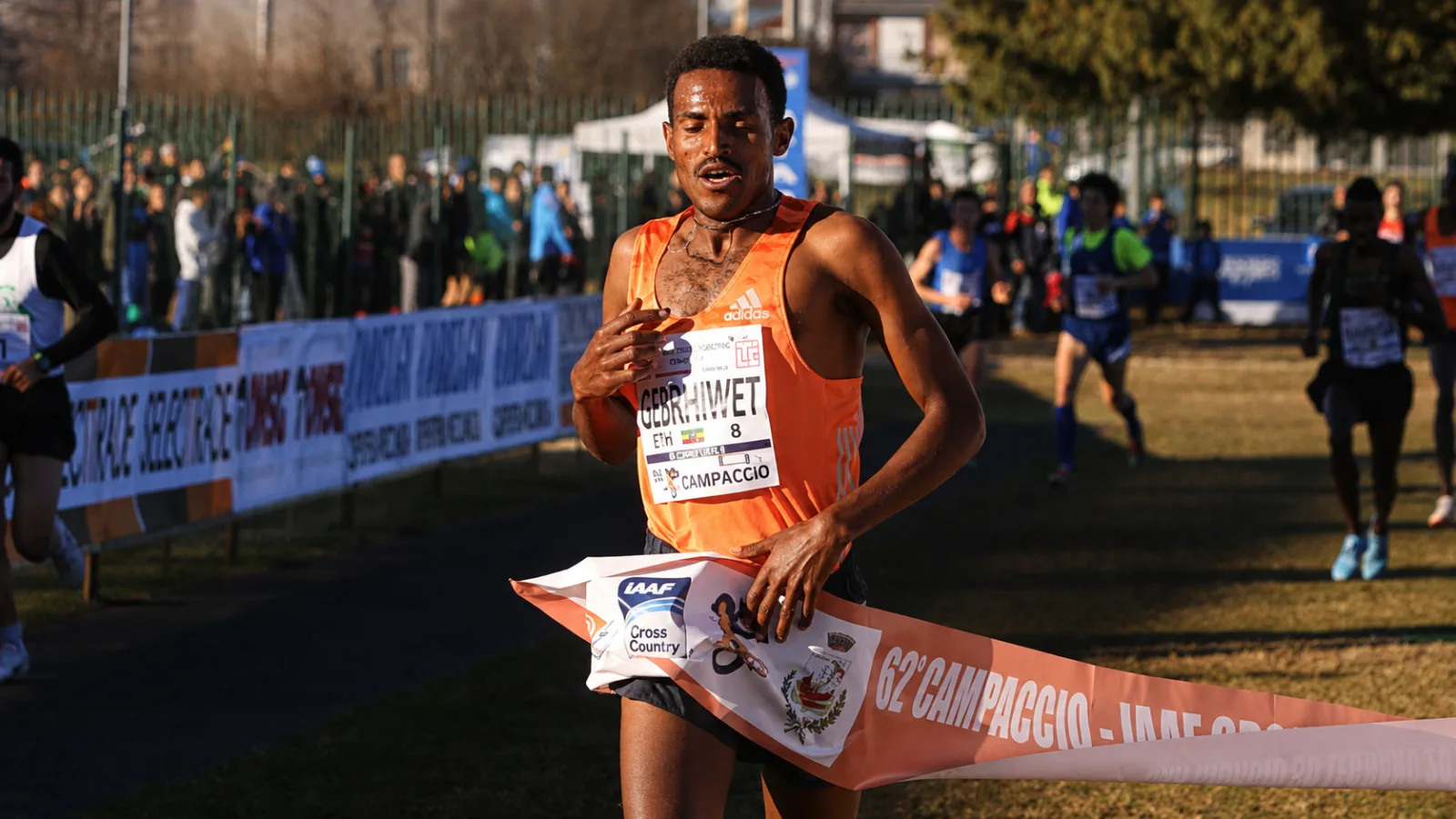
Hagos Gebrhiwet has spent much of his career measuring races in laps. On Sunday morning, the Ethiopian will enter very different territory when he makes his marathon debut at the TCS Sydney Marathon.
At 32, Gebrhiwet is not moving to the marathon in search of a final chapter after his track speed disappeared. He remains the second fastest 5,000m runner in history, having recorded 12:36.73 at the Bislett Games in Oslo in 2024.
He missed Joshua Cheptegei’s world record by only 1.37 seconds that night. His final lap took just 54.99 seconds, underlining the finishing speed that has defined much of his career.
None of that guarantees an easy passage through the closing kilometres in Sydney.
A Career Built at the Highest Level
Gebrhiwet has collected major medals across more than a decade at the top of distance running.
He won world 5,000m silver in Moscow in 2013, world bronze in Beijing two years later and Olympic bronze in Rio in 2016. He also claimed the men’s 5km title at the inaugural World Athletics Road Running Championships in Riga in 2023.
His ability on the road is not in doubt. Gebrhiwet ran 57:41 at the Valencia Half Marathon in 2023 and won the Barcelona Half Marathon in 58:05 earlier this year.
The marathon still asks a completely different set of questions.
A fast half marathon provides evidence that an athlete can handle sustained road running, but doubling the distance is not simple arithmetic. Fuel management, muscular fatigue and patience become increasingly important once the race moves beyond 30 kilometres.
Gebrhiwet has never had to answer those questions in competition before.
Sydney Will Not Offer a Gentle Introduction
Sydney is not the sort of course designed to ease a debutant quietly into the marathon.
The route begins on Miller Street in North Sydney, crosses the Harbour Bridge and travels through Centennial Park before finishing outside the Sydney Opera House. According to the organisers, it contains 313 metres of elevation gain despite an overall net drop of 83 metres.
Those constant changes should prevent Gebrhiwet from settling into the controlled rhythm normally associated with a track race or a flat road course.
More than 40,000 runners from over 140 countries are expected to take part in the second edition of Sydney as an Abbott World Marathon Major.
No Time to Learn on the Job
Gebrhiwet will also be surrounded by athletes with years of marathon experience.
Sisay Lemma is the fastest man in the field with a personal best of 2:01:48. Reigning world champion Alphonce Simbu has run 2:02:47, while Timothy Kiplagat and Vincent Ngetich have both broken 2:04.
Defending champion Hailemaryam Kiros also returns after winning last year’s race in 2:06:06, the fastest marathon recorded by a man on Australian soil.
The depth is severe. Twenty five men in the field have run below 2:10, with 14 having broken 2:05 and three owning personal bests below 2:03.
Nobody at the front will wait while Gebrhiwet learns how his body responds to the final quarter of a marathon.
That uncertainty is precisely what makes his debut so interesting. His track record suggests enormous potential, while his half marathon performances give him a strong foundation. Yet no personal best over 5,000m or 21.1 kilometres can reveal what will happen when the pace begins to bite after three quarters of the race.
Sydney will provide the answer on Sunday.