A race promoted as a fast route through a New Jersey park in America became something entirely different on Sunday morning.
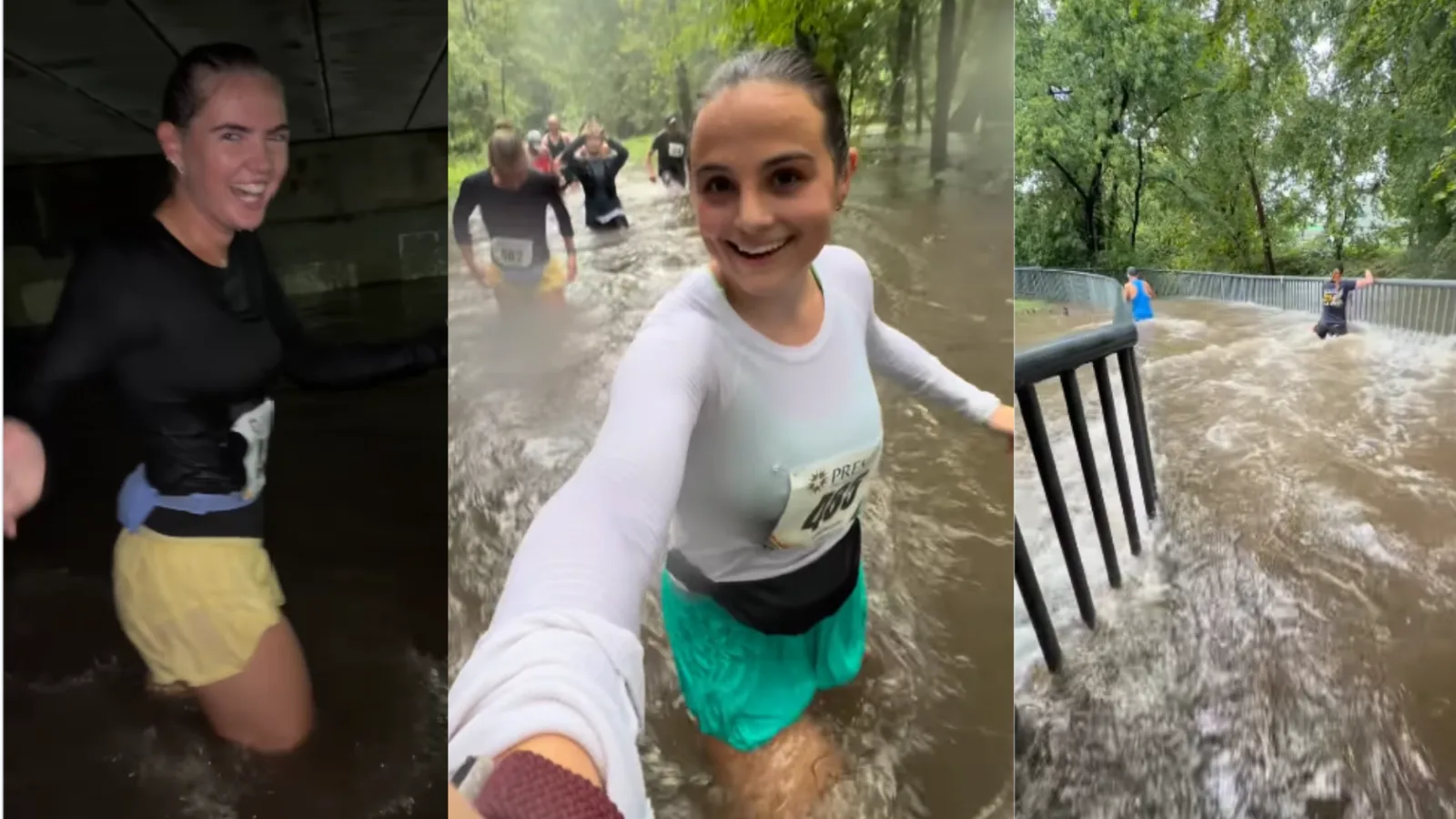
Runners taking part in the Racefaster Half Marathon found sections of the course buried beneath floodwater, forcing them to wade through submerged underpasses while holding railings and one another for support.
Footage from the event shows competitors entering brown water which, in places, reached waist and chest height. Around 250 runners reportedly completed the race, but the scenes have prompted serious questions about why it was permitted to begin.
The Warning Came Before the Start
The half marathon was held in Saddle River County Park, close to Paramus in northern New Jersey, on September 13th.
It had originally been due to begin at 8am. Torrential rain led organisers to delay the start until 10am, but the course itself remained unchanged.
At 8.53am, the National Weather Service issued a flash flood warning which specifically named Paramus and nearby Fair Lawn. The warning described the flooding as life threatening and remained active until 11.30am.
Another warning concerning the Saddle River was issued shortly before the delayed start. Two further warnings followed while competitors were still completing the 13.1 mile course.
The decision was therefore not made before the danger became known. The race began after the first official warning had already been issued.
The Course Vanished Beneath the Water
The Racefaster route uses paved paths through Saddle River County Park. Much of the course runs close to the river and passes beneath several roads and bridges.
Those underpasses became collection points as the water rose.
Runners reported encountering several flooded sections during the out and back race. Some found water around their knees, while other sections were said to be considerably deeper.
The problem was not merely that competitors got soaked. The water completely obscured the path beneath their feet, leaving runners unable to see potholes, broken surfaces or debris. Video also showed enough current to make holding the metal railings necessary in places.
View this post on Instagram A post shared by Jana Mucci (@jmooch_fit)
Some runners continued in groups so that they could steady one another. Others decided the conditions were too dangerous and withdrew.
The river continued to rise after the race, eventually reaching 6.8 feet. That was more than a foot above its designated flood level.
Finish Time Became Almost Irrelevant
American television personality Zac Clark was among those caught in the conditions.
Clark stopped to record one of the flooded crossings before continuing to a finish time of 1:40:42. That placed him third in his age category, although his result quickly became secondary to the footage he shared.
View this post on Instagram A post shared by Zac Clark (@zwclark)
Other videos showed lines of runners moving carefully through the water rather than racing. In several clips, competitors had little room to turn around once they had entered the submerged sections.
There is always an element of personal responsibility in road running. Competitors can stop if they believe conditions are unsafe, and some did exactly that.
That does not remove the organiser’s responsibility to assess the route before sending hundreds of people onto it.
Runners make decisions based on the expectation that a marked race course has been inspected and approved. A competitor reaching a flooded tunnel several miles into an event is in a very different position from someone being told before the start that the route cannot safely be used.
From Road Race to Safety Debate
Running events regularly continue through heavy rain. Wet roads, difficult footing and miserable conditions are part of the sport.
Floodwater is another matter.
Once the surface disappears and competitors require railings to remain upright, the argument is no longer about runners being prepared for poor weather. It becomes a question of basic course safety.
The most fortunate detail from Sunday is that no injuries have been reported.
That outcome does not settle the matter. It only means a race containing several obvious hazards ended without a known serious incident.
At the time of writing, Racefaster had not publicly explained why the event continued after the warnings were issued. The organiser also did not respond to requests for comment from American news outlets covering the story.
The half marathon was advertised as a flat and fast opportunity to record a personal best.
Those @jmoochfit & @zwclark