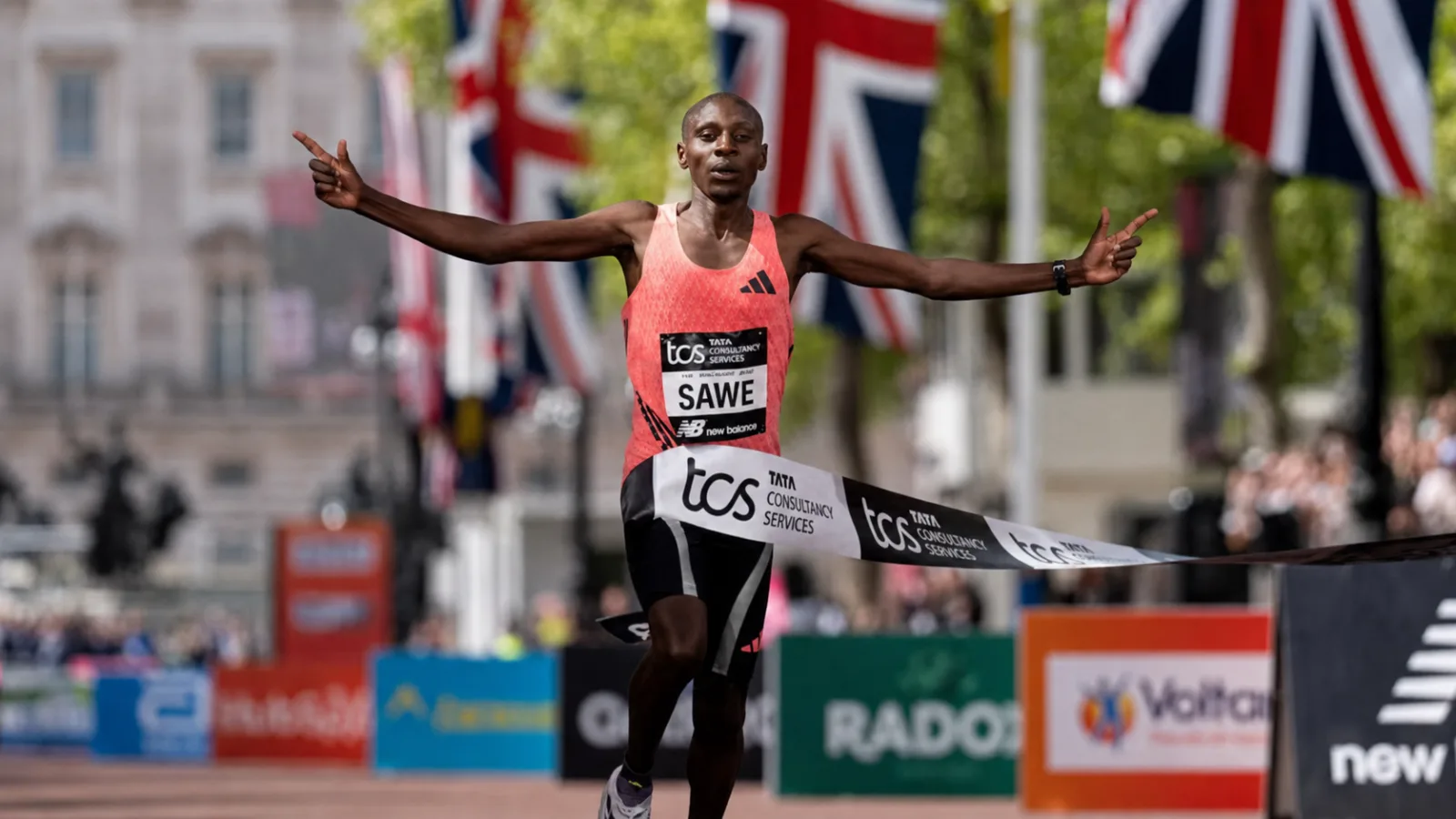
Marathon history moved so quickly in London in April that the next question arrived almost as soon as Sabastian Sawe crossed the finish line. What could the fastest marathon runner in history produce in Berlin?
That answer will have to wait.
Sabastian Sawe has withdrawn from the BMW Berlin Marathon after sustaining an injury, ending plans to defend the title he won last year.
Organisers confirmed on August 27th that the Kenyan will miss the September 27th race. They did not disclose the nature of the injury or provide an expected date for his return to competition.
For Berlin, this is far more significant than a single elite withdrawal.
Sawe had been due to make his first competitive appearance since running 1:59:30 at the London Marathon on April 26th. That performance made him the first athlete to complete a record eligible marathon in under two hours.
It also lowered Kelvin Kiptum’s previous world record of 2:00:35 by 65 seconds and transformed the expectations surrounding Sawe’s next appearance.
Berlin appeared to offer an ideal setting for the next chapter.
The German race has a long association with men’s marathon world records, while Sawe already possessed a winning history on its streets. He claimed the 2025 title in 2:02:16 despite unusually warm conditions.
His planned return therefore carried the possibility of another attack on the limits of the marathon, particularly on a course where many of the event’s defining performances have taken place.
Instead, the plan has ended one month before race day.
Sawe said he was deeply disappointed by the withdrawal and had hoped to produce a memorable performance on Berlin’s streets. He thanked the organisers and those who had supported his preparations, while offering his best wishes to the runners who will compete.
Race director Mark Milde responded by wishing Sawe a quick recovery.
The lack of information surrounding the injury leaves no clear indication of how long the world record holder could be absent. His next race has not been announced.
His withdrawal also interrupts an unbeaten marathon career that has gathered momentum with every appearance. Berlin was not simply another entry on his racing calendar. It represented the first opportunity to see how breaking the two hour barrier might influence his approach, his rivals and his ambitions.
The Berlin programme retains a major record narrative in the women’s race. Tigst Assefa is expected to lead a strong field with the world record among her stated ambitions, while Esther Pfeiffer will pursue the German record.
The men’s contest, however, has lost the athlete who would have commanded attention from the opening kilometre to the finish beside the Brandenburg Gate.
Sawe was supposed to arrive in Berlin carrying the most important question in modern marathon running.
How much faster could he go?
For now, the question remains unanswered, and the sport must wait for its fastest man to return.