Eight Irish athletes will take to the streets of Copenhagen this weekend as the World Athletics Road Running Championships bring the road mile, 5km and half marathon together on one programme.
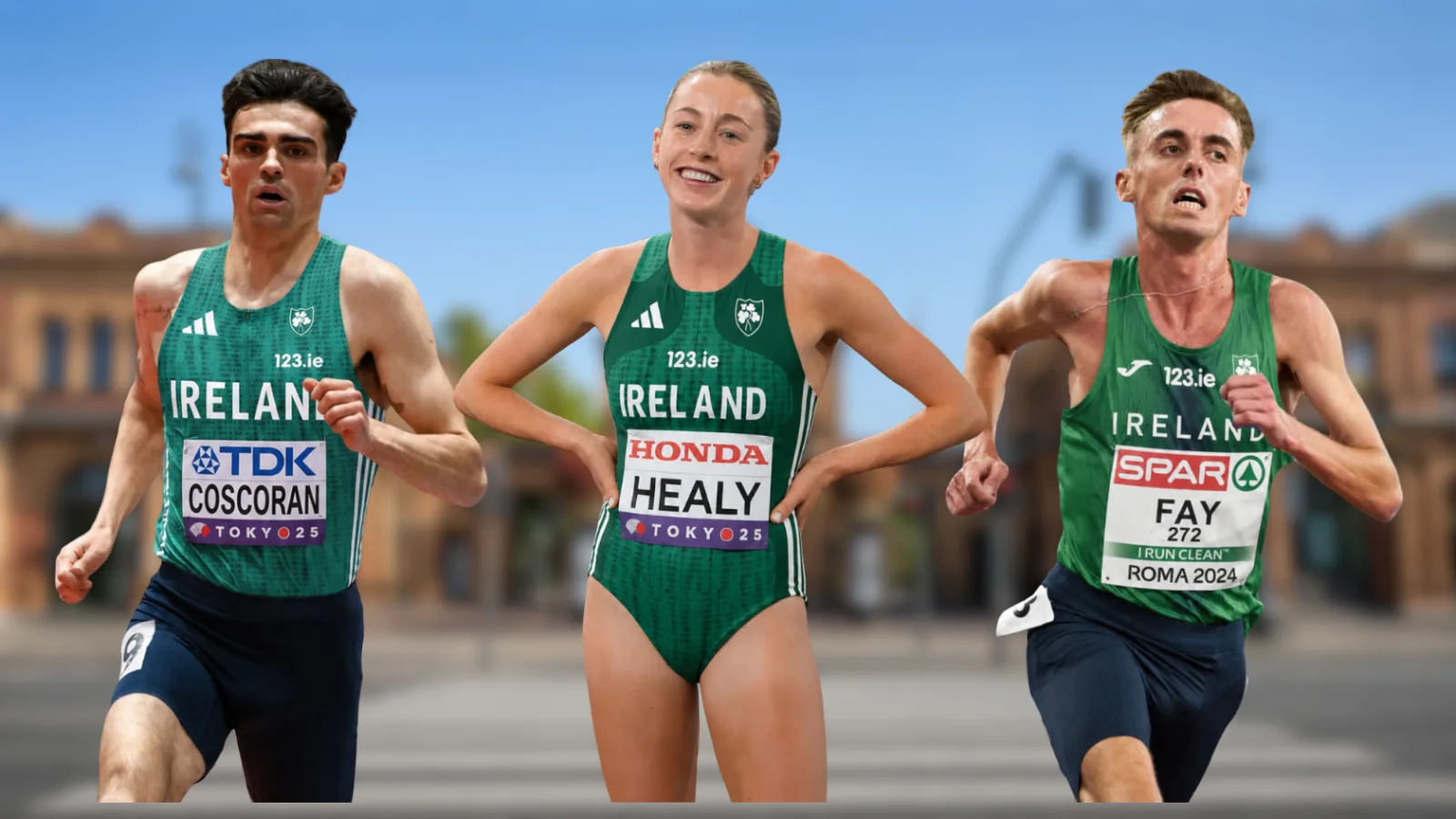
There are strong Irish stories across all three distances. Andrew Coscoran arrives with a European medal, Sarah Healy has enjoyed one of the best summers of her career, Cathal Doyle has just produced the fastest known Irish road mile and Peter Lynch will race as the national marathon record holder.
The championships take place on Saturday, September 19th and Sunday, September 20th. Each distance is decided in a single race, so there are no heats and no second chance if an athlete gets caught on the wrong side of a move.
What Are the World Road Running Championships?
Copenhagen will stage the second edition of the championships in their current form. The first was held in Riga in 2023, when World Athletics added the road mile and 5km to the established half marathon championship.
The history behind the event goes much further back. The first World Half Marathon Championships took place in Tyneside in 1992. The competition was renamed the World Road Running Championships in 2006, when the featured distance was 20km, before the half marathon returned in 2007. The old World Half Marathon Championships name came back a year later.
Riga then introduced the present three distance format in 2023. A planned edition in San Diego in 2025 was cancelled, which explains the three year gap before Copenhagen.
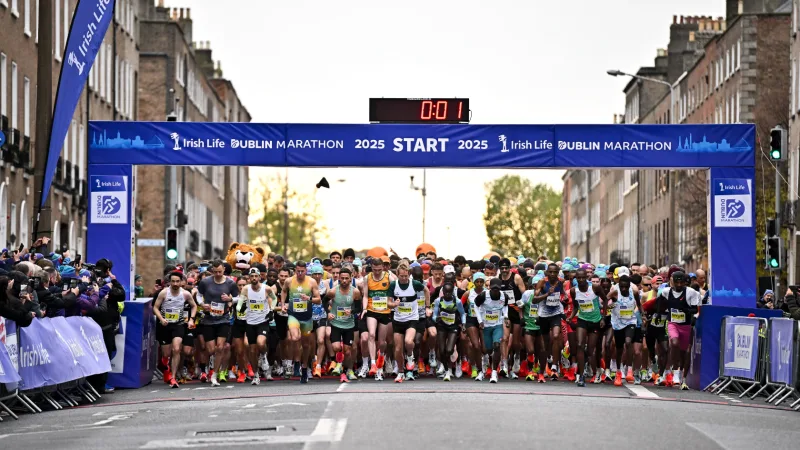
The idea is to put the best road runners in the world alongside a vast public running festival. There are 496 elite athletes entered from 85 member federations, as well as the Athlete Refugee Team, while as many as 65,000 recreational runners can take part across the weekend.
All three courses have been designed for quick racing. The road mile takes place around Østerbro, the 5km passes landmarks including the Copenhagen lakes, and the half marathon finishes in Fælledparken.
How Do the Championships Work?
Six individual world titles will be decided, one for men and one for women at each of the three distances.
There are team medals too. In the road mile and 5km, the two fastest men and two fastest women from each country count towards a mixed team result. In the half marathon, three athletes are needed for the separate men’s and women’s team competitions.
Ireland can record a team score in the road mile, with two men and two women selected. There is no Irish women’s entry in the 5km, while only two Irish men will start the half marathon, so those races will be individual assignments.
The original Irish selection has changed. Sophie O’Sullivan and Barry Keane have withdrawn, while Laura Nicholson, initially named as the non travelling reserve, has come into the women’s mile. That leaves eight Irish athletes set to compete.
Ireland’s Mile Quartet Brings Genuine Momentum
Sarah Healy (UCD AC) leads the Irish women’s challenge after placing fourth over 5000m and fifth over 1500m at the European Championships in Birmingham. She followed that double with a season best of 3:57.42 for 1500m at the Silesia Diamond League, just 0.27 seconds outside her personal best, before running 4:02.72 in Rovereto last week.
Healy has both the speed and strength required for a road mile, where positioning can matter as much as a fast track time. She will face a high quality field that includes Ethiopia’s Freweyni Hailu, American Addison Wiley and Australia’s Linden Hall.
Laura Nicholson (Bandon AC) joins her in the women’s race after moving up from the reserve position. Nicholson ran a 1500m personal best of 4:05.68 in Oordegem on August 1st, part of a season in which she has set new bests across several distances. She also represented Ireland at the World Championships in Tokyo last year, so the late call does not leave her short of major championship experience.
In the men’s race, Andrew Coscoran (Star of the Sea AC) returns to competition after winning European 1500m bronze in Birmingham in 3:36.24. He has run 3:31.65 for 1500m and a mile personal best of 3:49.68 this year. His European medal was another reminder that he can make good decisions in a tactical championship race.
Cathal Doyle (Clonliffe Harriers AC) may have the most relevant recent result of the entire Irish team. He ran 3:55.33 for fifth in the Düsseldorf road mile on September 6th, the fastest known Irish performance for the distance, subject to ratification. That came four days after a 1500m season best of 3:33.40 in Trier.
Coscoran and Doyle face a deep field featuring Portugal’s world 1500m champion Isaac Nader, American Yared Nuguse and Spain’s Mohamed Attaoui. Ireland’s quartet should also have a meaningful target in the mixed team standings.
Fay and McElhinney Face a Loaded 5km Field
Brian Fay (Raheny Shamrock AC) opened his year with an impressive 16th place at the World Cross Country Championships in Tallahassee. His best 5000m time this season is 13:13.30, and he placed 14th in the European final in Birmingham.
Fay has already tested himself on the road this month, running 13:40.81 for ninth in Düsseldorf, before recording 7:57.48 for 3000m in Rovereto two days later. He also owns the Irish 5000m record of 13:01.40.
Darragh McElhinney (Bantry AC) has run 13:15.90 this season and holds a personal best of 13:02.06 from 2025. He finished 18th in the European 5000m final and sharpened up for Copenhagen with a 7:49.97 run over 3000m in Rovereto.
The men’s 5km is arguably the toughest race on the programme. France’s Jimmy Gressier has run 12:51 on the road this year, while Ethiopia’s Addisu Yihune and Norway’s Jakob Ingebrigtsen are also among the entries. Fay and McElhinney will need to judge the early pace carefully if the leading group attacks from the start.
Lynch and Tonosa Take on the Half Marathon
Peter Lynch (Kilkenny City Harriers AC) produced two major breakthroughs in the spring. He finished fifth at the New York City Half Marathon in 59:52, then ran an Irish marathon record of 2:06:08 for ninth in London. His second half in London took just 62:54, evidence that he was still moving strongly after 21.1km.
Those performances give Lynch a compelling range for this assignment. Copenhagen will be much shorter than London, but his 59:52 in New York proves he can operate at the required pace from the gun.
Hiko Tonosa (Dundrum South Dublin AC) is the only Irish athlete in the team who also competed at the inaugural championships in Riga, where he finished 60th in the half marathon in 1:04:14. He has since lowered his best to 60:51, which equalled the Irish record when he ran it in Seville in January 2025.
Tonosa’s most recent half marathon came at the Antrim Coast event on August 23rd, where he placed 11th in 1:02:07. That was a useful competitive outing four weeks before Copenhagen.
The international field includes Olympic 10,000m champion Joshua Cheptegei, European record holder Andreas Almgren and Kenya’s Nicholas Kipkorir, who has run 58:08 this year.
Irish Athletes in Action
All times below are Irish time.
Saturday, September 19th
- 9.10am: Sarah Healy, Women’s Road Mile
- 9.10am: Laura Nicholson, Women’s Road Mile
- 9.30am: Andrew Coscoran, Men’s Road Mile
- 9.30am: Cathal Doyle, Men’s Road Mile
- 1.40pm: Brian Fay, Men’s 5km
- 1.40pm: Darragh McElhinney, Men’s 5km
Sunday, September 20th
- 8.45am: Peter Lynch, Men’s Half Marathon
- 8.45am: Hiko Tonosa, Men’s Half Marathon
How Can You Watch?
Eurovision Sport is scheduled to stream the championships live and free in Ireland, subject to the platform’s usual broadcast restrictions. Viewers can watch through the Eurovision Sport website or its mobile and television apps.
A free account is required once the five minute preview expires, so it is worth registering before the first Irish race begins at 9.10am on Saturday. Replays are also expected to remain available on the platform.