For about two years, Paul O'Donnell's entire training week was one parkrun. Not one parkrun plus a few easy miles, not one parkrun plus a session. Just the 5k on Saturday morning in Marlay Park, run flat out against his brother, and then nothing at all until the following Saturday.
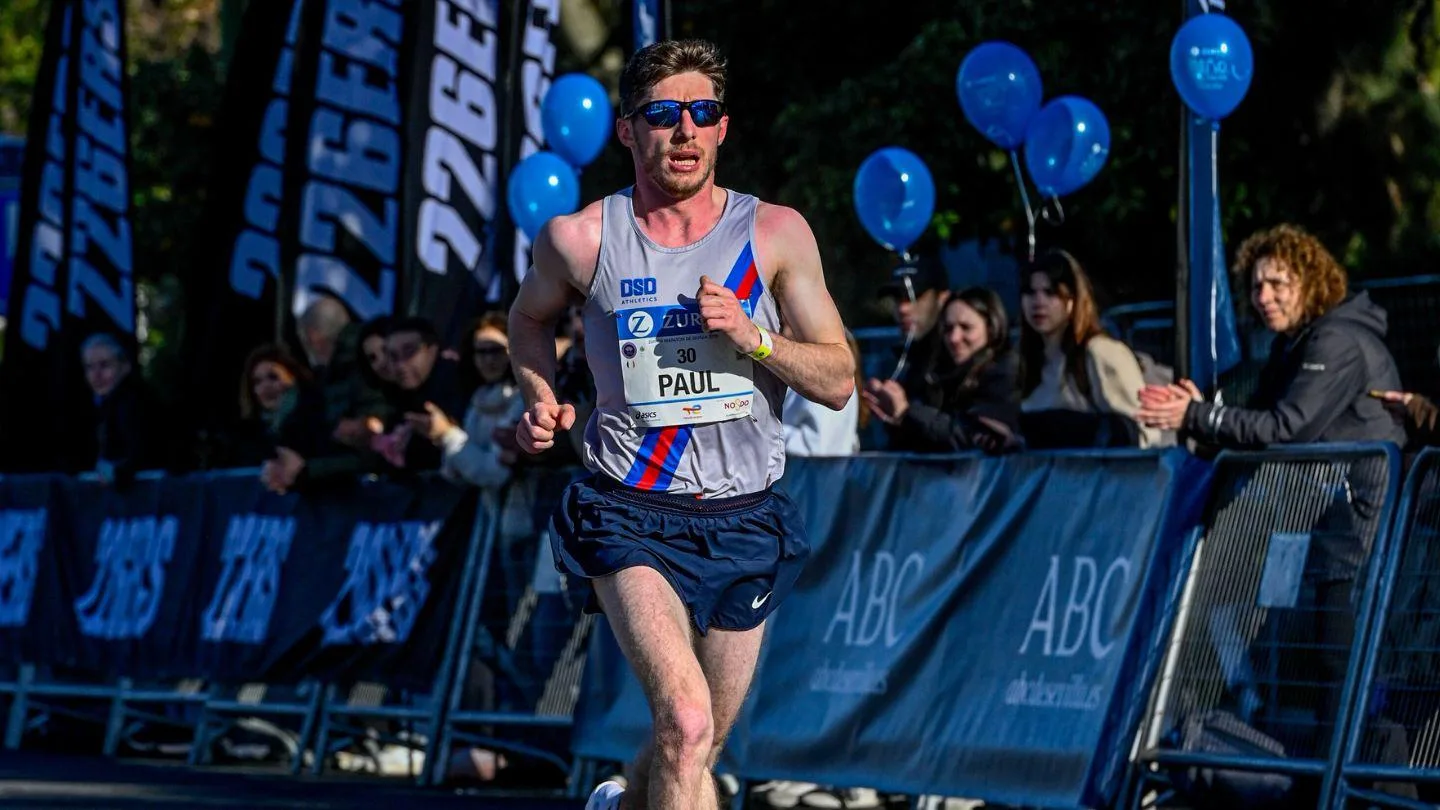
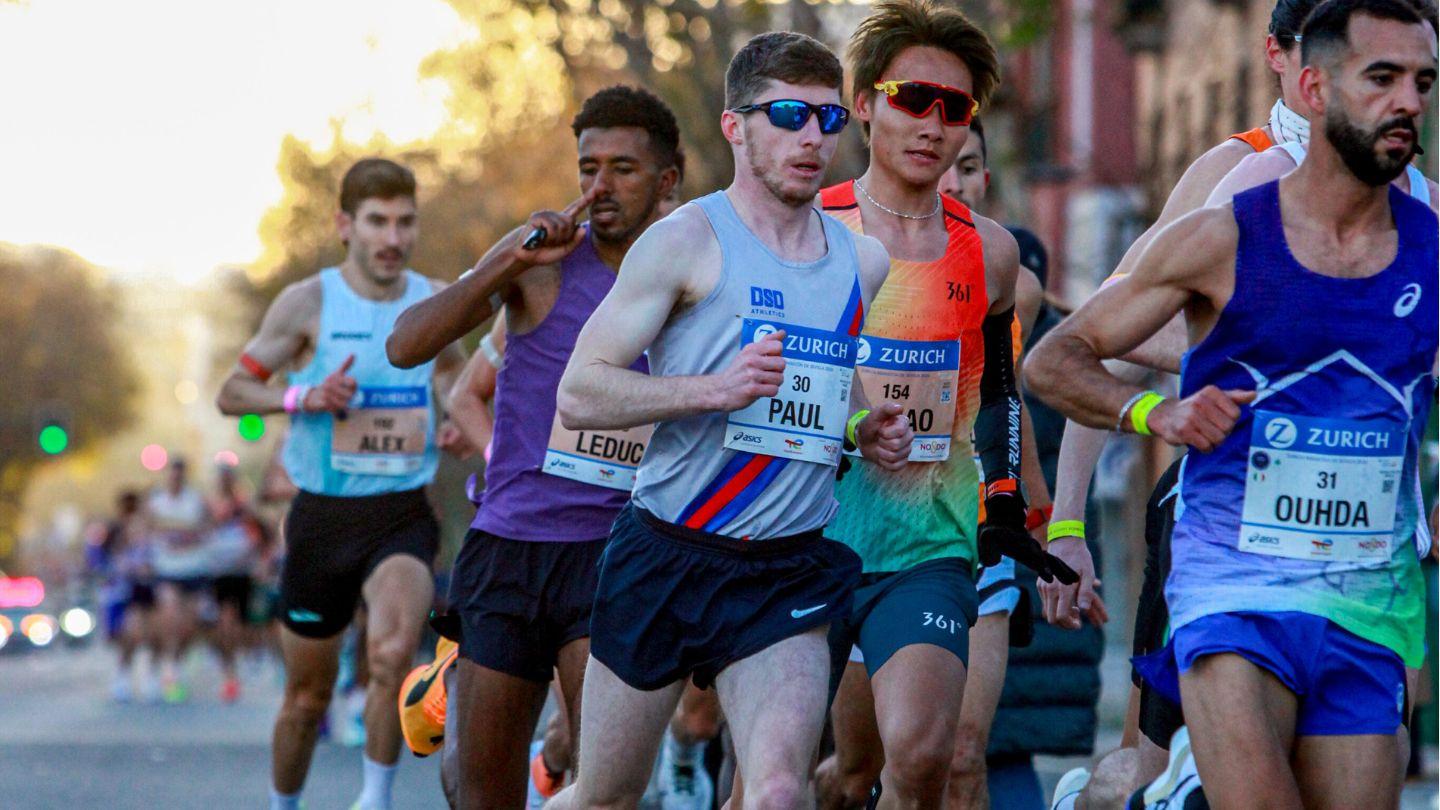
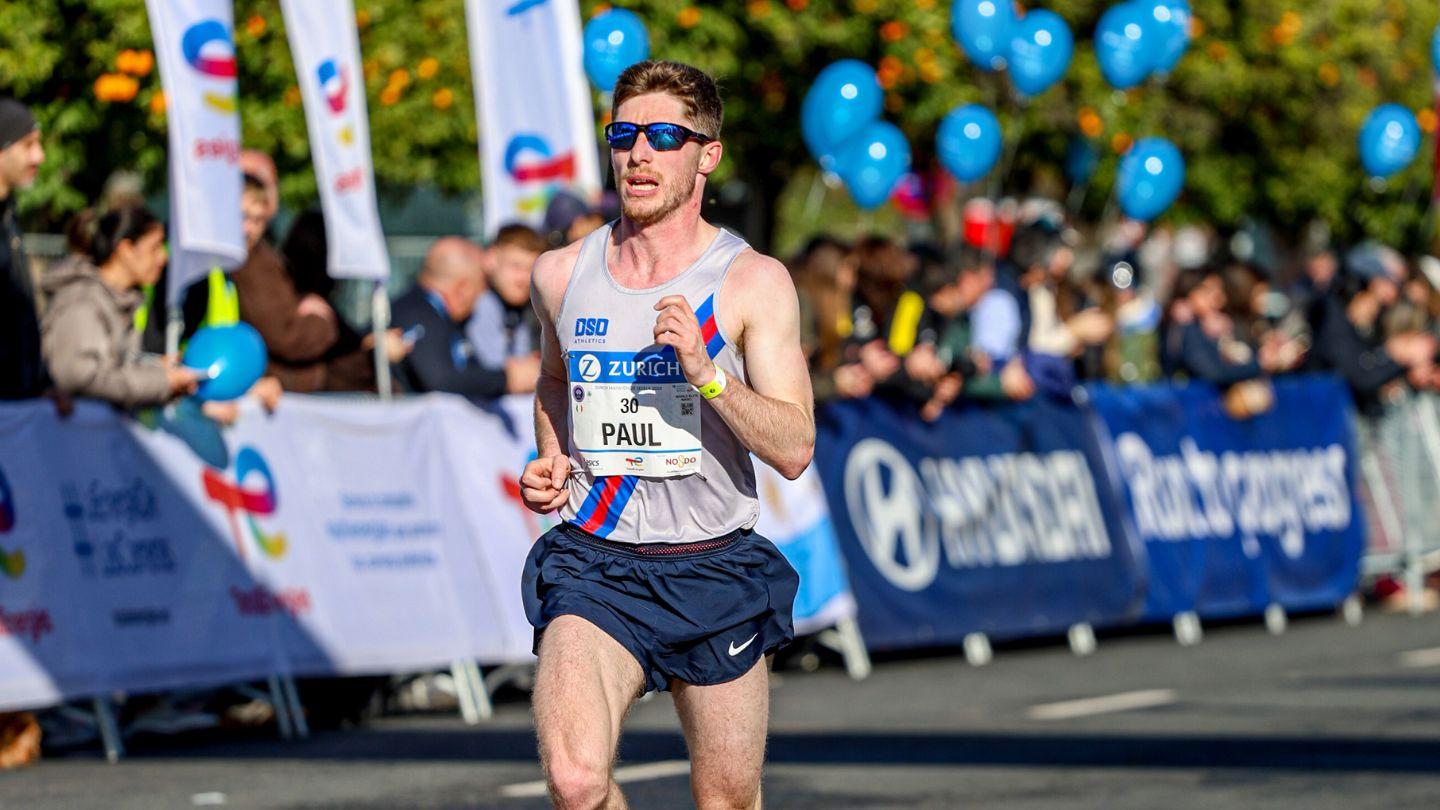
He is 27 now and runs 105 to 110 miles in a peak week. In February he ran 2:09:19 in Seville, which at the time made him the second fastest Irishman ever over the marathon and which still leaves him third on the all time list. On Sunday morning he lines up in Birmingham in an Ireland vest for the European Championships marathon, which goes off at ten past eight.
The reason his story is worth telling to runners is that the way he has progressed from starting to run, to marathon is the same one that so many of us have gone down before. He did not get fast-tracked through a development squad. He turned up at a free Saturday morning 5k, got hooked, found the event that suited him over the following few years, and worked his way up through longer and longer distances until the marathon was the obvious place to end up.
For those reading this wondering if they can every run a marathon, Paul’s story is one where starting small, and moving up to the Dublin Marathon race series is how a seemingly impossible task to run a marathon, becomes very doable. When it comes to parkrun, it is the front door, free and timed and available in nearly every county on a Saturday morning. From there the Irish Life Dublin Race Series carries you up the distances across the summer, with the Fingal 10K in July, the Frank Duffy 10 Mile in the Phoenix Park in August and the Irish Life Dublin Half Marathon in September, before the Dublin Marathon itself at the end of October. Those are not filler races. They are the rungs, and the couch to marathon journey that so many people are on this year is really just a case of taking them one at a time. The Frank Duffy goes off on Chesterfield Avenue at nine o'clock on Saturday morning with more than 5,000 runners in it, plenty of whom will be running ten miles for the first time in their lives on the way to a first marathon in October.
Paul went up those same steps, only further. He was a footballer who liked racing his brother, and the reason he is where he is now comes down to a free 5k up the road, a set of races that kept stretching him, and a handful of people who would not let him leave it at that.
A free 5k in the paper
The house was a soccer house first. "I didn't start running properly till my last year in school," Paul says. "I was football mad, like soccer, from the time I was about four." He played with his brothers in the garden until he was old enough for an actual team, then played with Leicester Celtic and Broadford Rovers from six up to seventeen.
The switch came out of a newspaper on a Saturday morning in Rathfarnham. "I think my dad was reading the paper and Marlay parkrun had had its first week the week before. He was just reading about this free 5k that was up in the park just up the road. Me and my brother, I don't know, the competitiveness took over a bit. We wanted to go race each other over the 5k."
That first one went about as well as a first 5k goes for a 14 year old with no idea what he is doing. "I think my first one was 19:20 or something. I had no sense of how a 5k was going to be, so I just went sprinting off the first k. I have no data, I wasn't wearing a watch, I've no idea how much I slowed down, but I'd say the k splits are not great to look at." He laughs at this. "I'd say that hasn't changed a lot since."
The times bounced around for a long while, which is worth saying out loud, because the graph of a future 2:09 marathoner does not go up in a straight line. "Some weeks I'd run 17, 18 minutes, the next week I'd run 23. I wasn't doing much in between." That is a nine minute range at 5k from a lad who would eventually average around 3:04 per kilometre for a marathon.
What kept the two of them going back was not the running on its own. "We'd volunteer, we did the timekeeping, we'd hang around after every race for a year or two. I think we just loved the running aspect and the community aspect, so it kept us going up every week, even when you'd wake up and it was raining and you weren't really too interested."
At one point the pair of them decided they were going to run a marathon, and bought a watch between them so they could do a few runs. The regulars at Marlay heard about it and stepped in. "The people up in parkrun found out and were like, don't do that. You're way too young." He was 15 or 16. They talked him out of it, which is exactly the right call and, ten years on, is a reasonable claim to a small share of the credit.
His dad, for the record, was never a runner in any formal sense. He grew up in Barnacullia and did plenty of running up and down the mountain as a kid, played football and got into pitch and putt, which is where Paul's own golf came from. He watched the athletics though. "He was always talking about watching Eamonn Coghlan in the 5k, fist pumping coming around the last bend."
The teachers who would not let it go
Paul went to De La Salle Churchtown, and it turned out to be a good school to be a promising runner in without knowing you were one.
Linda Byrne, who ran the marathon at the London Olympics, was working in the school at the time, and her brother Brian Byrne was Paul's maths teacher. Brian found out about the parkruns and started entering him in schools races. Linda handed him an old pair of her spikes for the cross country. Neither of those is a small thing when a kid has no club, no gear and no idea that schools races are even a thing.
Then came Patrick Mac Gabhann, a Dundrum South Dublin man who was around the school and who had clearly decided that Paul was joining DSD whether Paul liked it or not. Paul came sixth at the East Leinster schools cross country, and after that there was no escaping it. "He pestered me the full year, in fifth year, every day, to eventually go up. It took a while to break me down."
He eventually went up to a Wednesday evening session in UCD. There was no gentle introduction. "My first session was six by a mile. Straight in at the deep end." Donal Hennigan, who would go on to coach him, pointed at a group and told him to go with them. "They all seemed like a great bunch of guys, so I was like, okay, I might as well keep coming up."
For a full year he ran on Wednesday and Saturday and played football on Tuesday, Thursday and Sunday, and let the two of them sit side by side until one of them won on merit. "Eventually I got to the point where I was enjoying the running more and doing better at the running, so I thought I'd give this a bit more time."
The label arrived early, and from more than one direction. "Even from the very start up in DSD it was kind of, you will be a marathon runner when you're older." He never fell in love with the track and never fancied himself over 1500m. Cross country and the roads were always the thing.
Commerce, and the Poolside café
The route into college was not a straight line either. He spent a week in DCU doing chemical and pharmaceutical science before realising he had no interest in it, took a year out, and worked behind the butcher counter in the local SuperValu.
It was Brian Byrne, the maths teacher again, who sorted it. "He kindly sat down and went through all my options, what I was interested in, what I wanted to do, what my strengths were, and felt like commerce was a broad enough option." UCD had the added advantage of being where his friends were and being handy for training.
He is honest about what UCD was athletically. He kept training with DSD the whole way through and only occasionally jumped into UCD sessions, and the club was more of a social world than a competitive one. "I spent more time at the Poolside café than I did probably anywhere else for the three years I was there. You'd sit down and within two minutes someone else would have walked by and joined you." As for the racing, "we'd always joke we were more interested in the banquet and the afterparty than the actual races, which was maybe only partly true."
He graduated in 2020, into the middle of Covid, and took a job with Fidelity International.
Old man strength in Syracuse
Six or seven months into that job, sitting in his bedroom working from home, an email arrived from Tito Medrano, one of the assistant coaches at Syracuse, asking whether he would be interested in coming over for a year or two.
"I was just thinking, oh, that would be a bit more fun than sitting in my bedroom five days a week. I didn't really have any expectation that it would work out, but I responded, yeah, if you can sort something out, I'd definitely be interested."
Anyone reading this with a teenager eyeing up the American college route should read the next bit twice. "I didn't get my visa until a week after I was supposed to be in America, and I immediately flew over. I got there pretty much with two days to spare. If I'd been delayed any more I wouldn't have been able to start classes and then wouldn't have been able to be on the team. I'd advise anyone thinking about going to start a lot earlier than February of the year you're looking to go over."
He studied finance and added a certificate in data science, and by his own account did a better job of being a student the second time round. "I probably didn't give as much as I should have in my undergrad in terms of academics, so I was very interested in going back and properly not just passing my exams but learning something new. I feel like I had the proper college experience the second time around."
He arrived at 24, which flipped something he had never had to think about. At home he had always been the youngest in the group by a distance. In Syracuse the freshmen were 18 and 19. "My very first session I was told I had old man strength."
The standard was another adjustment. "I got over there and I was like, okay, there's ten of us who have run sub 14 in the 5k. There's sub 14 guys that aren't going to be making our team for conference and nationals." Under head coach Brien Bell he actually sharpened up rather than just piling on volume, and won a few races off a slow pace and a kick.
He had picked the place on very little research. "It was more of a this will be a great experience sort of decision rather than this will be great for my athletics. I was just like, yep, they're good, they make nationals every year, it'll work out." Two years turned into three.
A debut off ten weeks
After his last track season he took a proper break, hung around practice as a volunteer assistant and messed about in sessions to see how long he could last, which some days was one rep. When the coach clocked that he was going to keep showing up anyway, he put him to work pacing the women's team through the cross country season.
In December he decided to stay on another six months instead of coming home for good, and his friend Silas was doing a marathon at the end of March. So he did his first session back on New Year's Eve and started training for a marathon he had no business being ready for, through a Syracuse winter that was three months of snow, patching sessions together on the treadmill and the indoor track.
His coach was straight with him the day before. "He literally said to us, I've got you to 20 miles. You can do 20 miles at this pace. After that I have no idea. It's up to you guys."
That is more or less exactly how it played out at Rockland Lake, just north of New York City. "I felt very good for 20 miles, started to get tired, and then by 23 the legs came off. I was on for 2:09 with three miles to go and then was just crawling the last three."
He ran 2:10:17 on debut, which is the part that makes the crawling worth dwelling on. Elite runners hit the wall too. What is different is what they do while they are in it, and a lot of that comes down to the fact that Paul does not race with a watch. He only recently started wearing one in training, at his coach's request.
"It's good when the wheels do come off that you're not looking down and seeing that pace get slower and slower. It was just, okay, I've three miles to go, keep going, stay as calm as possible, keep my running form as smooth as possible, and don't worry about anything else. Some people, it gets in their head if they see the time, they start trying to push when they should really just be focusing on getting through. If you push beyond what you're physically capable of, it's going to be a long way home."
The same thing served him in Dublin the following October, where he started struggling twelve miles in, which is dangerously early. He ran 2:12:17 for third Irishman and a national bronze. "I was convinced around 39k, coming around the Ely lanes, that I was going to run 2:16 or something. Then I saw the clock at 40k and it said 2:06, and I was like, oh, I'm still on for 2:12. We actually managed to hold it together the last twelve miles. Staying calm is such a major part of the race. I don't think it can be overestimated how important it is."
Seville, and the small things
Seville in February was the one where everything he had been adding up finally landed together.
He worked through a full two day carb load with Dave Tobin, the nutritionist at the Sport Ireland Institute, and went to Flagstaff for four weeks beforehand, his first time at altitude. He is careful not to make his diet sound more virtuous than it is. "My nutrition is not by any means perfect. My one thing is just make sure I'm eating enough. The worst thing you can do is under-fuel, you'll get sick and injured. I don't eat particularly clean, but I get more than enough carbs and fuel in to be able to run the training I do."
The difference showed up where marathons are decided. "Seville was the first marathon where I didn't feel like I was tiring towards the end. I actually picked up the pace and felt strong."
He crossed in 2:09:19 for 18th place, taking almost a minute off his best and joining a list of only seven Irish men who have ever gone under 2:10. He reckons there was more in it. "Honestly I thought I could run 2:08, but there was a pacer going for 2:09, so I was like, okay, I'll just run with this group and not take any massive risks."
Being part of the endurance group is what makes that iteration possible, with altitude camps, strength and conditioning coaches, physios, nutritionists and physiologists all in reach. "If I was just on my own I'd probably keep doing the same thing. It's great after every marathon to sit down with different people and go, what worked, what didn't work, what do we want to try or change for the next one. I've still only done three and by no means feel like we've figured it out."
What the week actually looks like
For anyone curious about what 2:09 shape is built on, it is less exotic than you might expect.
Peak mileage is 105 to 110 miles a week, which he points out is at the lower end for people running his times, because he likes to keep one genuinely easy day, usually Sunday, to recover enough to go again. There is a hard session on Wednesday and a long run with work in it on Saturday, and everything else is easy running.
The sessions are simple by design. "A lot of them are you run marathon pace for a certain amount of time and then you float and then you run marathon pace. Marathon pace for a k, float for a k, do that ten times. We keep it simple enough, there's not too much can go wrong there."
Fuelling is Maurten drink mix rather than gels, because it does two jobs at once. "You're hydrating and fuelling at the same time, you don't have to think about getting your gel in and then finding water." He targets just over 100 grams of carbohydrate an hour, which works out at a bottle every 5k and four bottles an hour at 25 grams each. There is a mark drawn on each bottle showing how far down he has to drink, and he tends to overshoot it early on. "It gets harder as the bottles go on, so if I can get a bit more in earlier, I'll take it on."
The taper starts with mileage coming down about three weeks out while the intensity stays up until roughly ten days out.
Birmingham, and hoping for a hard day
Everything about this build has been aimed at one specific course. Birmingham is hilly and the expectation was hot and humid, so the planning started around four months ago.
He and David McGlynn spent three days a week in the environmental chamber at the Sport Ireland Institute running at 35 degrees in high humidity, then spent just over three weeks together in Font Romeu doing every easy run and every session on hills. "If that was a Seville type race I wouldn't have done the heat training, and I'd still do some hill work but nowhere near as much. I'd have focused more on running faster on the flats."
If the British weather does what British weather does, none of it is wasted. "We're Irish, so we're well used to wet and miserable. The thing is we're not used to hot. So if it is going to be hot, we need to be prepared, and if it doesn't end up being hot, we haven't lost anything."
In fact he would happily take a brutal day, and the reasoning is pure racing. "Being so hilly, if it's going to be really hot, that just completely throws the race open. The 2:06 guys might fall apart, they're not going to be able to run 2:06. Then the 2:09, 2:10 guys, if they run well, all of a sudden can compete with the 2:06, 2:05 guys. If it's a flat fast course in perfect conditions and the lads run 2:04, I'm probably not going to beat them. But if a lot of people go out too hard and struggle towards the end and we time it well, we'll roll people through in the last 10k."
Since he does not wear a watch, the plan is a human one. He races with Ryan Creech of Leevale often enough that the strategy writes itself. "Essentially my race plan is, if Ryan is there, run with Ryan." He expects the three of them, himself, Ryan and David McGlynn, to sit down beforehand and to run together for a good chunk of it, especially early, this being a team championship. "Obviously if Ryan is going well and I can't hang on, I'll drop off."
The one thing still undecided at the time we spoke was the shoes, which is a lovely bit of reassurance for anyone who agonises over theirs. He wore Nike through Syracuse and has done every easy run of the last four years in the Pegasus, with no interest in a rotation. "Some people seem to have 50 different pairs of shoes and are trying different ones on. I found a shoe that I like for easy runs and that's it."
For racing he wore Alphaflys for his debut and for Dublin, then bought a pair of Puma Fast-R Elites for Seville, and he has been flicking between the two ever since. "I had decided on the Alphaflys, but I wore the Pumas again last week and I was like, ah, I do like them. I think they're more comfortable, but they're a bit more aggressive, and with the heat I thought that might be a risk with calves cramping up. I'll talk to my coach and make a decision this weekend."
The bit nobody sees
Since coming home from Syracuse last summer, Paul has been running full time, and he is refreshingly unromantic about what that is actually like.
"It's been train in the morning, sit around, wait to train in the evening. When I was in Syracuse or UCD, or when I was working with Fidelity, you'd run and then even if you weren't really busy you'd have bits to do, structure your day, get ready for training again. I've not enjoyed too much just sitting around all day. Not that you're dreading your run, but it's the only thing you have to focus on for the seven hours leading into it, rather than you just finish work and you get to go for your run."
He starts a new job with AIB in a few weeks and is genuinely looking forward to it. He has already had the conversation with his manager, who knows about the running and is supportive of it, though he is realistic that the first couple of months will take some figuring out. It is also the reason his spring plans are still loose, with Seville a possibility and a later race like Rotterdam or London the fallback if the adjustment takes longer.
And there is the plain financial fact of it. "The bit more money will go a long way for buying the shoes and paying for training camps or whatever else I need."
The road to LA
The next two years have a shape even if the races are not all pinned down. Dublin next year is a certainty, partly because of the bonus points on offer for the national championship and partly because everyone else chasing Los Angeles will be there. "If that goes well, you're in a great spot." Then a big spring marathon either side of it, and a hope that two of the three land.
He is clear-eyed about the maths. "I could run well in all three and not make the team. The standards are that high."
That is the other story running underneath this one. Irish distance running has gone up several levels in a short space of time, to the point where a 2:09:19 no longer buys you any comfort. Peter Lynch's 2:06:08 in London this year moved Paul down a place on the all time list without him running a step. He does not treat that as a threat.
"If you're looking to make a championship and there's six other Irish guys running under 2:10, you can't be saying, oh, I'm going to try run 2:12 and make this championship. You have to rise to the level of what the other guys are doing." He is not chasing Peter's time for the sake of it. "Eventually I'd like to get there, but in my own time. If I can just chip away at my time over the next three, four marathons, I'd like to think I'd be down around that 2:06 mark anyway."
"The more people you have running well, the better people run. We've seen that across all the distances, men's and women's, field events, sprints. Everything is being pushed up because the competition is so high."
Meeting Paul
Three years in America did something to his listening habits that he did not entirely consent to. "Most of my teammates were big into country music, so I was almost forced to get into that, but I actually do enjoy it." The team was obsessed with Zach Bryan to the point of going to see him live, a verdict Paul delivers with total diplomatic honesty. "I thought he was okay, but he's not my favourite." Tyler Childers and Chris Stapleton fare better.
The one that has lasted is from closer to home. "I've always loved Paolo Nutini. He's probably my favourite artist at the minute." That is what is on in the car to and from training, with a bit of random American country thrown in.
The golf came from his dad and the pitch and putt, and he is big into it now.
And when the man doing the interview described himself as a rubbish marathon runner, Paul was not having it, which tells you plenty about him. "There's no such thing as a shit marathon runner, I don't think. It can be shit to run a marathon, but if you've run one, it's impressive either way."
Which brings the whole thing back around to Marlay Park on a Saturday morning. Paul O'Donnell will run for Ireland in Birmingham on Sunday morning off the back of coaches at De La Salle and Dundrum South Dublin, a maths teacher who entered him in schools races, an Olympian who gave him her old spikes, a father who read about a free 5k in the paper, a brother who wanted to beat him, and a group of parkrun volunteers who told two teenagers they were far too young to run a marathon.
He timed the results for a year or two before any of the rest of it happened. Same park, same volunteers, same free 5k that goes off at half nine every Saturday morning, and it is still the way most Irish marathon runners find their way in.
If you are one of the thousands working your way through the Race Series this summer with Dublin in October pencilled in, that is worth holding on to. The man running for Ireland in Birmingham on Sunday started on the exact same rung you did.