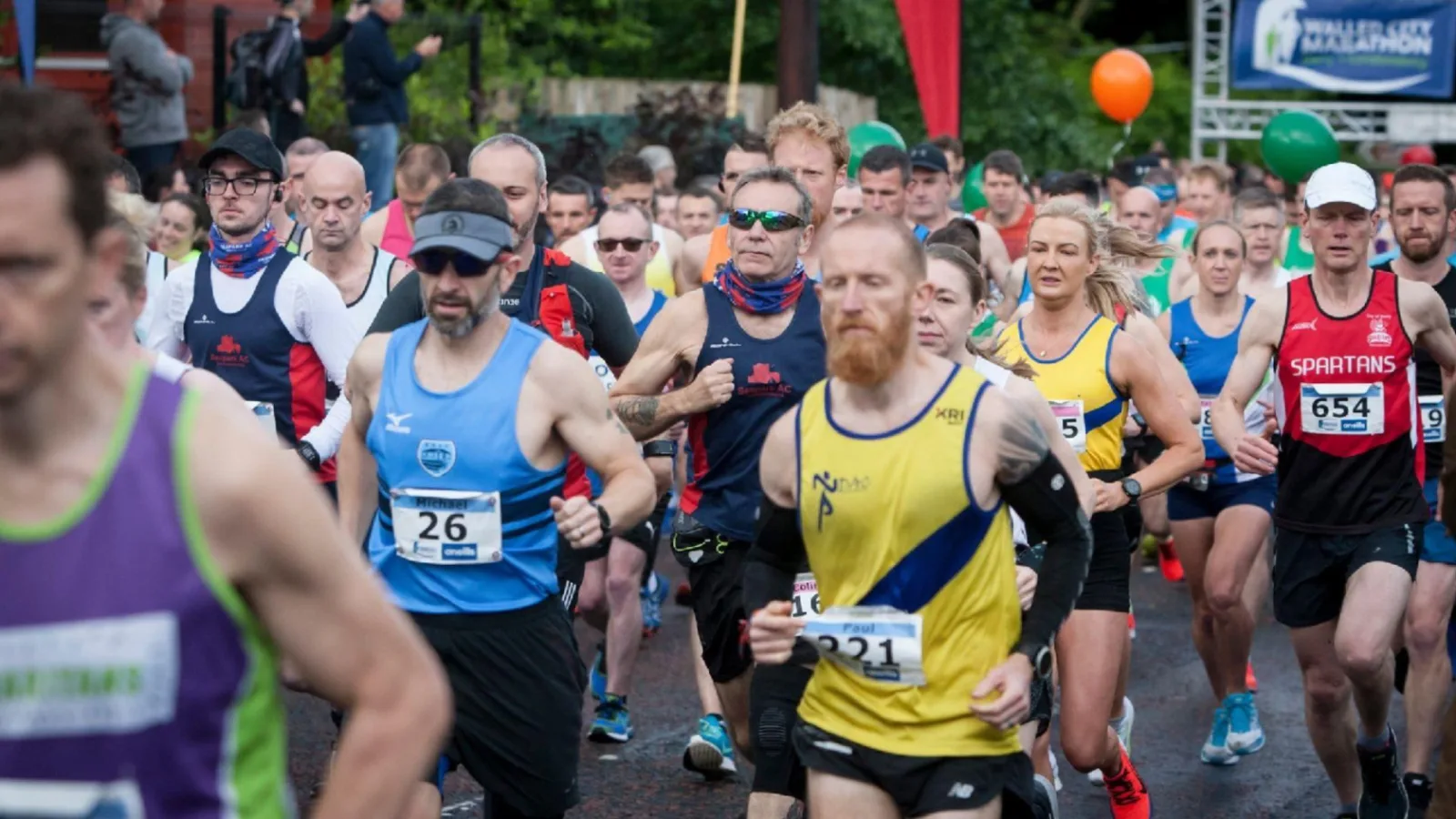
The Walled City 10 Mile returns to Derry on Saturday, March 13th, 2027, with one of the largest road race fields in the north expected to line up beside the River Foyle. Entries remain open, but organisers had already reported 70 per cent of places gone by early October.
Demand Has Been Heavy From The Start
Some races need months of promotion before the entry list begins to move. Walled City does not appear to have that problem.
The 2027 race opened for registration in late September, and organisers said 70 per cent of the available places had been taken by October 4th. They have also warned that another sell out is expected.
That demand is not especially surprising. The 2026 race recorded 2,725 finishers, while recent editions have drawn runners from across the north west, the rest of Ireland and further afield. It has grown into a major spring fixture rather than a local race with a slightly bigger than usual field.
Entries are still available at £32, with a £2.34 service fee added by the registration platform. Anybody planning to take part would be taking a fairly unnecessary gamble by waiting until the new year.
Ten Miles Around The Foyle
The River Foyle gives the race its identity. Recent routes have used the paths, roads and greenways on both sides of the river, taking runners through areas including the Waterside Greenway, Gransha Park, Foyle Bridge, Bay Road Park and the Peace Bridge.
The current 2027 listing places the event at St Columb’s Park and describes a fast course with a finish on the running track. Final instructions will confirm the precise route and start arrangements closer to race day.
That mix makes the race feel different from a conventional ten mile road loop. Long riverside stretches offer room to settle into pace, while the bridges and changes between roads and paths prevent the course from becoming monotonous.
The Foyle can also bring wind into the equation. A favourable section in one direction can become rather less generous after a turn, so runners chasing a time will need to judge their effort instead of blindly following the watch.
Fast At The Front And Busy Through The Field
The quality at the front of the 2026 race was serious. Finn Valley AC’s John Joe Doherty won in 52:47, with City of Derry Spartans AC athlete Conal McGinley second in 53:34.
Strabane AC’s Ann Marie McGlynn produced an outstanding 54:13 to lead the women home, finishing sixth overall. Judith Storm of City of Derry Spartans AC followed in 56:26.
Those performances underline the speed the course can produce, but the size of the field is just as important for the majority of entrants. With thousands taking part, runners can usually find company around their target pace. That can make a sizeable difference during the quieter middle miles when concentration begins to wander.
A Well Timed Spring Test
Ten miles is an awkward enough distance to demand respect but short enough to race with real intent. It rewards a controlled start, steady work through the middle and the ability to keep pressing when the final two miles feel considerably longer than advertised.
The March date also makes Walled City useful for runners preparing for a spring half marathon or marathon. It can serve as a proper target in its own right or as a strong test of fitness before training moves into its final weeks.
For runners coming back from a quieter winter, the race offers enough time to build sensibly from December. The fact that entries are disappearing quickly may also provide the useful push of having a firm date in the diary.
The Medal Is Part Of The Story
Walled City has developed a reputation for sizeable finisher medals. Organisers have leaned into that reputation for 2027 by asking runners which Derry landmark or feature should inspire the next design.
The medal is not the reason most people will cover ten miles, but it has become part of the event’s character. After a fast run around the Foyle, carrying home something that requires a reasonably sturdy ribbon feels appropriate.
Race Essentials
Why Walled City Is Worth Entering
Walled City combines the atmosphere of a large event with a course that belongs unmistakably to Derry. The River Foyle, the city bridges and the track finish give the race a clear identity, while the ten mile distance suits both competitive club runners and those building towards a longer spring target.
The strongest selling point may simply be its popularity. More than 2,700 runners finished in 2026, and most of the 2027 allocation had already been claimed before Halloween. That tells its own story.
Entries are open for now. Given the pace at which they have moved, that final word is doing quite a bit of work.