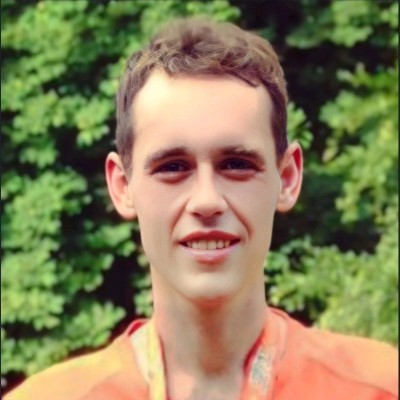
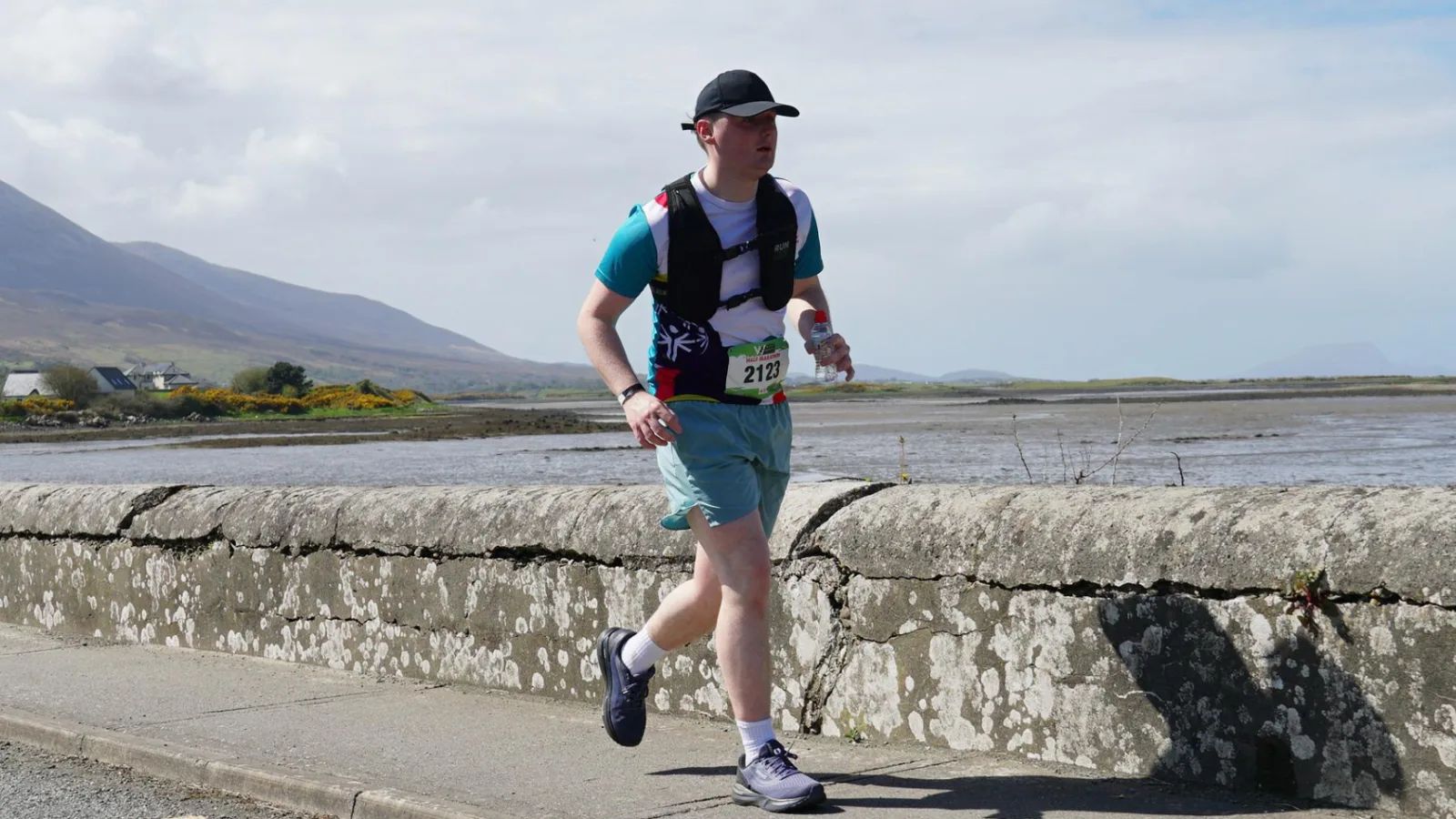
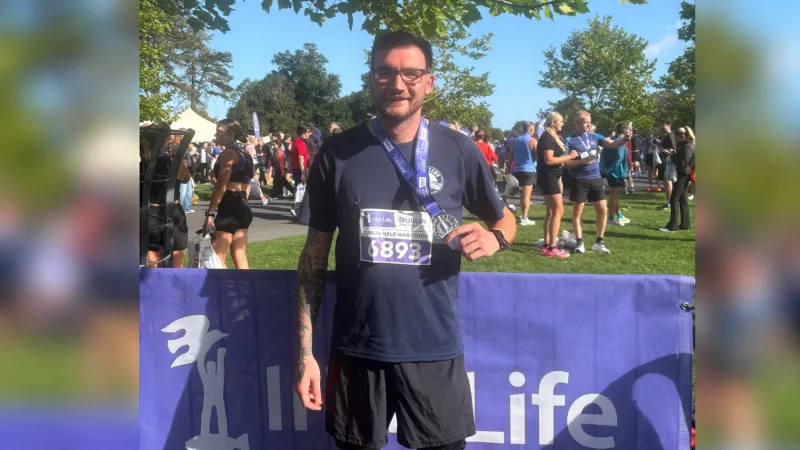
David Sammon was deep into a half marathon training run last weekend and ready to pack it in.
"I was about to stop."
But he kept going.
"My Dad was on my mind,and I'm doing this for him more than ever. So I just kept going. And I was sore after it, but I don't regret doing it."
Dublin at the end of the month will be David's first marathon. He has never run further than a half marathon in his life and he is under no illusions about what is coming, which is part of why he wanted to do it in the first place.
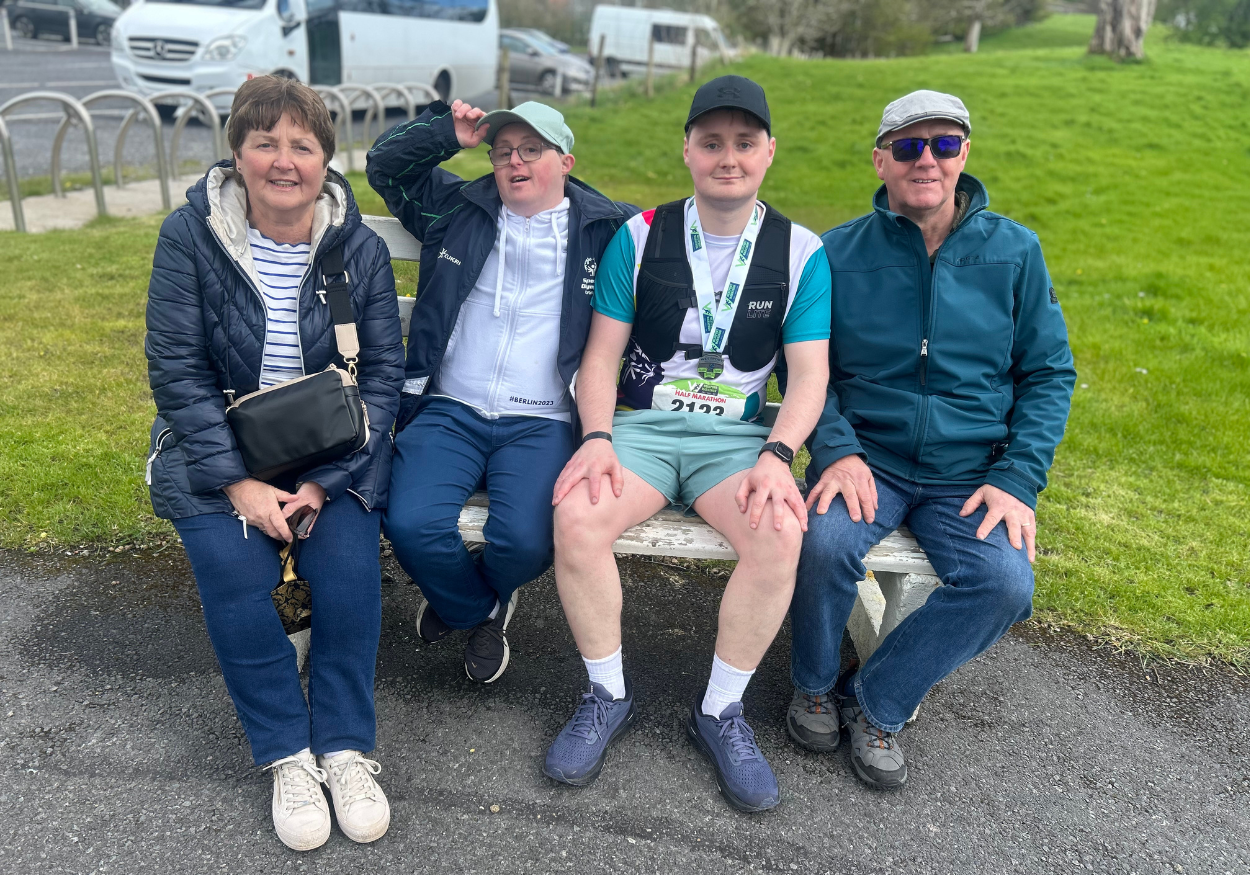
He will be running for Special Olympics Ireland, for his brother Sean, and for his father Martin, who died suddenly last month.
Castlebar
David is from Castlebar in County Mayo, the youngest of four.
He had wanted to run a marathon for a long time.
"That's something I always wanted to challenge myself and see if I can make it up to 42 kilometres."
He tried the lottery first, like everybody else, and did not get in. Then he found out about the charity places, and the decision to decide who to represent took no time at all
“Special Olympics Ireland was the obvious choice for me. I was delighted when they accepted me, especially as they know my story.”
They do know his story. His target was €1,500, he raised it, and he was in.
"I did a fundraiser, got my fundraising target, got accepted into the marathon, which I really am excited for. And it's just around the corner."
Seán
David's brother Seán has competed in Special Olympics events for years. Kayaking first, and then table tennis more and more.
In 2023 he travelled to the Special Olympics World Games in Berlin, representing Ireland.
He came home with a silver and a bronze.
Ask David about his brother and you get a description of a person rather than a list of achievements.
"He's the heart and soul of the family. That's the best way to say it."
"He's always been a very confident guy. He'll talk to the room. He loves the crowd, and he loves training his peers. He's a real sportsman."
Seán competed in Dublin again this year, and the family have been at more events over the years than David could count.
"It had a special part in our family life. My parents, along with myself and my brother and sister, were at the many Special Olympics events that my brother Seán participated in, with both kayaking and table tennis."
What it gave Seán is the reason the charity was never in doubt.
"It brought him so much joy. He made lifelong friends, gained a new level of confidence. It was one of the best things that ever happened to him."
The Proudest Day
Martin Sammon was a Special Olympics Ireland volunteer and coach for many years. He trained Seán for competitions, travelled with him, and celebrated what he achieved.
Berlin in 2023 was the high point of all of it, and David is specific about why.
"That was, without a doubt, one of dad's proudest days, and probably one of his proudest achievements, helping Seán to get there."
"It wasn't his own personal achievement. It was seeing what Seán achieved in Berlin."
That is the whole man in two sentences, and the rest of the interview bears it out.
"Dad Cared About People"
Martin died recently, and suddenly.
"It's still very raw to us. The feelings, the emotions."
David had to stand up and speak about his father at the burial mass, so he has already had to find the words once, under the worst possible circumstances. He goes back to that speech when he is asked how he would like his dad remembered.
"Dad cared about people. Dad was, for the most part, a generous person, especially with his time."
"If somebody needed his help, Dad would do it if he can. He never expected anything big in return, or make a big deal about helping people. That was just the best way to describe simply who he was."
He spent his working life as a mental health nurse, and David is careful to point out that the support went in more than one direction.
"Supporting not only patients, but colleagues as well. Giving them good advice and guidance."
He farmed as well.
"And if another farmer needed a hand, he would definitely be there. His neighbours knew they could depend on him."
He was, before any of the rest of it, a family man.
And then there was Special Olympics, which David describes as an organisation his father gave an enormous amount of his time to, and which gave a good deal back.
"It was such a great joy to his life. He made new friends, along with the other volunteers, as well as being able to coach all members, including supporting other athletes, not just Seán."
"He was part of a greater community that brought him so much joy."
All the One Thing
The part of the conversation where David pulls it together is the part worth reading twice, because he has clearly thought hard about what connects a nurse, a farmer, a neighbour and a volunteer.
"I look back on all these different parts of his life. His family, his nursing career, his farming, his relationship with neighbours and friends, and Special Olympics."
"It all connects to how he just genuinely cared about people."
"He was just always a phone call away, or a text away, if people needed anything. And he'd try his best to arrange to support a fellow friend, neighbour or relative, or even a stranger sometimes."
There is one more thing Martin did, with David's mother Beatrice, and it is not a small one.
"With my mother Beatrice, he was very much involved with setting up Ireland's first Special Olympics kayaking club."
"He was a very active member in our town in Castlebar, supporting his local community, supporting inclusion for everyone who are all different, no matter their background or special needs or anything."
A Race That Changed Shape
David signed up for this marathon while his father was alive and healthy. At that point it was a straightforward thing: a personal challenge, and money raised for an organisation that had given his family a great deal.
"When I first signed up to the marathon, Dad was with us. He was alive. He was healthy. And it was really just doing it to challenge myself and raise money for the organisation, for the athletes like my brother. Give them the chance to experience the joy that we had."
Then his father died, and the whole thing moved.
"With the recent passing of my father, it kind of all took a whole new meaning. So I'm also doing this marathon and fundraising to honour my father's name and his legacy."
He has a way of describing what a runner carries around a course that is the best thing he says in the interview, and it explains why this piece exists at all.
"Whenever someone's running, they're representing someone. They're always representing more than one. It's how I see it. You're wearing three or four different cloaks doing this."
For David the cloaks are easy enough to count. Seán. The organisation. His parents, who were in the middle of all of it. And his father's memory.
A Light Jog, in Final Year
David's own running started in his last year of college, and it started for a reason he volunteers himself without being asked.
"Last year in my final year in college, I had a little bit of a struggle with my own mental health."
"Then I just randomly went out for a light jog around, and I kind of felt better. I felt like I was looking after myself better."
It grew from there into something wider.
"I started being more health conscious about my overall wellbeing, as well as my own eating habits. I wanted to remain fit and healthy."
"In college I was so focused on getting work completed. I took a lot of other things for granted."
And then the line that explains why he kept at it.
"I sort of found a joy for running, and a joy for just being a better version of myself than I was yesterday."
There is an echo in that which is impossible to miss, and David does not make anything of it, so it is worth noting here. The thing that helped him at his lowest point in college was the same territory his father worked in for a living.
Before running there was football, in school and after it, which he enjoyed and then stopped.
"I wanted to do something different than what I regularly do."
Mayo AC, and a Hamstring
David is a member of Mayo AC, who train at St Mary's pitch on a Tuesday and Claremorris track on a Thursday.
He is honest that he has not been as consistent with the club sessions as he would like, and that most of his work has been done alone.
"I've just been focusing on my own personal training. Trying to run certain distances at my own pace."
The injury came at the start of this year, and it taught him more than the training had.
"I had a bit of an annoying hamstring injury, so I had to focus on recovering, as well as staying more conscious of listening to my body more, focusing on stretching and recovering properly."
It worked. He came out of it and ran a half marathon in two hours and two minutes.
"I was so happy to achieve the half marathon within two hours and two minutes."
His father saw that one.
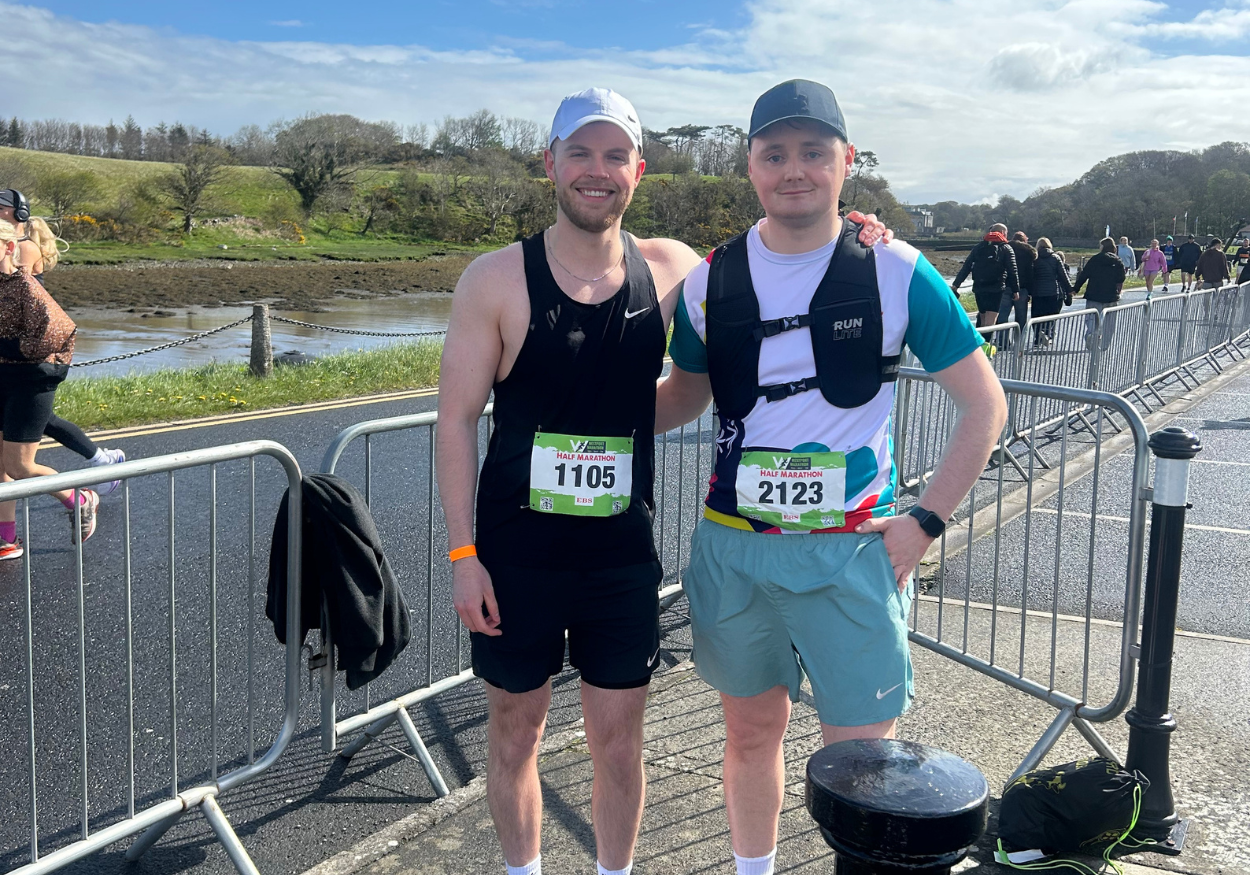
Since then it has been a few 5ks and 10ks and another half the weekend before we spoke, with one eye firmly on not undoing any of it.
"It's all about just making sure I'm careful now with my training, so I don't hurt myself before the big day."
On gels he is unconvinced but compliant.
"I'm not too mad about gels. They work, but they don't taste that great. Most of them, I feel."
And on whether he is enjoying the training, he gives the only honest answer anybody ever gives.
"Some days I enjoy it. Some days I hate it. But I'm willing to keep going."
"If You Can't Run, Walk"
There is no time target for Dublin, and David is clear that there does not need to be one.
"I don't specifically have a target. I have no idea how I'd like the race to go. My number one goal is to generally get over the finish line."
"If I do another marathon, then yes, I'll look to beat my time for this one."
He is realistic about what is in front of him.
"It's my first marathon, so I'm under no illusion that 42 kilometres is going to be easy, because it won't be. I know there'll probably come a point where things will get really difficult."
And he knows exactly what he will do when that happens.
"When that happens, I'll remind myself why I'm doing it, who I'm doing it for."
Then he gives the line he has been repeating to himself, and which is already going around in his head weeks out from the race.
"If you can't run, walk. If you can't walk, crawl."
The Finish Line
Asked what crossing the line will mean, David does the sensible thing and admits he cannot know yet.
"It's difficult to really know until it happens, because it's going to be more emotional than ever with Dad passing away. If he was with us today, it wouldn't have the same level of impact."
"I couldn't possibly know what the marathon will eventually come to mean to me, because I'll be carrying Dad's spirit with me as I try and complete 26.2 miles."
Beatrice will be there. So will Sean, his brother Paul and his sister Louise, and a group of friends heading up to Dublin, some of them for David and some for other people they know in the race.
"I have good friends and family that are there for me, and I've been looking forward to seeing them all there."
What He'd Tell a First Timer
David's advice comes directly out of the mistake that cost him a few weeks earlier this year, which makes it worth more than most.
"Just listen to your body. Don't overdo it with training. Make sure you know your limit, when to stop running."
"Regretfully, I made a mistake where I ran too often in the week, and it cost me being sore, where I couldn't run for a few weeks."
"It's important to remain conscious of your own body, your own limits, and make sure you do the proper, correct exercises to make sure you're fully fit to run. Because it's very easy to get injured while you run."
He has a specific word of warning about this race in particular.
"In the Dublin Marathon you're running on hard ground. So you need to pace yourself. You need to take it slow when it's necessary."
And then the part aimed at anybody reading this who has been talking themselves out of it.
"If you really are determined and hungry to achieve the marathon, just don't give up. No matter what insecurities you have."
"You shouldn't doubt yourself into wanting to do a marathon, or even a 10k."
Next Year
There is one other thing that changed this year.
David was due to start a master's in marketing practice this September. After his father died he withdrew from the course, took a job closer to home, and stayed close to his family.
Somewhere in those months he also decided that marketing is not the direction anymore.
"I was going to do marketing practice, but I decided recently I want a change of direction, on teaching."
He does not draw a line between that and anything else. It is hard not to notice, all the same, that he has spent the last few months describing a man who spent his life looking after other people, and has come out of it wanting to go and teach.
Why He Said Yes
David was asked at the end why he had agreed to do the interview at all, given how recent all of this is and how raw he says it still feels.
His answer took about four seconds.
"I was quick to say yes to you when you offered, because I definitely want Dad to really be more remembered for the good things he's ever done for people."