“Nobody Knows What It Is, Unless They've Been Impacted by It”: Zack Barron Ran Dublin in Memory of His Grandad
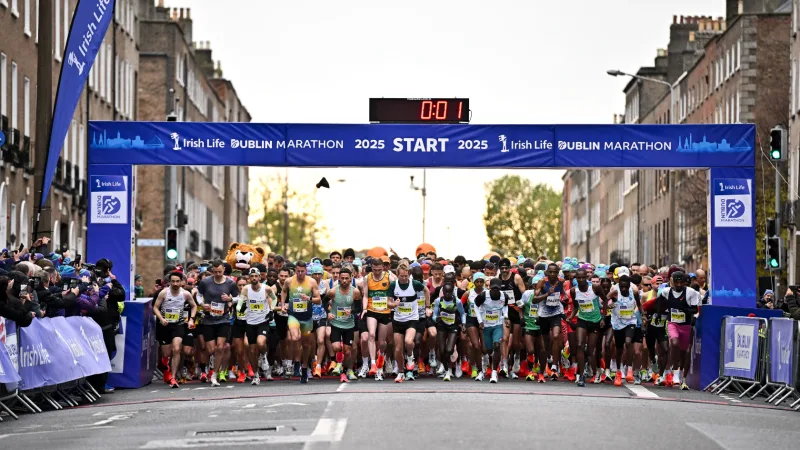
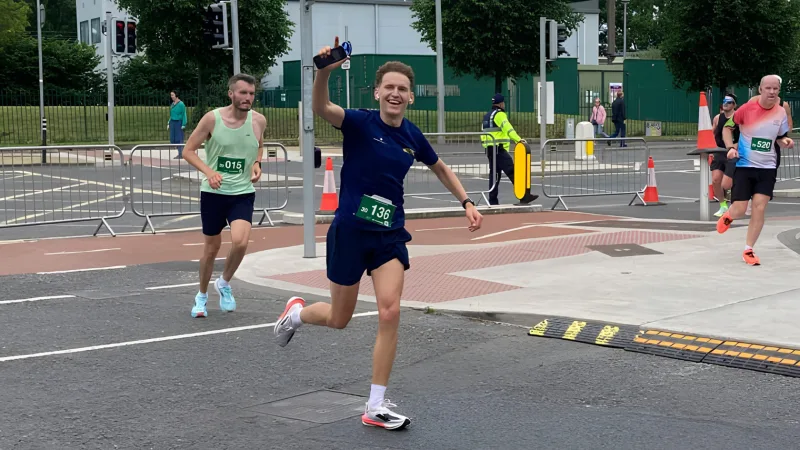
Zack Barron ran the Dublin Marathon yesterday in memory of his grandad, Martin Barron, raising funds for the Oesophageal Cancer Fund. Ahead of the race, he spoke to Paddy Ryan about his running journey, the loss of his grandfather and why raising awareness of oesophageal cancer matters so much to him.
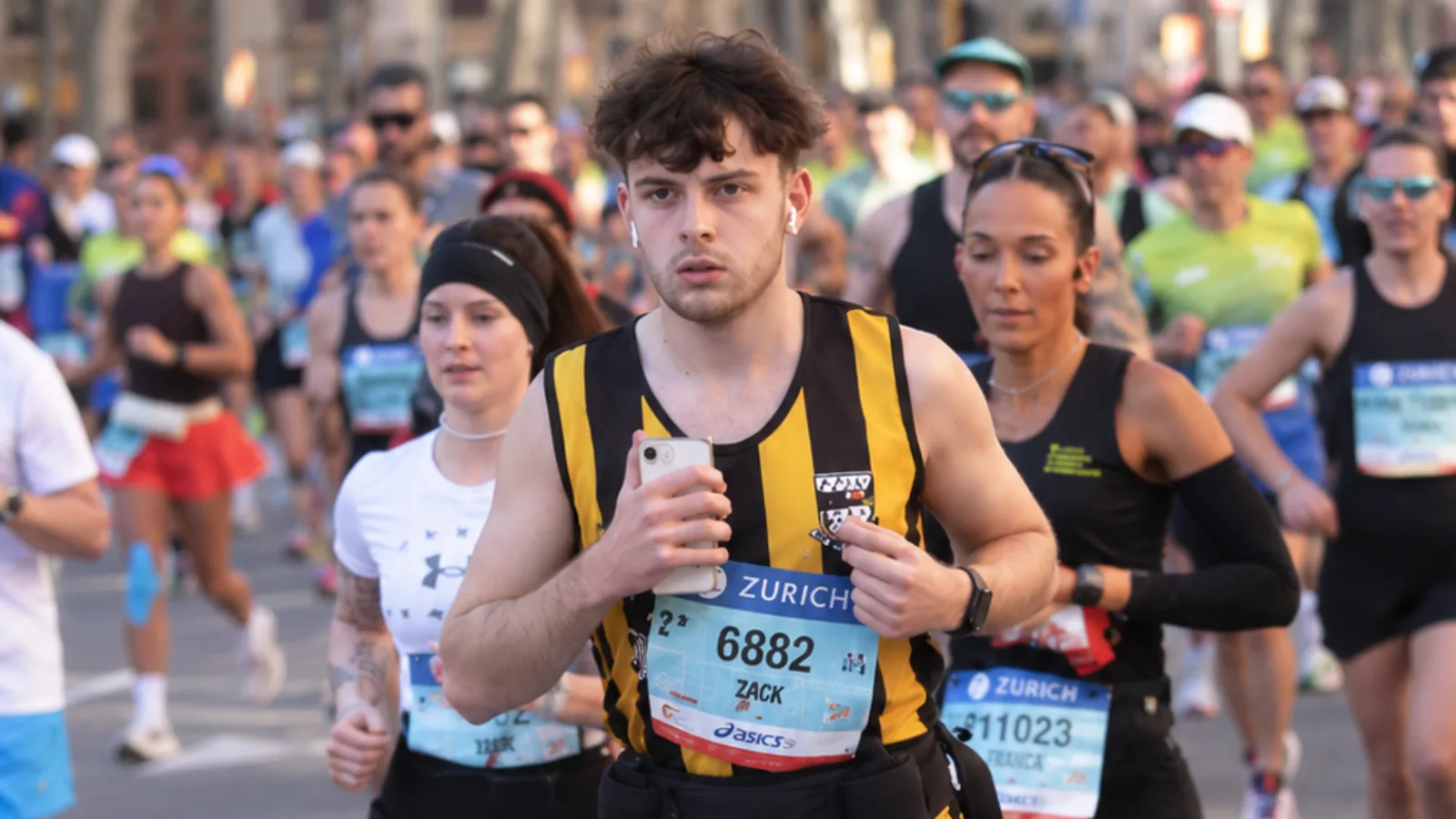
Zack Barron ran 3 hours 28 minutes in Barcelona in March, which was his first ever marathon.
His plan for Dublin was to go and stand beside the three-hour pacer and see what happened.
"Sub three, hopefully. It's tough to know until you go on the day. Barcelona was three twenty eight. I'm just going to stay with the three hour pacer and see how we go from there."
That was an ambitious afternoon by anybody's standards, and it would be about the fourth or fifth race he had ever run in his life.
"It's not too many. I did a 10K in Waterford in the summer, and a half marathon last year. Apart from that it's still quite new to me, the racing and stuff."
He was running it for the Oesophageal Cancer Fund, in memory of his grandad, Martin Barron, who died on St Stephen's Day last year, and who is the reason any of this is happening at all.
Final Year, and a Family of Runners
Zack is from Kilkenny, close to the Carlow border, and is in final year of business studies at DCU. He is job hunting for a graduate role alongside all of this, which he has parked for a fortnight while the marathon takes priority.
Running is more or less the family business. His father has eighteen marathons behind him and has since retired from racing. His brother has run for Ireland a couple of times.
"My brother's big into running as well. My dad has done eighteen marathons. He's kind of retired now."
Between the two of them, the topic was never off the table in that house.
"Being around my dad and brother, they were talking constantly about races. We're in the car, and that's all the conversation is."
Going home still means the same conversation, and he gets a good deal out of it.
"My dad obviously knows a lot about marathons, so that chat we have about race day, or the kind of feelings you get, that sort of got me into wanting to do it."
Why He Started
The actual start of it was practical rather than romantic.
Zack played hurling and soccer at home, and when he moved to Dublin for college he picked up a weekend job, which made the whole thing impossible.
"I had to quit any sort of hurling or soccer, because I wasn't around for training during the week and wasn't around for matches at the weekend."
"So I had to find some way of keeping fit."
He had pottered along at running before that without ever taking it seriously. Then he did the thing that changed everything, which was to book a race.
He entered a half marathon last year off training he describes as inconsistent at best, got round it, and was happy with the time.
"I wasn't running too consistently, but I just said I'd book one and see how it goes. Didn't train great for it, but I finished it, and I was really happy with the time."
"So from there I kind of learned that if I book races, I stick to it."
That lesson has become the one piece of advice he gives anybody who asks him how to start, and we will come back to it, because it is the best thing in this interview after his grandad.
His Grandad
Zack's grandad, Martin Barron, his father's father, was diagnosed with oesophageal cancer about three years ago.
"It's not something I'd probably ever heard of too much. It's not one of the more common forms of cancer. I didn't know much about it."
Over the following two years he watched it take hold. The illness narrowed his grandad's breathing and his eating as it spread, to the point where he was being fed through a tube into his stomach.
"For two years I kind of watched him get weaker."
He died on St Stephen's Day last year.
The line Zack gives about the disease itself is the sharpest thing he says, and it is the reason awareness matters to him as much as money.
"I think it's one of the forms of cancer that nobody knows what it is. But if someone does, it's usually because they've been impacted by it."
What the Support Looked Like
Zack's grandad was a farmer, and a traditional man who was not one for going away anywhere.
Which runs straight into the practical problem with cancer treatment in Ireland, which is that a great deal of it happens in Dublin.
Chemotherapy meant staying up in the city. The first stay was ten weeks. With the rest of the family working, getting him up and back down again was close to impossible.
"They organised completely free of charge taxis up. Someone to collect him, bring him up, bring him back down."
Then came the care at home.
"The home care, people coming out and looking in on him. And then towards his last few weeks, there were nurses there. And specifically towards the end, full home palliative care."
The detail that stayed with Zack is from last Christmas.
"Especially around Christmas, there was a nurse who stayed Christmas Eve night. And she had young kids at home and had to come out and stay."
"So the charity supports those people as well, because they obviously deserve it. That's not an easy job."
His grandad died two days later.
Zack is careful to spread the credit around when he talks about any of this, and what he keeps coming back to is not the money but the people doing the work.
€1,000, Then €1,500, Then €2,200
Zack set his original fundraising target at €1,000, then moved it to €1,500 when that went, and it was sitting just over €2,200 when we spoke, with a final push still to come in race week.
He does not take any credit for that.
"He's a popular man, so a lot of people knew him."
"A lot of people in my family and in the town in general have been quite generous with the donations."
"Definitely more raised than I thought originally I would get. But it's great to run for him, for his memory."
What he is open about is how uncomfortable he found the asking, which is worth hearing from a 21-year-old as much as from anybody else in this series.
"The first time I posted it, I was thinking about it the whole week. Like, oh, I don't want to be putting this up."
"Even though I know if someone else posted it, I wouldn't think it was weird or whatever."
And then the thing that changes, which everybody who has ever set up a page will recognise.
"As soon as you see a bit of support, it's much easier to post it again and again."
Training Around a Timetable
Training for Barcelona was straightforward, because Zack was on work placement at the time and his week had a shape to it. Runs before or after work, long run at the weekend.
This block has been considerably messier.
He is back in college, and he works shifts at the weekend, sometimes mornings and sometimes evenings, which has knocked the long run out of its usual slot entirely.
So it has moved into the week.
"I found this year mainly getting the bulk of it done during the week around classes. Tuesday and Wednesday are less busy days."
The morning we spoke, his long run had already been done, early, before the day started. There is a session on Friday, and the easy runs get slotted into whatever gaps are left.
He is clear about which version is harder.
"That is definitely tougher in college, because it's not structured. It's much easier when you're working nine to five."
He is not in a club. His brother is in one, and there is a smaller club at home, but with half his week in Dublin and half of it in Kilkenny it has never been workable.
So most of it is done alone, with occasional company from a friend who also ran Barcelona and is also doing Dublin, and the odd easy run with his brother.
It is worth noting what that means in practice for somebody chasing three hours. No group to drag him through a session, nobody waiting at a track on a Tuesday, no coach adjusting anything week to week. The plan is his, the sessions are his, and the decision to go out in the dark on a wet November evening in final year is his alone every single time.
The Hard Part
For a man targeting three hours, the hardest part of this is not the mileage or the sessions.
"Especially coming into this time of year, it's really tough to get out some days. Some days you're not too pushed to want to go on your own, and it's kind of finding something to get you going."
What works for him is other people, even when he is not running with them.
"If I look at someone else out on a run the same day, it pushes me on to know that I have to go."
And then the practical bit, which applies to absolutely everybody.
"Just get out the door. Because the sooner you start running it's perfect. It's just that bit before you go."
Double the Carbs
The fuelling has been deliberately overhauled since Barcelona.
He used Maurten for his first marathon, on the basis that they have a reputation for being easiest on the stomach, and he has since moved from a 20-gram gel to a 40-gram one.
That is double what he took in Spain, and he knows exactly what the trade-off is.
More carbohydrate per gel means more fuel late on, and it also means more work for a stomach that has to keep processing it while he is running at three-hour pace. It is the single biggest change between his first marathon and his second, and he has had the whole block to test it.
Barcelona, and What He Learned
Barcelona was about finishing. That is how he describes it himself, and it is the right way to approach a first one.
"Barcelona was mainly more about finishing the race."
It was also hot, which is a factor he would not have to deal with on the last Sunday in October in Dublin.
"This time it's probably more hoping for a time, and pushing it a bit more. Obviously Barcelona is a bit different as well, with the heat and stuff. So hopefully it won't be as bad in Dublin."
Which is how a man who ran 3:28 in March ended up lining up beside a three-hour pacer in October. He knew what the distance felt like now. He knew what he did wrong. And the conditions were going to be kinder.
Whether three hours was on or not, he would find out somewhere around 30 kilometres, which is the honest answer for anybody attempting that kind of jump. Going out with the pacer was the right way to do it either way, because the group does the thinking for the first half and he only has to answer the question once.
What He Wants People to Take from It
There is a reason Zack keeps returning to the awareness side of this rather than the total on the page, and it goes back to how little he knew himself two years ago.
Before his grandad was diagnosed, oesophageal cancer was a phrase he had barely encountered. By the end of those two years he had watched what it does, up close, over a long period, in his own family.
That is the gap he would like this piece to close by even a small amount. Most people reading it will be in the position he was in before the diagnosis, which is knowing nothing about it at all.
"Definitely something I wanted to raise a bit of awareness for, and raise a bit of money for."
The Finish Line
Zack's family were travelling up for the race. They would not know exactly where he was on the course, so there would be a certain amount of guesswork and a very early start for them, and they would be at the finish.
What he expected to be thinking about in the last few kilometres was not his split times.
"Hopefully when I get to that final stretch, I'll just be thinking about my grandad looking down on me."
And then he said something that put his age on the whole thing, and made it land harder.
"It's kind of the first person I've lost. All my other grandparents are still alive, which is probably a bit lucky for me. Not a lot of people my age could say that."
"But the first person I've experienced losing myself. So crossing that finish line and just thinking about him, and my family around, would be quite special."
"Just Book a Race"
Which brings us back to the advice, and Zack gives it the same way every time he is asked, because it is the thing that worked on him.
"I always just say book a race."
The mechanism is not motivation. It is accountability, and specifically the fear of having to admit you did not do it.
"If I book a race and tell everyone I'm doing the race, you have to either do the race and face it, or go to the embarrassment of telling everyone I can't do it, I didn't train for it."
The important part, and the part people miss, is that the race does not have to be a marathon.
"It's a 5K, even like a one mile, two mile. Just, you have something to aim for, and give yourself a few weeks to try it."
Which is about as low a barrier as advice gets, and it comes from somebody who has watched it work on himself twice now.
That is how he got from a lad who had to give up football to a lad standing beside the three-hour pacer in Dublin inside about two years. One booking at a time, each one slightly bigger than the last.
"I think there's no way I couldn't see myself not running now."