ere's a comforting myth surrounding the Dublin Marathon that it's a reasonably flat race.
And to be fair, large sections of it are.
Unfortunately, the organisers have also included a few hills, apparently concerned that running 26.2 miles wasn't quite enough of a challenge.
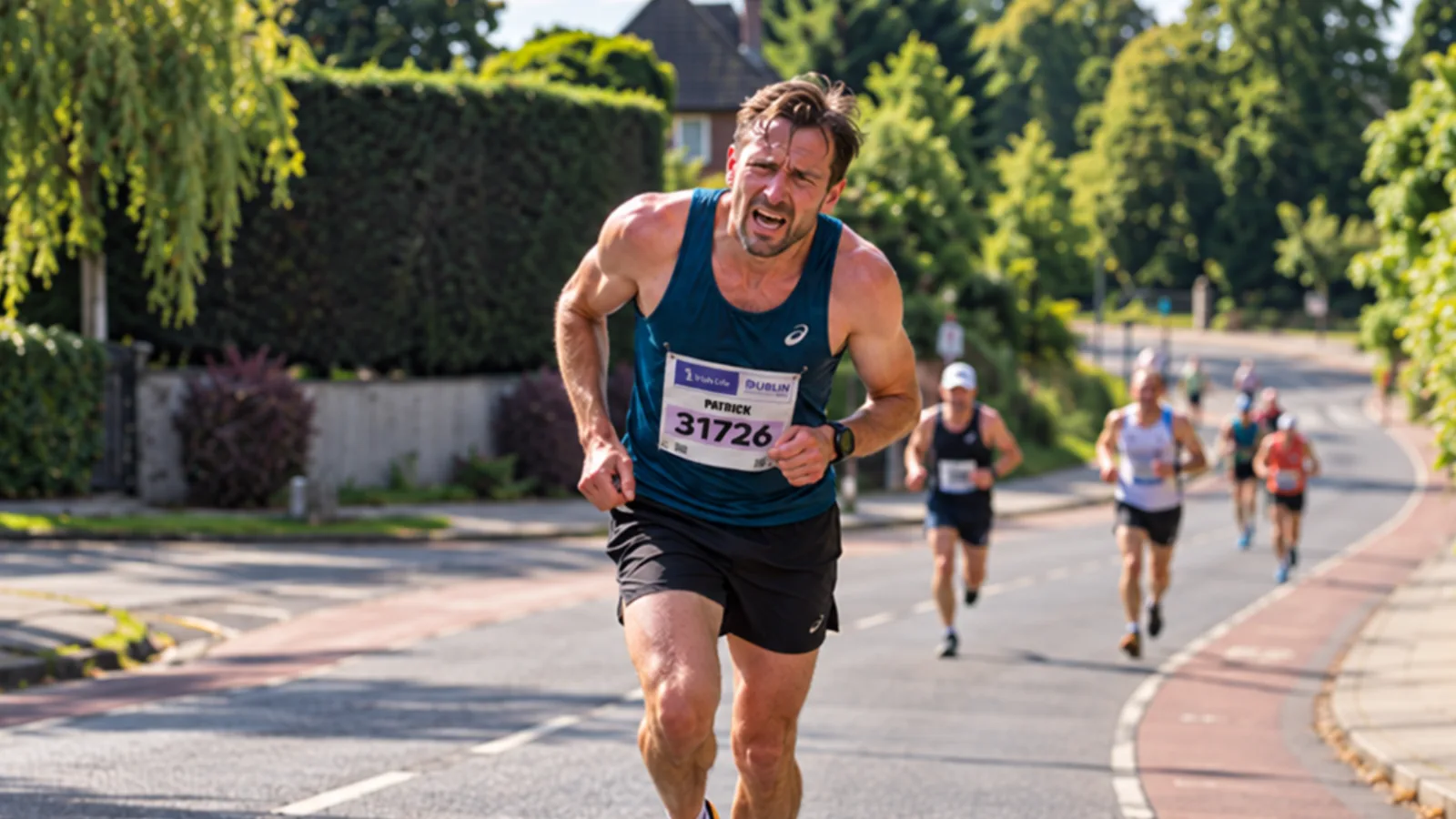
On Sunday October 25th, thousands of runners will take to the streets of the capital, hoping to achieve personal bests, complete their first marathon or simply reach the finish line with some dignity intact.
And while Dublin's incredible crowds can make the kilometres fly by, the course has a nasty habit of reminding runners that gravity remains very much in operation.
The hills aren't particularly mountainous. You won't need climbing equipment, oxygen cylinders or a Sherpa.
But their positioning, particularly during the final 10 kilometres, can turn a perfectly respectable marathon into a deeply unpleasant experience.
So, where exactly are the climbs, how difficult are they, and how can you stop them from destroying your race?
We've examined the official 2026 Dublin Marathon route to identify the sections worth preparing for.
1. Patrick Street: The First Warning Shot
Location: Starts at Approximately 2K
The Dublin Marathon actually begins rather generously.
Runners set off from Leeson Street Lower, heading downhill towards St Stephen's Green before continuing through the Liberties.
It's a lovely beginning.
Your legs feel fresh. The atmosphere is electric. Your watch is producing numbers that suggest you may have significantly underestimated your athletic ability.
Then comes Patrick Street.
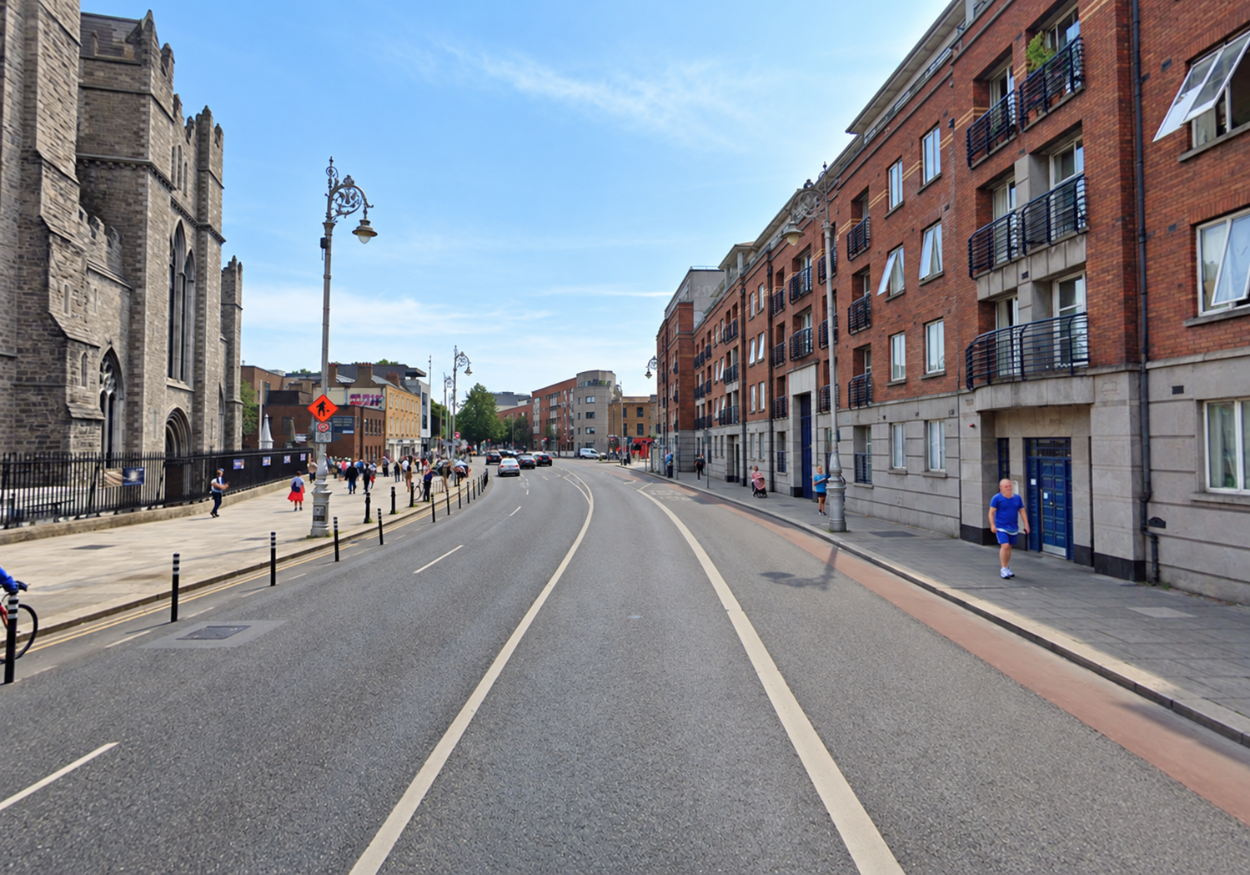
The road climbs towards Christchurch Cathedral, providing the first real reminder that Dublin wasn't designed exclusively for marathon runners.
It's not an enormous hill, and most reasonably prepared runners will barely notice it.
The danger is treating the opening kilometres like a 5K race.
With adrenaline pumping and thousands of people around you, it's remarkably easy to run faster than intended.
How to tackle it: Resist the temptation to push harder when the road rises. Maintain a comfortable effort, accept a slightly slower pace and remember that you've barely started.
You have another 40 kilometres to go.
There's absolutely no need to start behaving like you're chasing an Olympic qualifying time.
2. Phoenix Park and Castleknock: The Climb That Sneaks Up on You
Location: Approximately 6K to 12K
This is arguably the most deceptive section of the entire marathon.
After crossing the River Liffey, runners head through Stoneybatter and towards Phoenix Park, entering the park at approximately 6K.
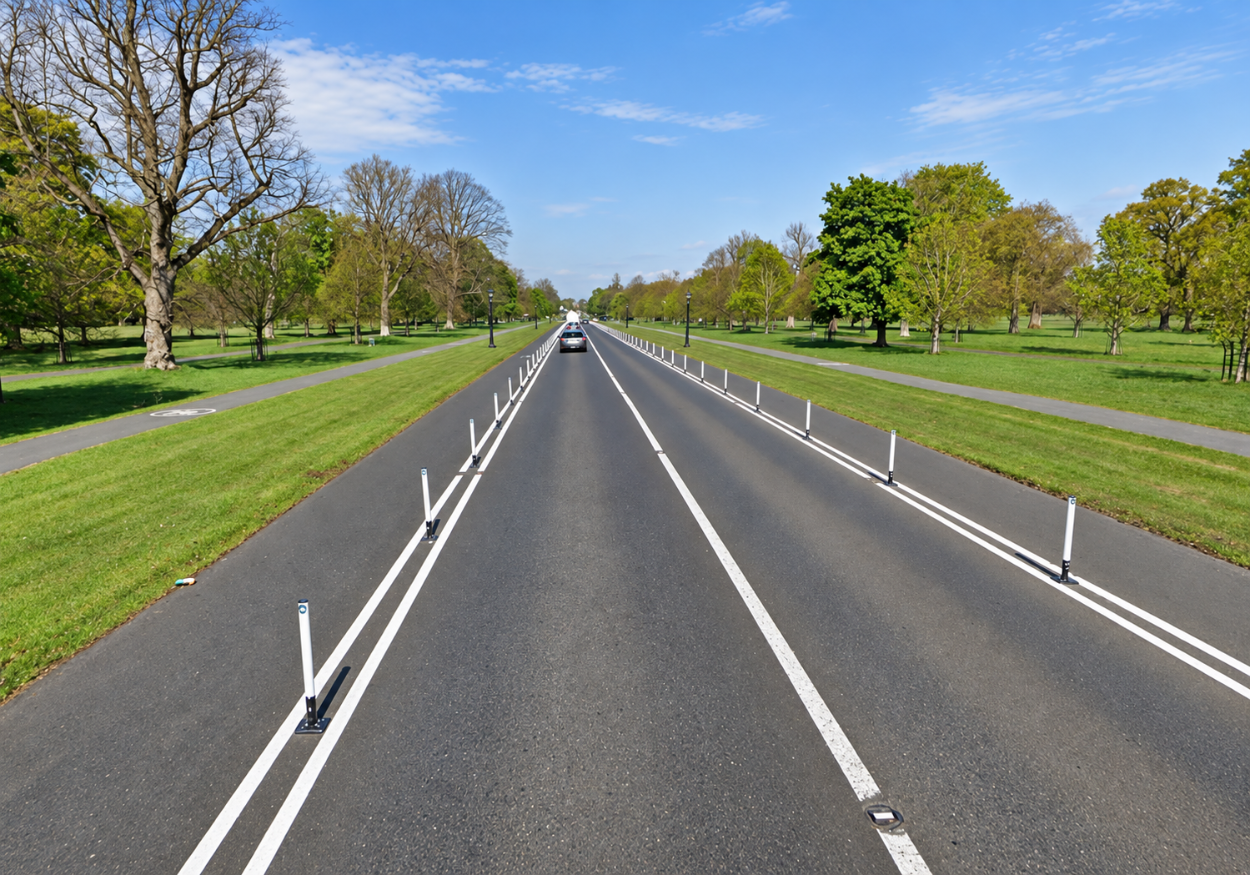
The surroundings are magnificent.
Wide roads, beautiful scenery, enthusiastic supporters and enough fresh air to briefly forget that you've voluntarily signed up for several hours of physical discomfort.
But there's something you might not notice.
You're gradually climbing.
The route rises through the approach to Phoenix Park and along Chesterfield Avenue towards Castleknock, with a shorter climb as runners leave the park.
It isn't a brutally steep ascent. In fact, parts of it barely look like hills at all.
That's precisely what makes it dangerous.
According to independent elevation analysis of the course, the route reaches one of its highest points around the Castleknock section, approximately 11.5K into the race.
By this stage, you could already have accumulated considerably more climbing than you realise.
And because you're still relatively fresh, you might be tempted to maintain your usual flat road pace throughout.
How to tackle it: Run according to effort rather than obsessively chasing an exact kilometre split. If you're breathing noticeably harder on the gradual inclines, ease back slightly.
The reward comes afterwards, as the route returns to Phoenix Park and descends towards Chapelizod.
Enjoy the downhill, but don't turn it into an uncontrolled sprint.
Your quadriceps have another three hours of work ahead of them.
Possibly four.
We don't know your life.
3. Crumlin and Kimmage: The Hills Nobody Warns You About
Location: Approximately 22K to 28K
After passing Kilmainham Gaol, the route becomes slightly undulating around Dolphin's Barn and Crumlin Road, where runners approach the halfway point.
There are no particularly terrifying climbs here.
Nothing with an intimidating nickname.
No spectators holding signs telling you to abandon all hope.
Instead, you have a succession of gentle rises and changes in elevation that can gradually take their toll.
The route continues through Walkinstown, Cromwellsfort Road, Kimmage and Fortfield Road before descending along Templeogue Road towards Terenure.
On paper, none of this sounds particularly threatening.
But by now, you've been running for quite some time.
Your legs are beginning to accumulate fatigue, your energy reserves need managing, and any mistakes made during the opening miles are starting to become apparent.
This is where runners who have gone out too quickly can begin paying for it.
How to tackle it: Maintain a controlled rhythm and stay on top of your planned fuelling and hydration.
Don't force yourself to recover every second lost on a gentle climb.
A few slower kilometres here are considerably preferable to spending the final six miles walking like you've been recently released from a full body plaster cast.
4. Milltown Road: The Beginning of the Endgame
Location: Around 31K to 32K
By the time runners reach the final quarter of the marathon, the atmosphere begins to change.
The early excitement has faded.
The novelty of running through Dublin has worn off.
And your relationship with your Garmin has deteriorated to the point where you're considering throwing it into the nearest hedge.
After a downhill stretch on Dartry Road, the course begins climbing again along Milltown Road.
This isn't necessarily the toughest ascent of the race, but it arrives at an uncomfortable moment.
You've covered almost 20 miles.
Your legs have already experienced several hours of repetitive impact, and there's a reasonable chance you've begun doing mental arithmetic to determine precisely how much longer this nonsense is going to continue.
The Milltown incline serves as a warning.
The really unpleasant part is still ahead.
How to tackle it: Keep your stride relaxed and slightly shorter on the climb. Avoid trying to maintain an artificially fast pace.
Concentrate on reaching the top feeling in control rather than exhausted.
You'll need whatever energy you can preserve.
5. Clonskeagh, Roebuck Road & The Infamous Irish Heartbreak Hill
Location: Approximately 32K to 35K and beyond
And here it is.
The one you've probably heard about.
The hill that Dublin Marathon veterans mention with the sort of haunted expression normally reserved for people discussing a particularly traumatic family Christmas.
Dublin's Heartbreak Hill.
According to the official 2026 course description, runners face approximately three kilometres of climbing along Clonskeagh and Roebuck Roads, with the most notorious section around the 35K mark. The stretch from crossing the Dodder to reaching the Spar on Roebuck Road (the Spar is still there, right?) can feel like a marathon within a marathon if you don't approach it correctly.
That's almost 22 miles into the marathon.
An absolutely wonderful time to introduce a sustained uphill section.
What makes this stretch so difficult isn't necessarily the gradient itself.
It's the timing.
At 5K, this road would be a manageable inconvenience.
At 35K, it can feel like climbing Croagh Patrick with a fridge strapped to your back.
Your legs are heavy. Your pace is deteriorating. Every small rise suddenly looks significantly steeper than it actually is.
And somewhere along Roebuck Road, your brain may begin suggesting that perhaps running marathons isn't the wholesome hobby you once believed it to be.
But there's some good news.
The hill eventually ends.
How to tackle it: Forget about maintaining your exact target pace on the climb.
Instead, maintain a sustainable effort, shorten your stride if necessary and resist the urge to fight the gradient.
If your kilometre split is slower, so be it.
Trying to force your usual pace uphill when you're already exhausted could leave you paying for it over the remaining distance.
Break the climb into smaller sections. Focus on reaching the next bend, the next group of spectators or the next obvious landmark.
And remember that everyone around you is negotiating the same stretch of road.
Some will just be considerably better at pretending they're enjoying themselves.
6. Fosters Avenue and the Final Miles: The Reward
Location: Approximately 35K to the finish
After Heartbreak Hill, runners finally receive something approaching an apology from the course designers.
The route descends along Fosters Avenue before continuing towards Stillorgan Road.
There's still a flyover to negotiate near UCD, but the most notorious sustained climbing is behind you.
From there, runners turn onto Nutley Lane near RTÉ at approximately 38K, before making their way along Merrion Road, past the RDS and towards the finish on Mount Street Upper.
The terrain is generally more forgiving.
Of course, that doesn't necessarily mean the running becomes easy.
At 38K, even a perfectly flat road can feel like an act of personal aggression.
But psychologically, getting past Roebuck Road can provide a considerable lift.
You know the toughest climbing is over.
The finish is getting closer.
And, most importantly, you've nearly reached the point where somebody hands you a medal and you can stop running.
How to tackle it: Allow your pace to increase naturally if you still feel strong, but don't immediately sprint downhill to recover time lost on the climb.
Your legs may already be suffering considerable fatigue, and an aggressive descent can make matters worse.
Focus on maintaining your form and working steadily towards the finish.
So, Is the Dublin Marathon Actually a Hilly Course?
Yes, although it would be misleading to describe it as mountainous.
Independent route profiles suggest the course involves roughly 200 metres or more of total climbing, depending on the elevation data and measurement method used.
That doesn't make Dublin an exceptionally difficult marathon, but it certainly isn't pancake flat either.
And the important thing to remember is that the most famous hill isn't necessarily the one involving the greatest amount of climbing.
The gradual ascent towards Castleknock contributes significantly to the course's overall elevation gain.
Roebuck Road earns its reputation because of when you encounter it.
One tests your discipline early in the race.
The other tests whatever you've got left towards the end.
Five Things to Remember on Race Day
If you're running the Dublin Marathon on October 25th, keep these principles in mind.
Don't get carried away at the start. The opening downhill can tempt you into running faster than planned.
Respect Phoenix Park. Gradual inclines still require energy, even when they barely look like hills.
Run climbs by effort, not pace. A slower split uphill doesn't automatically mean you're having a bad race.
Don't attack every descent. Running aggressively downhill can increase muscular fatigue, particularly late in a marathon.
Save something for Clonskeagh and Roebuck. Those final climbs are considerably more manageable when you haven't spent the previous 20 miles pretending you're Eliud Kipchoge.
And with less than two weeks remaining before race day, there's no need to suddenly introduce brutal hill sessions into your training. The hard work should already be done.
One Last Thing About Those Hills
There's something strangely satisfying about the Dublin Marathon course.
It doesn't simply hand you 26.2 miles of easy running.
It asks questions.
Have you paced yourself properly? Have you fuelled sensibly? Can you remain patient when your legs are begging you to do something considerably less strenuous?
And when you eventually reach Roebuck Road, you'll have to answer those questions.
But remember, you don't need to charge up every hill like a professional athlete.
You don't need to record identical splits throughout the race.
And you certainly don't need to panic because your pace drops on an incline.
The objective is to reach Mount Street Upper having covered the entire 42.195 kilometres.
Preferably smiling.
Possibly crying.
Almost certainly promising yourself you'll never do another marathon.